Shutdown notice
Announced 4 Nov 2026, no end date yet
HumanLayer announced it is joining Factory on November 4, 2026. The current platform will continue during a transition of at least 30 days, with support for data export, migration to Factory or open-source self-hosting. An exact hosted shutdown date is not stated.
Dates, scope and sources
-
Finding: HumanLayer announced it is joining Factory on November 4, 2026. The current platform stays available during a transition of at least 30 days, with data export, Factory migration or open-source self-hosting support and refunds for recent paying customers. No exact hosted shutdown date is stated.
CodeLayer / HumanLayer
Open-source Mac app. Agents run on your computer or on your own server.
Product websitehumanlayer.com Compare with others Missing or wrong data?
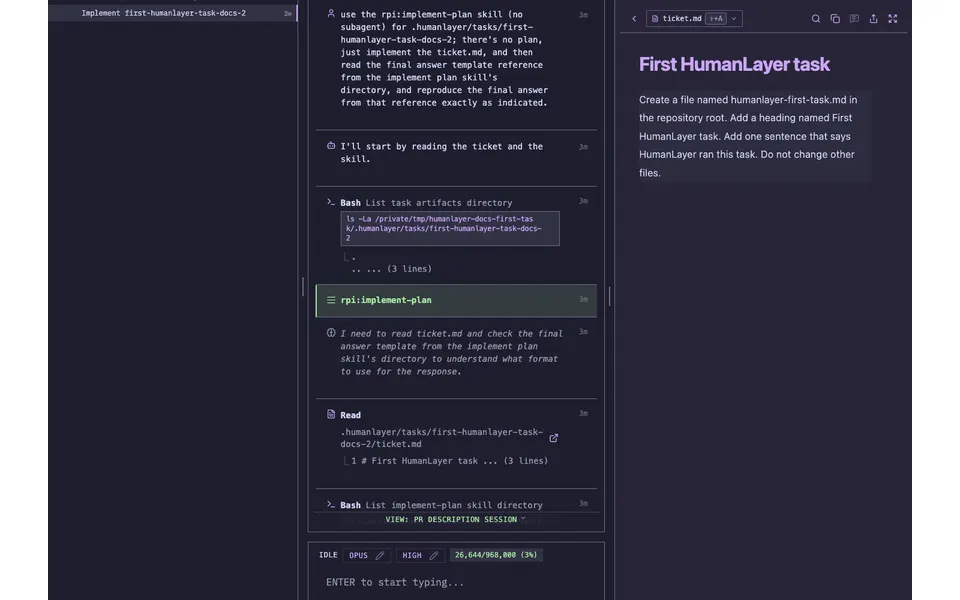
- Desktop app
- Mac
- Browser
- Yes
- Phone
- Phone browser
- Command line
- Yes
- Agents
- Claude Code, Codex, OpenCode and Pi
- Your subscription
- Works with your own plan
- Agents run
- On your computer and on your own server
- Laptop closed
- Keeps going
- Isolation
- Worktree, Container and VM
- Parallel agents
- Yes
- Scheduled runs
- Yes
- Coordinator agent
- Yes
- Built-in issues
- No
- Pull requests
- Yes
- Review screen
- Yes
- Team
- Shared sessions, roles and SSO
- Self-hosting
- Yes
- Licence
- Apache-2.0
- Price from
- Free
- How it charges
- Free plan, subscription, per seat and bring your own key
- Paid plans from
- $41–100/month
Receipts
- Checked
- Findings
- 50 published · 44 cross-checked by a second agent · read them all
- Sources
- 34 public pages on 3 sites: humanlayer.com, docs.humanlayer.com, github.com
- Screenshot
- docs.humanlayer.com, retrieved · first party docs · shows appearance, not capability
- Data
- /products/code-layer.json · .md
- Method
- Same rules for all 103 researched ADEs. How we check · Report wrong data
What it does
Where you use it
The complete current application repository lists macOS Electron/Tauri shells, web clients, a daemon and CLI. It has no native Windows/Linux desktop shell or iOS/Android app. User-host daemons can use other operating systems, and phone browsers can create, watch and message sessions.
Source and scope for Where you use itAgents it runs
HumanLayer integrates Claude Code, Codex, OpenCode and Pi. The closed schema lists those families and product-specific CodeLayer/Fold paths, with a stricter daemon-launchable subset; other supported terminal sessions can be mirrored. Model gateways do not add another coding harness.
Source and scope for Agents it runsAccounts and subscriptions
The pricing FAQ explicitly permits existing Claude/Codex subscriptions or API keys. Codex sign-in and custom API configuration are separate paths. The FAQ says HumanLayer has no separate per-token bill; provider and compute charges remain the user’s responsibility. Further scoped facts are recorded in the atomic answers.
Source and scope for Accounts and subscriptionsWhere agents run
Daemons run on the workstation or user-selected VM/server near the code and private services. The user supplies and supervises that compute; a hosted UI does not imply managed agent compute. The pinned README says Cloud runs the same code, its devstack runs the whole stack locally and self-hosting guides are in progress. No self-hosted install was performed. Further scoped facts are recorded in the atomic answers.
Source and scope for Where agents runHow work is kept apart
Worktree timing allows task-specific branches/worktrees or direct checkout use. Multi-repo tasks create a worktree per repository. No two-change collision fixture was run. The daemon gives agents the file/network access of its OS user. Worktrees separate code and do not prove hostile-code containment.
Source and scope for How work is kept apartParallel work
The vendor states local daemons run many sessions in parallel; the bundled skill launches separate task worktrees. No concurrent fixture was observed. The CLI status reference distinguishes running, needs approval, usage-limit waits and failed/lost sessions. Task status is separate and absent in that reference.
Source and scope for Parallel workScheduled runs
User-run CI/cron can invoke automation run with a PAT; schedules, concurrency groups and no-op guards are external workflow configuration. This is documented automation integration, not a hosted scheduler. Automation exits with the session result; inactivity or stop controls the daemon shutdown. No automation was executed.
Source and scope for Scheduled runsGit and pull requests
Workspace setup creates task branches/worktrees; implementation skills commit checked phases. No fixture change was delivered. An opt-in GitHub PR tab exposes PR actions/review threads/checks, and PR skills create/update descriptions and follow up on checks.
Source and scope for Git and pull requestsLicence and source
The current application monorepo at the cited revision is Apache-2.0, with separately licensed vendored MIT folders. It includes desktop/web, daemon, API and sync proxy. The pinned README says HumanLayer Cloud runs this code. Independent production parity and any hosted-only operations were not audited.
Source and scope for Licence and sourcePrice
Public pricing lists Pro at USD 100/user/month with unlimited tasks/sessions and BYO agent subscriptions/API keys; Starter is free up to three members and 200 sessions/month. Provider/compute costs remain separate. Agents use user-provided local/remote compute; no universal compute bill is established.
Source and scope for PriceTyped filters
Every value links to its receipt below. Read plan and surface restrictions before using a filter to decide.
| Filter | Value |
|---|---|
| Desktop OS: macOS | Yes |
| Desktop OS: Windows | No |
| Desktop OS: Linux | No |
| Web client | Yes |
| Phone access: Native iOS | No |
| Phone access: Native Android | No |
| Phone access: Phone browser | Yes |
| CLI | Yes cross-checked |
| Coding agents: Claude Code | Yes |
| Coding agents: Codex | Yes |
| Coding agents: Cursor Agent | No |
| Coding agents: Gemini CLI | No |
| Coding agents: OpenCode | Yes |
| Coding agents: Pi | Yes |
| Coding agents: Grok | No |
| Coding agents: Aider | No |
| Coding agents: Antigravity | No |
| Use my subscription | Yes cross-checked |
| Where agents run: On your computer | Yes cross-checked |
| Where agents run: On your own server | Yes cross-checked |
| Where agents run: In the vendor's cloud | Unknown |
| Workspace isolation: Git worktree | Yes cross-checked |
| Workspace isolation: Container | Yes |
| Workspace isolation: VM or microVM | Yes |
| Parallel runs | Yes cross-checked |
| Coordinator | Yes cross-checked |
| Native issue tracking | No cross-checked |
| Unattended triggers | Yes cross-checked |
| Shared prompting | Yes cross-checked |
| Team roles | Yes cross-checked |
| SSO | Yes cross-checked |
| Pull request workflow | Yes cross-checked |
| Review interface | Yes cross-checked |
| Product license: Apache-2.0 | Yes. Apache-2.0 cross-checked |
| Product license: MIT | No. Apache-2.0 cross-checked |
| Product license: GPL-3.0 | No. Apache-2.0 cross-checked |
| Product license: GPL-3.0-or-later | No. Apache-2.0 cross-checked |
| Product license: AGPL-3.0 | No. Apache-2.0 cross-checked |
| Product license: AGPL-3.0-or-later | No. Apache-2.0 cross-checked |
| Product license: Elastic License 2.0 | No. Apache-2.0 cross-checked |
| Product license: Custom terms | No. Apache-2.0 cross-checked |
| Product license: Proprietary | No. Apache-2.0 cross-checked |
| Self-hosting | Yes cross-checked |
| Telemetry opt-out | Yes |
| Free access | Yes cross-checked |
| Starting price: Free | Yes. Free cross-checked |
| Starting price: Up to $20/month | No. Free cross-checked |
| Starting price: $21–40/month | No. Free cross-checked |
| Starting price: $41–100/month | No. Free cross-checked |
| Starting price: Over $100/month | No. Free cross-checked |
| Starting price: Contact for pricing | No. Free cross-checked |
| Pricing model: Free, no paid plan | No |
| Pricing model: Free plan | Yes cross-checked |
| Pricing model: Subscription | Yes |
| Pricing model: Per seat | Yes cross-checked |
| Pricing model: Usage-based | No |
| Pricing model: Per machine or compute | No |
| Pricing model: Bring your own key | Yes cross-checked |
| Pricing model: One-time purchase | No |
| Paid plans from: No paid plan | No. $41–100/month |
| Paid plans from: $10 or less/month | No. $41–100/month |
| Paid plans from: $11–20/month | No. $41–100/month |
| Paid plans from: $21–40/month | No. $41–100/month |
| Paid plans from: $41–100/month | Yes. $41–100/month |
| Paid plans from: Over $100/month | No. $41–100/month |
| Paid plans from: Contact sales | No. $41–100/month |
| Lifecycle status: Active | No. Sunsetting cross-checked |
| Lifecycle status: Sunsetting | Yes. Sunsetting cross-checked |
| Keeps going with laptop closed | Yes cross-checked |
| Open-source license | Yes. Apache-2.0 cross-checked |
| Any desktop app | Yes |
| Paid plan up to $20/month | No. $41–100/month |
| Paid plan up to $40/month | No. $41–100/month |
| Any phone client | Yes |
Filter receipts
Desktop OS: macOS: Yes
Desktop OS: macOS
Typed value: Yes.
The complete current application repository lists macOS Electron/Tauri shells, web clients, a daemon and CLI. It has no native Windows/Linux desktop shell or iOS/Android app. User-host daemons can use other operating systems, and phone browsers can create, watch and message sessions.
- Desktop os: The full app inventory explicitly identifies macOS desktop shells; Windows/Linux support is daemon-host access, not a native desktop client.
- Task actions: Browser/phone session creation and messaging are documented; desktop supports workflow and worktree setup. Complete client-by-client approve/review/resume parity was not tested.
- Only the named documented or inspected parts are established; other atomic questions retain their recorded gaps.
-
Finding: The tutorial uses the Apple-silicon macOS app, signed-in Claude Code, Git and an inline task. Oneshot can run directly in a checkout; other host operating systems use remote-daemon instructions. No setup timing was measured.
Desktop OS: Windows: No
Desktop OS: Windows
Typed value: No.
The complete current application repository lists macOS Electron/Tauri shells, web clients, a daemon and CLI. It has no native Windows/Linux desktop shell or iOS/Android app. User-host daemons can use other operating systems, and phone browsers can create, watch and message sessions.
- Desktop os: The full app inventory explicitly identifies macOS desktop shells; Windows/Linux support is daemon-host access, not a native desktop client.
- Mobile apps: The complete repository app inventory contains desktop/web components and no native iOS/Android application.
- Only the named documented or inspected parts are established; other atomic questions retain their recorded gaps.
-
Finding: The pinned current application repository includes desktop/web, daemon, CLI and server components and supports Claude Code, Codex, OpenCode and Pi. It identifies Electron/Tauri macOS shells, a local devstack and telemetry controls through unset environment configuration.
Desktop OS: Linux: No
Desktop OS: Linux
Typed value: No.
The complete current application repository lists macOS Electron/Tauri shells, web clients, a daemon and CLI. It has no native Windows/Linux desktop shell or iOS/Android app. User-host daemons can use other operating systems, and phone browsers can create, watch and message sessions.
- Desktop os: The full app inventory explicitly identifies macOS desktop shells; Windows/Linux support is daemon-host access, not a native desktop client.
- Mobile apps: The complete repository app inventory contains desktop/web components and no native iOS/Android application.
- Only the named documented or inspected parts are established; other atomic questions retain their recorded gaps.
-
Finding: The pinned current application repository includes desktop/web, daemon, CLI and server components and supports Claude Code, Codex, OpenCode and Pi. It identifies Electron/Tauri macOS shells, a local devstack and telemetry controls through unset environment configuration.
Web client: Yes
Web client
Typed value: Yes.
The complete current application repository lists macOS Electron/Tauri shells, web clients, a daemon and CLI. It has no native Windows/Linux desktop shell or iOS/Android app. User-host daemons can use other operating systems, and phone browsers can create, watch and message sessions.
- Browser: A browser on a computer or phone can create, watch and message remote sessions; embedded terminal and workspace configuration remain desktop-only.
- Mobile browser: A browser on a computer or phone can create, watch and message remote sessions; embedded terminal and workspace configuration remain desktop-only.
- Task actions: Browser/phone session creation and messaging are documented; desktop supports workflow and worktree setup. Complete client-by-client approve/review/resume parity was not tested.
- Cross device continuity: The same remote-host sessions can be controlled from phone/browser. Cross-device operation is documented, not observed.
- Only the named documented or inspected parts are established; other atomic questions retain their recorded gaps.
-
Finding: Desktop and remote daemons run Claude/Codex on user-selected hosts. The phone/browser can start, watch and message sessions but lacks workspace configuration and embedded terminals. Long-running supervision and persisted host credentials/history are required; running sessions fail after roughly two minutes without a responding host.
Phone access: Native iOS: No
Phone access: Native iOS
Typed value: No.
The complete current application repository lists macOS Electron/Tauri shells, web clients, a daemon and CLI. It has no native Windows/Linux desktop shell or iOS/Android app. User-host daemons can use other operating systems, and phone browsers can create, watch and message sessions.
- Desktop os: The full app inventory explicitly identifies macOS desktop shells; Windows/Linux support is daemon-host access, not a native desktop client.
- Mobile apps: The complete repository app inventory contains desktop/web components and no native iOS/Android application.
- Only the named documented or inspected parts are established; other atomic questions retain their recorded gaps.
-
Finding: The pinned current application repository includes desktop/web, daemon, CLI and server components and supports Claude Code, Codex, OpenCode and Pi. It identifies Electron/Tauri macOS shells, a local devstack and telemetry controls through unset environment configuration.
Phone access: Native Android: No
Phone access: Native Android
Typed value: No.
The complete current application repository lists macOS Electron/Tauri shells, web clients, a daemon and CLI. It has no native Windows/Linux desktop shell or iOS/Android app. User-host daemons can use other operating systems, and phone browsers can create, watch and message sessions.
- Desktop os: The full app inventory explicitly identifies macOS desktop shells; Windows/Linux support is daemon-host access, not a native desktop client.
- Mobile apps: The complete repository app inventory contains desktop/web components and no native iOS/Android application.
- Only the named documented or inspected parts are established; other atomic questions retain their recorded gaps.
-
Finding: The pinned current application repository includes desktop/web, daemon, CLI and server components and supports Claude Code, Codex, OpenCode and Pi. It identifies Electron/Tauri macOS shells, a local devstack and telemetry controls through unset environment configuration.
Phone access: Phone browser: Yes
Phone access: Phone browser
Typed value: Yes.
The complete current application repository lists macOS Electron/Tauri shells, web clients, a daemon and CLI. It has no native Windows/Linux desktop shell or iOS/Android app. User-host daemons can use other operating systems, and phone browsers can create, watch and message sessions.
- Browser: A browser on a computer or phone can create, watch and message remote sessions; embedded terminal and workspace configuration remain desktop-only.
- Mobile browser: A browser on a computer or phone can create, watch and message remote sessions; embedded terminal and workspace configuration remain desktop-only.
- Task actions: Browser/phone session creation and messaging are documented; desktop supports workflow and worktree setup. Complete client-by-client approve/review/resume parity was not tested.
- Cross device continuity: The same remote-host sessions can be controlled from phone/browser. Cross-device operation is documented, not observed.
- Only the named documented or inspected parts are established; other atomic questions retain their recorded gaps.
-
Finding: Desktop and remote daemons run Claude/Codex on user-selected hosts. The phone/browser can start, watch and message sessions but lacks workspace configuration and embedded terminals. Long-running supervision and persisted host credentials/history are required; running sessions fail after roughly two minutes without a responding host.
CLI: Yes cross-checked
CLI
Typed value: Yes.
Product CLI/RPC routes create/list tasks and launch/list sessions; automation run uses a checkout and PAT. Full operation parity and API stability were not tested. Interactive login stores host credentials; automations use expiring personal access tokens and separate provider credentials.
- Cli: Product CLI/RPC routes create/list tasks and launch/list sessions; automation run uses a checkout and PAT. Full operation parity and API stability were not tested.
- Api: Product CLI/RPC routes create/list tasks and launch/list sessions; automation run uses a checkout and PAT. Full operation parity and API stability were not tested.
- Operations: Product CLI/RPC routes create/list tasks and launch/list sessions; automation run uses a checkout and PAT. Full operation parity and API stability were not tested.
- Authentication: Interactive login stores host credentials; automations use expiring personal access tokens and separate provider credentials.
- No complete SDK/MCP/webhook inventory or API stability commitment was found in the checked docs and CLI source.
- Hosted platform is in the announced Factory transition. Open-source continuation is separate from hosted availability. No hands-on scenario was run.
-
Run HumanLayer Sessions in Automations
Finding: automation run creates/reuses a task and runs one Cloud-visible session in a user-supplied CI/cron checkout. It uses a PAT and provider credentials, starts a job-local daemon with permission prompts bypassed, streams events and exits with session result. Scheduling, concurrency and no-op guards belong to the external workflow.
-
HumanLayer apps/cli/src/api/proxy-router.ts
Finding: The CLI proxies the product RPC contract except metrics and requires scoped filters for conversation-event sync. This supports product-owned API access, not a stability guarantee or an exposed MCP server.
Coding agents: Claude Code: Yes
Coding agents: Claude Code
Typed value: Yes.
HumanLayer integrates Claude Code, Codex, OpenCode and Pi. The closed schema lists those families and product-specific CodeLayer/Fold paths, with a stricter daemon-launchable subset; other supported terminal sessions can be mirrored. Model gateways do not add another coding harness.
- Harnesses: The closed schema covers Claude aliases, Codex, OpenCode, Pi and product-specific CodeLayer/Fold. Cursor, Gemini CLI, Grok, Aider and Antigravity are absent and rejected as undeclared coding agents.
- Only the named documented or inspected parts are established; other atomic questions retain their recorded gaps.
-
Finding: The pinned current application repository includes desktop/web, daemon, CLI and server components and supports Claude Code, Codex, OpenCode and Pi. It identifies Electron/Tauri macOS shells, a local devstack and telemetry controls through unset environment configuration.
Coding agents: Codex: Yes
Coding agents: Codex
Typed value: Yes.
HumanLayer integrates Claude Code, Codex, OpenCode and Pi. The closed schema lists those families and product-specific CodeLayer/Fold paths, with a stricter daemon-launchable subset; other supported terminal sessions can be mirrored. Model gateways do not add another coding harness.
- Harnesses: The closed schema covers Claude aliases, Codex, OpenCode, Pi and product-specific CodeLayer/Fold. Cursor, Gemini CLI, Grok, Aider and Antigravity are absent and rejected as undeclared coding agents.
- Only the named documented or inspected parts are established; other atomic questions retain their recorded gaps.
-
Finding: The pinned current application repository includes desktop/web, daemon, CLI and server components and supports Claude Code, Codex, OpenCode and Pi. It identifies Electron/Tauri macOS shells, a local devstack and telemetry controls through unset environment configuration.
Coding agents: Cursor Agent: No
Coding agents: Cursor Agent
Typed value: No.
HumanLayer integrates Claude Code, Codex, OpenCode and Pi. The closed schema lists those families and product-specific CodeLayer/Fold paths, with a stricter daemon-launchable subset; other supported terminal sessions can be mirrored. Model gateways do not add another coding harness.
- Harnesses: The closed schema covers Claude aliases, Codex, OpenCode, Pi and product-specific CodeLayer/Fold. Cursor, Gemini CLI, Grok, Aider and Antigravity are absent and rejected as undeclared coding agents.
- Only the named documented or inspected parts are established; other atomic questions retain their recorded gaps.
-
HumanLayer coding-agent schema
Finding: The closed coding-agent schema contains Claude aliases, CodeLayer/Fold, Pi, OpenCode and Codex. Only the declared launchable subset is offered by task launchers; absent values are rejected by daemon handlers. Other supported terminal agents can be mirrored. No Cursor, Gemini CLI, Grok, Aider or Antigravity type is present.
Coding agents: Gemini CLI: No
Coding agents: Gemini CLI
Typed value: No.
HumanLayer integrates Claude Code, Codex, OpenCode and Pi. The closed schema lists those families and product-specific CodeLayer/Fold paths, with a stricter daemon-launchable subset; other supported terminal sessions can be mirrored. Model gateways do not add another coding harness.
- Harnesses: The closed schema covers Claude aliases, Codex, OpenCode, Pi and product-specific CodeLayer/Fold. Cursor, Gemini CLI, Grok, Aider and Antigravity are absent and rejected as undeclared coding agents.
- Only the named documented or inspected parts are established; other atomic questions retain their recorded gaps.
-
HumanLayer coding-agent schema
Finding: The closed coding-agent schema contains Claude aliases, CodeLayer/Fold, Pi, OpenCode and Codex. Only the declared launchable subset is offered by task launchers; absent values are rejected by daemon handlers. Other supported terminal agents can be mirrored. No Cursor, Gemini CLI, Grok, Aider or Antigravity type is present.
Coding agents: OpenCode: Yes
Coding agents: OpenCode
Typed value: Yes.
HumanLayer integrates Claude Code, Codex, OpenCode and Pi. The closed schema lists those families and product-specific CodeLayer/Fold paths, with a stricter daemon-launchable subset; other supported terminal sessions can be mirrored. Model gateways do not add another coding harness.
- Harnesses: The closed schema covers Claude aliases, Codex, OpenCode, Pi and product-specific CodeLayer/Fold. Cursor, Gemini CLI, Grok, Aider and Antigravity are absent and rejected as undeclared coding agents.
- Only the named documented or inspected parts are established; other atomic questions retain their recorded gaps.
-
Finding: The pinned current application repository includes desktop/web, daemon, CLI and server components and supports Claude Code, Codex, OpenCode and Pi. It identifies Electron/Tauri macOS shells, a local devstack and telemetry controls through unset environment configuration.
Coding agents: Pi: Yes
Coding agents: Pi
Typed value: Yes.
HumanLayer integrates Claude Code, Codex, OpenCode and Pi. The closed schema lists those families and product-specific CodeLayer/Fold paths, with a stricter daemon-launchable subset; other supported terminal sessions can be mirrored. Model gateways do not add another coding harness.
- Harnesses: The closed schema covers Claude aliases, Codex, OpenCode, Pi and product-specific CodeLayer/Fold. Cursor, Gemini CLI, Grok, Aider and Antigravity are absent and rejected as undeclared coding agents.
- Only the named documented or inspected parts are established; other atomic questions retain their recorded gaps.
-
Finding: The pinned current application repository includes desktop/web, daemon, CLI and server components and supports Claude Code, Codex, OpenCode and Pi. It identifies Electron/Tauri macOS shells, a local devstack and telemetry controls through unset environment configuration.
Coding agents: Grok: No
Coding agents: Grok
Typed value: No.
HumanLayer integrates Claude Code, Codex, OpenCode and Pi. The closed schema lists those families and product-specific CodeLayer/Fold paths, with a stricter daemon-launchable subset; other supported terminal sessions can be mirrored. Model gateways do not add another coding harness.
- Harnesses: The closed schema covers Claude aliases, Codex, OpenCode, Pi and product-specific CodeLayer/Fold. Cursor, Gemini CLI, Grok, Aider and Antigravity are absent and rejected as undeclared coding agents.
- Only the named documented or inspected parts are established; other atomic questions retain their recorded gaps.
-
HumanLayer coding-agent schema
Finding: The closed coding-agent schema contains Claude aliases, CodeLayer/Fold, Pi, OpenCode and Codex. Only the declared launchable subset is offered by task launchers; absent values are rejected by daemon handlers. Other supported terminal agents can be mirrored. No Cursor, Gemini CLI, Grok, Aider or Antigravity type is present.
Coding agents: Aider: No
Coding agents: Aider
Typed value: No.
HumanLayer integrates Claude Code, Codex, OpenCode and Pi. The closed schema lists those families and product-specific CodeLayer/Fold paths, with a stricter daemon-launchable subset; other supported terminal sessions can be mirrored. Model gateways do not add another coding harness.
- Harnesses: The closed schema covers Claude aliases, Codex, OpenCode, Pi and product-specific CodeLayer/Fold. Cursor, Gemini CLI, Grok, Aider and Antigravity are absent and rejected as undeclared coding agents.
- Only the named documented or inspected parts are established; other atomic questions retain their recorded gaps.
-
HumanLayer coding-agent schema
Finding: The closed coding-agent schema contains Claude aliases, CodeLayer/Fold, Pi, OpenCode and Codex. Only the declared launchable subset is offered by task launchers; absent values are rejected by daemon handlers. Other supported terminal agents can be mirrored. No Cursor, Gemini CLI, Grok, Aider or Antigravity type is present.
Coding agents: Antigravity: No
Coding agents: Antigravity
Typed value: No.
HumanLayer integrates Claude Code, Codex, OpenCode and Pi. The closed schema lists those families and product-specific CodeLayer/Fold paths, with a stricter daemon-launchable subset; other supported terminal sessions can be mirrored. Model gateways do not add another coding harness.
- Harnesses: The closed schema covers Claude aliases, Codex, OpenCode, Pi and product-specific CodeLayer/Fold. Cursor, Gemini CLI, Grok, Aider and Antigravity are absent and rejected as undeclared coding agents.
- Only the named documented or inspected parts are established; other atomic questions retain their recorded gaps.
-
HumanLayer coding-agent schema
Finding: The closed coding-agent schema contains Claude aliases, CodeLayer/Fold, Pi, OpenCode and Codex. Only the declared launchable subset is offered by task launchers; absent values are rejected by daemon handlers. Other supported terminal agents can be mirrored. No Cursor, Gemini CLI, Grok, Aider or Antigravity type is present.
Use my subscription: Yes cross-checked
Use my subscription
Typed value: Yes.
The pricing FAQ explicitly permits existing Claude/Codex subscriptions or API keys. Codex sign-in and custom API configuration are separate paths. The FAQ says HumanLayer has no separate per-token bill; provider and compute charges remain the user’s responsibility. Further scoped facts are recorded in the atomic answers.
- Subscription plan eligibility, local models and multi-account switching were not resolved.
- Hosted platform is in the announced Factory transition. Open-source continuation is separate from hosted availability. No hands-on scenario was run.
-
HumanLayer Claude provider login driver
Finding: The daemon's Claude sign-in spawns the installed Claude Code CLI with `auth login` / `auth status`, so the CLI's own account login (including subscription sign-in) is used; the Codex driver separately runs ChatGPT device sign-in.
-
HumanLayer Claude session launch
Finding: Claude sessions locate the user's installed claude executable (configured path or PATH) and pass it to the Agent SDK as pathToClaudeCodeExecutable, so sessions run on the local Claude Code install and its login.
-
HumanLayer homepage pricing and FAQ (checked 2026-11-10)
Finding: Starter is free for teams of up to three members and 200 sessions/month; Pro is USD 100 per user per month; Enterprise is custom-priced and adds SSO/SAML, audit logs and on-prem/private VPC. FAQ: bring existing Claude/Codex subscriptions or API keys, no separate HumanLayer per-token bill. A free macOS (Apple silicon) download and Homebrew cask are offered.
Where agents run: On your computer: Yes cross-checked
Where agents run: On your computer
Typed value: Yes.
Daemons run on the workstation or user-selected VM/server near the code and private services. The user supplies and supervises that compute; a hosted UI does not imply managed agent compute. The pinned README says Cloud runs the same code, its devstack runs the whole stack locally and self-hosting guides are in progress. No self-hosted install was performed. Further scoped facts are recorded in the atomic answers.
- Local: Daemons run on the workstation or user-selected VM/server near the code and private services. The user supplies and supervises that compute; a hosted UI does not imply managed agent compute.
- Byo remote: Daemons run on the workstation or user-selected VM/server near the code and private services. The user supplies and supervises that compute; a hosted UI does not imply managed agent compute.
- Hybrid: Daemons run on the workstation or user-selected VM/server near the code and private services. The user supplies and supervises that compute; a hosted UI does not imply managed agent compute.
- Provisioning: Daemons run on the workstation or user-selected VM/server near the code and private services. The user supplies and supervises that compute; a hosted UI does not imply managed agent compute.
- Payer: Daemons run on the workstation or user-selected VM/server near the code and private services. The user supplies and supervises that compute; a hosted UI does not imply managed agent compute.
- Client disconnect: A supervised remote daemon continues independently of the controlling laptop and is accessible from phone/browser. Host shutdown differs from client disconnection.
- Other device continuation: A supervised remote daemon continues independently of the controlling laptop and is accessible from phone/browser. Host shutdown differs from client disconnection.
- The named documentation/source pass did not resolve every atomic question; hands-on persistence and access boundaries were not tested.
- Hosted platform is in the announced Factory transition. Open-source continuation is separate from hosted availability. No hands-on scenario was run.
-
Finding: Desktop and remote daemons run Claude/Codex on user-selected hosts. The phone/browser can start, watch and message sessions but lacks workspace configuration and embedded terminals. Long-running supervision and persisted host credentials/history are required; running sessions fail after roughly two minutes without a responding host.
Where agents run: On your own server: Yes cross-checked
Where agents run: On your own server
Typed value: Yes.
Daemons run on the workstation or user-selected VM/server near the code and private services. The user supplies and supervises that compute; a hosted UI does not imply managed agent compute. The pinned README says Cloud runs the same code, its devstack runs the whole stack locally and self-hosting guides are in progress. No self-hosted install was performed. Further scoped facts are recorded in the atomic answers.
- Local: Daemons run on the workstation or user-selected VM/server near the code and private services. The user supplies and supervises that compute; a hosted UI does not imply managed agent compute.
- Byo remote: Daemons run on the workstation or user-selected VM/server near the code and private services. The user supplies and supervises that compute; a hosted UI does not imply managed agent compute.
- Hybrid: Daemons run on the workstation or user-selected VM/server near the code and private services. The user supplies and supervises that compute; a hosted UI does not imply managed agent compute.
- Provisioning: Daemons run on the workstation or user-selected VM/server near the code and private services. The user supplies and supervises that compute; a hosted UI does not imply managed agent compute.
- Payer: Daemons run on the workstation or user-selected VM/server near the code and private services. The user supplies and supervises that compute; a hosted UI does not imply managed agent compute.
- Client disconnect: A supervised remote daemon continues independently of the controlling laptop and is accessible from phone/browser. Host shutdown differs from client disconnection.
- Other device continuation: A supervised remote daemon continues independently of the controlling laptop and is accessible from phone/browser. Host shutdown differs from client disconnection.
- The named documentation/source pass did not resolve every atomic question; hands-on persistence and access boundaries were not tested.
- Hosted platform is in the announced Factory transition. Open-source continuation is separate from hosted availability. No hands-on scenario was run.
-
Finding: Desktop and remote daemons run Claude/Codex on user-selected hosts. The phone/browser can start, watch and message sessions but lacks workspace configuration and embedded terminals. Long-running supervision and persisted host credentials/history are required; running sessions fail after roughly two minutes without a responding host.
Workspace isolation: Git worktree: Yes cross-checked
Workspace isolation: Git worktree
Typed value: Yes.
Worktree timing allows task-specific branches/worktrees or direct checkout use. Multi-repo tasks create a worktree per repository. No two-change collision fixture was run. The daemon gives agents the file/network access of its OS user. Worktrees separate code and do not prove hostile-code containment.
- Checkout: Worktree timing allows task-specific branches/worktrees or direct checkout use. Multi-repo tasks create a worktree per repository. No two-change collision fixture was run.
- Branch: Worktree timing allows task-specific branches/worktrees or direct checkout use. Multi-repo tasks create a worktree per repository. No two-change collision fixture was run.
- Worktree: Worktree timing allows task-specific branches/worktrees or direct checkout use. Multi-repo tasks create a worktree per repository. No two-change collision fixture was run.
- Code separation: Worktree timing allows task-specific branches/worktrees or direct checkout use. Multi-repo tasks create a worktree per repository. No two-change collision fixture was run.
- No container/VM/OS containment option or process/secret isolation was established; documented worktrees do not provide security containment.
- Hosted platform is in the announced Factory transition. Open-source continuation is separate from hosted availability. No hands-on scenario was run.
-
Finding: Workspace setup uses local Git repositories, branches and one or several task worktrees. A configuration skill proposes shared/local JSON, source refs, setup commands and files to copy. Failed setup can require manual diagnosis.
-
How workspace configuration works
Finding: Shared and local JSON configure separate worktrees for each repository; setup commands and copied files apply per repository. Skills/instructions load across repositories, while MCP and Claude settings follow the launch directory.
Workspace isolation: Container: Yes
Workspace isolation: Container
Typed value: Yes.
Worktree timing allows task-specific branches/worktrees or direct checkout use. Multi-repo tasks create a worktree per repository. No two-change collision fixture was run. The daemon gives agents the file/network access of its OS user. Worktrees separate code and do not prove hostile-code containment.
- Container: The docs cover running the daemon inside a container (with a mounted credential volume and in-app updates turned off), which confines agents to that container's environment. HumanLayer does not document creating a container per session; the container is a user-managed host choice.
- Vm: A daemon host may be a cloud VM, including disposable or suspended VMs. This is a user-provisioned host, not a VM or microVM the product creates per session.
- No container/VM/OS containment option or process/secret isolation was established; documented worktrees do not provide security containment.
- Hosted platform is in the announced Factory transition. Open-source continuation is separate from hosted availability. No hands-on scenario was run.
-
HumanLayer remote daemons explanation
Finding: A daemon host can be a cloud VM, workstation or private-network machine, and the docs explain running the daemon inside a container (credential volume) and on disposable/suspended VMs. The daemon is the host; the docs do not describe HumanLayer creating a container or VM per session.
Workspace isolation: VM or microVM: Yes
Workspace isolation: VM or microVM
Typed value: Yes.
Worktree timing allows task-specific branches/worktrees or direct checkout use. Multi-repo tasks create a worktree per repository. No two-change collision fixture was run. The daemon gives agents the file/network access of its OS user. Worktrees separate code and do not prove hostile-code containment.
- Container: The docs cover running the daemon inside a container (with a mounted credential volume and in-app updates turned off), which confines agents to that container's environment. HumanLayer does not document creating a container per session; the container is a user-managed host choice.
- Vm: A daemon host may be a cloud VM, including disposable or suspended VMs. This is a user-provisioned host, not a VM or microVM the product creates per session.
- No container/VM/OS containment option or process/secret isolation was established; documented worktrees do not provide security containment.
- Hosted platform is in the announced Factory transition. Open-source continuation is separate from hosted availability. No hands-on scenario was run.
-
HumanLayer remote daemons explanation
Finding: A daemon host can be a cloud VM, workstation or private-network machine, and the docs explain running the daemon inside a container (credential volume) and on disposable/suspended VMs. The daemon is the host; the docs do not describe HumanLayer creating a container or VM per session.
Parallel runs: Yes cross-checked
Parallel runs
Typed value: Yes.
The vendor states local daemons run many sessions in parallel; the bundled skill launches separate task worktrees. No concurrent fixture was observed. The CLI status reference distinguishes running, needs approval, usage-limit waits and failed/lost sessions. Task status is separate and absent in that reference.
- The named documentation/source pass did not resolve every atomic question; hands-on persistence and access boundaries were not tested.
- Hosted platform is in the announced Factory transition. Open-source continuation is separate from hosted availability. No hands-on scenario was run.
-
HumanLayer release notes 0.149.0
Finding: Release 0.149.0 notes that task and session lists were stabilised so rows stop reshuffling while agents run in parallel, i.e. several sessions run at once in the shipped app.
Coordinator: Yes cross-checked
Coordinator
Typed value: Yes.
RPI provides named harness-native research/implementation children; a separate bundled orchestration skill launches/inspects product tasks/sessions through the CLI. Harness-specific model/effort rules apply. Recent release notes show nested Claude subagent calls in the stream. No live child-identity fixture was observed. Further scoped facts are recorded in the atomic answers.
- Roles: RPI provides named harness-native research/implementation children; a separate bundled orchestration skill launches/inspects product tasks/sessions through the CLI. Harness-specific model/effort rules apply.
- Model harness effort: RPI provides named harness-native research/implementation children; a separate bundled orchestration skill launches/inspects product tasks/sessions through the CLI. Harness-specific model/effort rules apply.
- Orchestration owner: RPI provides named harness-native research/implementation children; a separate bundled orchestration skill launches/inspects product tasks/sessions through the CLI. Harness-specific model/effort rules apply.
- Invocation: RPI provides named harness-native research/implementation children; a separate bundled orchestration skill launches/inspects product tasks/sessions through the CLI. Harness-specific model/effort rules apply.
- No live two-reviewer team, cross-harness message exchange, child reopen or follow-up fixture was run.
- Hosted platform is in the announced Factory transition. Open-source continuation is separate from hosted availability. No hands-on scenario was run.
-
HumanLayer apps/riptide-humanlayer-claude-plugin/skills/orchestrate/SKILL.md
Finding: The built-in orchestration skill uses the HumanLayer CLI to choose hosts, launch tasks and sessions, inspect statuses/PRs and manage task artifacts. This is a product-supplied skill, not evidence of an independently tested cross-harness team.
Native issue tracking: No cross-checked
Native issue tracking
Typed value: No.
Inline persistent task containers group multiple independent sessions, so a ticket in an external tracker is optional. A native backlog with issue-state semantics is not established. The recent minimalist UI allows task renaming; full native issue-field editing remains unverified. Further scoped facts are recorded in the atomic answers.
- Priorities, labels, assignment edits, idea parking and native task-state operations were not established by task/docs/CLI references.
- Hosted platform is in the announced Factory transition. Open-source continuation is separate from hosted availability. No hands-on scenario was run.
-
HumanLayer built-in skill: list tasks
Finding: The bundled orchestration reference states that a task has no status of its own; only its sessions carry statuses. Tasks can be listed, paged, filtered by owner and archived.
Unattended triggers: Yes cross-checked
Unattended triggers
Typed value: Yes.
User-run CI/cron can invoke automation run with a PAT; schedules, concurrency groups and no-op guards are external workflow configuration. This is documented automation integration, not a hosted scheduler. Automation exits with the session result; inactivity or stop controls the daemon shutdown. No automation was executed.
- Schedules: User-run CI/cron can invoke automation run with a PAT; schedules, concurrency groups and no-op guards are external workflow configuration. This is documented automation integration, not a hosted scheduler.
- Events: User-run CI/cron can invoke automation run with a PAT; schedules, concurrency groups and no-op guards are external workflow configuration. This is documented automation integration, not a hosted scheduler.
- Recurring tasks: User-run CI/cron can invoke automation run with a PAT; schedules, concurrency groups and no-op guards are external workflow configuration. This is documented automation integration, not a hosted scheduler.
- Completion conditions: Automation exits with the session result; inactivity or stop controls the daemon shutdown. No automation was executed.
- Scheduler location: User-run CI/cron can invoke automation run with a PAT; schedules, concurrency groups and no-op guards are external workflow configuration. This is documented automation integration, not a hosted scheduler.
- Overlaps: User-run CI/cron can invoke automation run with a PAT; schedules, concurrency groups and no-op guards are external workflow configuration. This is documented automation integration, not a hosted scheduler.
- Client independence: User-run CI/cron can invoke automation run with a PAT; schedules, concurrency groups and no-op guards are external workflow configuration. This is documented automation integration, not a hosted scheduler.
- No product-owned hosted scheduler or retries policy was established; documented recurring runs rely on user-owned CI/cron.
- Hosted platform is in the announced Factory transition. Open-source continuation is separate from hosted availability. No hands-on scenario was run.
-
Run HumanLayer Sessions in Automations
Finding: automation run creates/reuses a task and runs one Cloud-visible session in a user-supplied CI/cron checkout. It uses a PAT and provider credentials, starts a job-local daemon with permission prompts bypassed, streams events and exits with session result. Scheduling, concurrency and no-op guards belong to the external workflow.
Shared prompting: Yes cross-checked
Shared prompting
Typed value: Yes.
Task sharing gives editors session/file access and reviewers document comments. No two-account permission fixture was run. Release notes describe live shared drafts with named cursors/presence and authors on queued messages; the October beta UI includes multiplayer prompting. Input conflicts were not tested. Further scoped facts are recorded in the atomic answers.
- Presence: Release notes describe live shared drafts with named cursors/presence and authors on queued messages; the October beta UI includes multiplayer prompting. Input conflicts were not tested.
- Coprompting: Release notes describe live shared drafts with named cursors/presence and authors on queued messages; the October beta UI includes multiplayer prompting. Input conflicts were not tested.
- Attribution: Release notes describe live shared drafts with named cursors/presence and authors on queued messages; the October beta UI includes multiplayer prompting. Input conflicts were not tested.
- Two-account ordering/conflict handling and owner-disconnect behavior were not tested.
- Hosted platform is in the announced Factory transition. Open-source continuation is separate from hosted availability. No hands-on scenario was run.
-
Finding: Recent releases add directory-task worktrees, multiplayer beta UI, orchestration/teleport skills, Pi streaming, diff comments and attention notifications. Earlier entries document live shared drafts, harness handoff, public review links, usage-limit recovery, host load and opt-in GitHub PR controls.
Team roles: Yes cross-checked
Team roles
Typed value: Yes.
Official integration guides reserve connection setup to organization admins; task-level edit and review access are documented. Full role matrix and revocation enforcement were not tested. Editors can add sessions and change task files; reviewers can comment on documents. Further scoped facts are recorded in the atomic answers.
- Organization roles: Official integration guides reserve connection setup to organization admins; task-level edit and review access are documented. Full role matrix and revocation enforcement were not tested.
- Task roles: Editors can add sessions and change task files; reviewers can comment on documents.
- Membership: Official integration guides reserve connection setup to organization admins; task-level edit and review access are documented. Full role matrix and revocation enforcement were not tested.
- No unauthorized-access or revocation fixture was run; organization/project roles and provisioning details remain incomplete.
- Hosted platform is in the announced Factory transition. Open-source continuation is separate from hosted availability. No hands-on scenario was run.
-
How HumanLayer tasks keep related work together
Finding: Tasks group separately configured sessions and shared files. Editors add sessions and edit files; reviewers comment. Supported agent file tools sync text, HTML, images and PDFs into the artifact view, including across workstations. This is not a repository backup.
-
Connect GitHub and Create Tasks from Issues
Finding: Organization admins connect repository-scoped GitHub Apps. Issue details/comments enter ticket.md, and artifact links update one source-issue comment. Failed link updates do not block saving an artifact.
SSO: Yes cross-checked
SSO
Typed value: Yes.
Official integration guides reserve connection setup to organization admins; task-level edit and review access are documented. Full role matrix and revocation enforcement were not tested. Editors can add sessions and change task files; reviewers can comment on documents. Further scoped facts are recorded in the atomic answers.
- No unauthorized-access or revocation fixture was run; organization/project roles and provisioning details remain incomplete.
- Hosted platform is in the announced Factory transition. Open-source continuation is separate from hosted availability. No hands-on scenario was run.
-
HumanLayer homepage pricing and FAQ (checked 2026-11-10)
Finding: Starter is free for teams of up to three members and 200 sessions/month; Pro is USD 100 per user per month; Enterprise is custom-priced and adds SSO/SAML, audit logs and on-prem/private VPC. FAQ: bring existing Claude/Codex subscriptions or API keys, no separate HumanLayer per-token bill. A free macOS (Apple silicon) download and Homebrew cask are offered.
Pull request workflow: Yes cross-checked
Pull request workflow
Typed value: Yes.
Workspace setup creates task branches/worktrees; implementation skills commit checked phases. No fixture change was delivered. An opt-in GitHub PR tab exposes PR actions/review threads/checks, and PR skills create/update descriptions and follow up on checks.
- Branches: Workspace setup creates task branches/worktrees; implementation skills commit checked phases. No fixture change was delivered.
- Worktrees: Workspace setup creates task branches/worktrees; implementation skills commit checked phases. No fixture change was delivered.
- Commits: Workspace setup creates task branches/worktrees; implementation skills commit checked phases. No fixture change was delivered.
- Pull requests: An opt-in GitHub PR tab exposes PR actions/review threads/checks, and PR skills create/update descriptions and follow up on checks.
- Comments: An opt-in GitHub PR tab exposes PR actions/review threads/checks, and PR skills create/update descriptions and follow up on checks.
- Ci response: An opt-in GitHub PR tab exposes PR actions/review threads/checks, and PR skills create/update descriptions and follow up on checks.
- Product state: An opt-in GitHub PR tab exposes PR actions/review threads/checks, and PR skills create/update descriptions and follow up on checks.
- No end-to-end draft PR, rebase or conflict-resolution fixture was run.
- Hosted platform is in the announced Factory transition. Open-source continuation is separate from hosted availability. No hands-on scenario was run.
-
Skills and workflows reference
Finding: RPI skills create and revise task artifacts, split implementation into checked phases and use manual or selected automatic handoffs. PR skills compare the branch diff with the plan, create/update a PR and save a description or optional walkthrough. These are documented agent workflows, not verified delivery enforcement.
-
Finding: Recent releases add directory-task worktrees, multiplayer beta UI, orchestration/teleport skills, Pi streaming, diff comments and attention notifications. Earlier entries document live shared drafts, harness handoff, public review links, usage-limit recovery, host load and opt-in GitHub PR controls.
Review interface: Yes cross-checked
Review interface
Typed value: Yes.
Documented diff review includes changed-file navigation, comments and viewed markers, with artifact comments retained across UI reloads. Review effort, narrow screens and missed-evidence rates were not measured.
- Change understanding: Documented diff review includes changed-file navigation, comments and viewed markers, with artifact comments retained across UI reloads. Review effort, narrow screens and missed-evidence rates were not measured.
- Evidence navigation: Documented diff review includes changed-file navigation, comments and viewed markers, with artifact comments retained across UI reloads. Review effort, narrow screens and missed-evidence rates were not measured.
- Comments: Documented diff review includes changed-file navigation, comments and viewed markers, with artifact comments retained across UI reloads. Review effort, narrow screens and missed-evidence rates were not measured.
- Keyboard: Documented diff review includes changed-file navigation, comments and viewed markers, with artifact comments retained across UI reloads. Review effort, narrow screens and missed-evidence rates were not measured.
- Retained context: Documented diff review includes changed-file navigation, comments and viewed markers, with artifact comments retained across UI reloads. Review effort, narrow screens and missed-evidence rates were not measured.
- No shared review fixture, timing, keyboard/narrow-screen comparison or missed-evidence count was measured.
- Hosted platform is in the announced Factory transition. Open-source continuation is separate from hosted availability. No hands-on scenario was run.
-
Finding: Recent releases add directory-task worktrees, multiplayer beta UI, orchestration/teleport skills, Pi streaming, diff comments and attention notifications. Earlier entries document live shared drafts, harness handoff, public review links, usage-limit recovery, host load and opt-in GitHub PR controls.
Product license: Apache-2.0: Yes. Apache-2.0 cross-checked
Product license: Apache-2.0
Typed value: Yes. Apache-2.0.
The current application monorepo at the cited revision is Apache-2.0, with separately licensed vendored MIT folders. It includes desktop/web, daemon, API and sync proxy. The pinned README says HumanLayer Cloud runs this code. Independent production parity and any hosted-only operations were not audited.
- Client license: The current application monorepo at the cited revision is Apache-2.0, with separately licensed vendored MIT folders. It includes desktop/web, daemon, API and sync proxy.
- Server license: The current application monorepo at the cited revision is Apache-2.0, with separately licensed vendored MIT folders. It includes desktop/web, daemon, API and sync proxy.
- Hosted extensions: The pinned README says HumanLayer Cloud runs this code. Independent production parity and any hosted-only operations were not audited.
- Source visibility: The current application monorepo at the cited revision is Apache-2.0, with separately licensed vendored MIT folders. It includes desktop/web, daemon, API and sync proxy.
- Source revision: The current application monorepo at the cited revision is Apache-2.0, with separately licensed vendored MIT folders. It includes desktop/web, daemon, API and sync proxy.
- Hosted parity: The pinned README says HumanLayer Cloud runs this code. Independent production parity and any hosted-only operations were not audited.
- The named documentation/source pass did not resolve every atomic question; hands-on persistence and access boundaries were not tested.
- Hosted platform is in the announced Factory transition. Open-source continuation is separate from hosted availability. No hands-on scenario was run.
-
Finding: The pinned current application repository includes desktop/web, daemon, CLI and server components and supports Claude Code, Codex, OpenCode and Pi. It identifies Electron/Tauri macOS shells, a local devstack and telemetry controls through unset environment configuration.
-
Finding: The current application repository carries Apache-2.0; the README names separately licensed vendored MIT folders.
Product license: MIT: No. Apache-2.0 cross-checked
Product license: MIT
Typed value: No. Apache-2.0.
The current application monorepo at the cited revision is Apache-2.0, with separately licensed vendored MIT folders. It includes desktop/web, daemon, API and sync proxy. The pinned README says HumanLayer Cloud runs this code. Independent production parity and any hosted-only operations were not audited.
- Client license: The current application monorepo at the cited revision is Apache-2.0, with separately licensed vendored MIT folders. It includes desktop/web, daemon, API and sync proxy.
- Server license: The current application monorepo at the cited revision is Apache-2.0, with separately licensed vendored MIT folders. It includes desktop/web, daemon, API and sync proxy.
- Hosted extensions: The pinned README says HumanLayer Cloud runs this code. Independent production parity and any hosted-only operations were not audited.
- Source visibility: The current application monorepo at the cited revision is Apache-2.0, with separately licensed vendored MIT folders. It includes desktop/web, daemon, API and sync proxy.
- Source revision: The current application monorepo at the cited revision is Apache-2.0, with separately licensed vendored MIT folders. It includes desktop/web, daemon, API and sync proxy.
- Hosted parity: The pinned README says HumanLayer Cloud runs this code. Independent production parity and any hosted-only operations were not audited.
- The named documentation/source pass did not resolve every atomic question; hands-on persistence and access boundaries were not tested.
- Hosted platform is in the announced Factory transition. Open-source continuation is separate from hosted availability. No hands-on scenario was run.
-
Finding: The pinned current application repository includes desktop/web, daemon, CLI and server components and supports Claude Code, Codex, OpenCode and Pi. It identifies Electron/Tauri macOS shells, a local devstack and telemetry controls through unset environment configuration.
-
Finding: The current application repository carries Apache-2.0; the README names separately licensed vendored MIT folders.
Product license: GPL-3.0: No. Apache-2.0 cross-checked
Product license: GPL-3.0
Typed value: No. Apache-2.0.
The current application monorepo at the cited revision is Apache-2.0, with separately licensed vendored MIT folders. It includes desktop/web, daemon, API and sync proxy. The pinned README says HumanLayer Cloud runs this code. Independent production parity and any hosted-only operations were not audited.
- Client license: The current application monorepo at the cited revision is Apache-2.0, with separately licensed vendored MIT folders. It includes desktop/web, daemon, API and sync proxy.
- Server license: The current application monorepo at the cited revision is Apache-2.0, with separately licensed vendored MIT folders. It includes desktop/web, daemon, API and sync proxy.
- Hosted extensions: The pinned README says HumanLayer Cloud runs this code. Independent production parity and any hosted-only operations were not audited.
- Source visibility: The current application monorepo at the cited revision is Apache-2.0, with separately licensed vendored MIT folders. It includes desktop/web, daemon, API and sync proxy.
- Source revision: The current application monorepo at the cited revision is Apache-2.0, with separately licensed vendored MIT folders. It includes desktop/web, daemon, API and sync proxy.
- Hosted parity: The pinned README says HumanLayer Cloud runs this code. Independent production parity and any hosted-only operations were not audited.
- The named documentation/source pass did not resolve every atomic question; hands-on persistence and access boundaries were not tested.
- Hosted platform is in the announced Factory transition. Open-source continuation is separate from hosted availability. No hands-on scenario was run.
-
Finding: The pinned current application repository includes desktop/web, daemon, CLI and server components and supports Claude Code, Codex, OpenCode and Pi. It identifies Electron/Tauri macOS shells, a local devstack and telemetry controls through unset environment configuration.
-
Finding: The current application repository carries Apache-2.0; the README names separately licensed vendored MIT folders.
Product license: GPL-3.0-or-later: No. Apache-2.0 cross-checked
Product license: GPL-3.0-or-later
Typed value: No. Apache-2.0.
The current application monorepo at the cited revision is Apache-2.0, with separately licensed vendored MIT folders. It includes desktop/web, daemon, API and sync proxy. The pinned README says HumanLayer Cloud runs this code. Independent production parity and any hosted-only operations were not audited.
- Client license: The current application monorepo at the cited revision is Apache-2.0, with separately licensed vendored MIT folders. It includes desktop/web, daemon, API and sync proxy.
- Server license: The current application monorepo at the cited revision is Apache-2.0, with separately licensed vendored MIT folders. It includes desktop/web, daemon, API and sync proxy.
- Hosted extensions: The pinned README says HumanLayer Cloud runs this code. Independent production parity and any hosted-only operations were not audited.
- Source visibility: The current application monorepo at the cited revision is Apache-2.0, with separately licensed vendored MIT folders. It includes desktop/web, daemon, API and sync proxy.
- Source revision: The current application monorepo at the cited revision is Apache-2.0, with separately licensed vendored MIT folders. It includes desktop/web, daemon, API and sync proxy.
- Hosted parity: The pinned README says HumanLayer Cloud runs this code. Independent production parity and any hosted-only operations were not audited.
- The named documentation/source pass did not resolve every atomic question; hands-on persistence and access boundaries were not tested.
- Hosted platform is in the announced Factory transition. Open-source continuation is separate from hosted availability. No hands-on scenario was run.
-
Finding: The pinned current application repository includes desktop/web, daemon, CLI and server components and supports Claude Code, Codex, OpenCode and Pi. It identifies Electron/Tauri macOS shells, a local devstack and telemetry controls through unset environment configuration.
-
Finding: The current application repository carries Apache-2.0; the README names separately licensed vendored MIT folders.
Product license: AGPL-3.0: No. Apache-2.0 cross-checked
Product license: AGPL-3.0
Typed value: No. Apache-2.0.
The current application monorepo at the cited revision is Apache-2.0, with separately licensed vendored MIT folders. It includes desktop/web, daemon, API and sync proxy. The pinned README says HumanLayer Cloud runs this code. Independent production parity and any hosted-only operations were not audited.
- Client license: The current application monorepo at the cited revision is Apache-2.0, with separately licensed vendored MIT folders. It includes desktop/web, daemon, API and sync proxy.
- Server license: The current application monorepo at the cited revision is Apache-2.0, with separately licensed vendored MIT folders. It includes desktop/web, daemon, API and sync proxy.
- Hosted extensions: The pinned README says HumanLayer Cloud runs this code. Independent production parity and any hosted-only operations were not audited.
- Source visibility: The current application monorepo at the cited revision is Apache-2.0, with separately licensed vendored MIT folders. It includes desktop/web, daemon, API and sync proxy.
- Source revision: The current application monorepo at the cited revision is Apache-2.0, with separately licensed vendored MIT folders. It includes desktop/web, daemon, API and sync proxy.
- Hosted parity: The pinned README says HumanLayer Cloud runs this code. Independent production parity and any hosted-only operations were not audited.
- The named documentation/source pass did not resolve every atomic question; hands-on persistence and access boundaries were not tested.
- Hosted platform is in the announced Factory transition. Open-source continuation is separate from hosted availability. No hands-on scenario was run.
-
Finding: The pinned current application repository includes desktop/web, daemon, CLI and server components and supports Claude Code, Codex, OpenCode and Pi. It identifies Electron/Tauri macOS shells, a local devstack and telemetry controls through unset environment configuration.
-
Finding: The current application repository carries Apache-2.0; the README names separately licensed vendored MIT folders.
Product license: AGPL-3.0-or-later: No. Apache-2.0 cross-checked
Product license: AGPL-3.0-or-later
Typed value: No. Apache-2.0.
The current application monorepo at the cited revision is Apache-2.0, with separately licensed vendored MIT folders. It includes desktop/web, daemon, API and sync proxy. The pinned README says HumanLayer Cloud runs this code. Independent production parity and any hosted-only operations were not audited.
- Client license: The current application monorepo at the cited revision is Apache-2.0, with separately licensed vendored MIT folders. It includes desktop/web, daemon, API and sync proxy.
- Server license: The current application monorepo at the cited revision is Apache-2.0, with separately licensed vendored MIT folders. It includes desktop/web, daemon, API and sync proxy.
- Hosted extensions: The pinned README says HumanLayer Cloud runs this code. Independent production parity and any hosted-only operations were not audited.
- Source visibility: The current application monorepo at the cited revision is Apache-2.0, with separately licensed vendored MIT folders. It includes desktop/web, daemon, API and sync proxy.
- Source revision: The current application monorepo at the cited revision is Apache-2.0, with separately licensed vendored MIT folders. It includes desktop/web, daemon, API and sync proxy.
- Hosted parity: The pinned README says HumanLayer Cloud runs this code. Independent production parity and any hosted-only operations were not audited.
- The named documentation/source pass did not resolve every atomic question; hands-on persistence and access boundaries were not tested.
- Hosted platform is in the announced Factory transition. Open-source continuation is separate from hosted availability. No hands-on scenario was run.
-
Finding: The pinned current application repository includes desktop/web, daemon, CLI and server components and supports Claude Code, Codex, OpenCode and Pi. It identifies Electron/Tauri macOS shells, a local devstack and telemetry controls through unset environment configuration.
-
Finding: The current application repository carries Apache-2.0; the README names separately licensed vendored MIT folders.
Product license: Elastic License 2.0: No. Apache-2.0 cross-checked
Product license: Elastic License 2.0
Typed value: No. Apache-2.0.
The current application monorepo at the cited revision is Apache-2.0, with separately licensed vendored MIT folders. It includes desktop/web, daemon, API and sync proxy. The pinned README says HumanLayer Cloud runs this code. Independent production parity and any hosted-only operations were not audited.
- Client license: The current application monorepo at the cited revision is Apache-2.0, with separately licensed vendored MIT folders. It includes desktop/web, daemon, API and sync proxy.
- Server license: The current application monorepo at the cited revision is Apache-2.0, with separately licensed vendored MIT folders. It includes desktop/web, daemon, API and sync proxy.
- Hosted extensions: The pinned README says HumanLayer Cloud runs this code. Independent production parity and any hosted-only operations were not audited.
- Source visibility: The current application monorepo at the cited revision is Apache-2.0, with separately licensed vendored MIT folders. It includes desktop/web, daemon, API and sync proxy.
- Source revision: The current application monorepo at the cited revision is Apache-2.0, with separately licensed vendored MIT folders. It includes desktop/web, daemon, API and sync proxy.
- Hosted parity: The pinned README says HumanLayer Cloud runs this code. Independent production parity and any hosted-only operations were not audited.
- The named documentation/source pass did not resolve every atomic question; hands-on persistence and access boundaries were not tested.
- Hosted platform is in the announced Factory transition. Open-source continuation is separate from hosted availability. No hands-on scenario was run.
-
Finding: The pinned current application repository includes desktop/web, daemon, CLI and server components and supports Claude Code, Codex, OpenCode and Pi. It identifies Electron/Tauri macOS shells, a local devstack and telemetry controls through unset environment configuration.
-
Finding: The current application repository carries Apache-2.0; the README names separately licensed vendored MIT folders.
Product license: Custom terms: No. Apache-2.0 cross-checked
Product license: Custom terms
Typed value: No. Apache-2.0.
The current application monorepo at the cited revision is Apache-2.0, with separately licensed vendored MIT folders. It includes desktop/web, daemon, API and sync proxy. The pinned README says HumanLayer Cloud runs this code. Independent production parity and any hosted-only operations were not audited.
- Client license: The current application monorepo at the cited revision is Apache-2.0, with separately licensed vendored MIT folders. It includes desktop/web, daemon, API and sync proxy.
- Server license: The current application monorepo at the cited revision is Apache-2.0, with separately licensed vendored MIT folders. It includes desktop/web, daemon, API and sync proxy.
- Hosted extensions: The pinned README says HumanLayer Cloud runs this code. Independent production parity and any hosted-only operations were not audited.
- Source visibility: The current application monorepo at the cited revision is Apache-2.0, with separately licensed vendored MIT folders. It includes desktop/web, daemon, API and sync proxy.
- Source revision: The current application monorepo at the cited revision is Apache-2.0, with separately licensed vendored MIT folders. It includes desktop/web, daemon, API and sync proxy.
- Hosted parity: The pinned README says HumanLayer Cloud runs this code. Independent production parity and any hosted-only operations were not audited.
- The named documentation/source pass did not resolve every atomic question; hands-on persistence and access boundaries were not tested.
- Hosted platform is in the announced Factory transition. Open-source continuation is separate from hosted availability. No hands-on scenario was run.
-
Finding: The pinned current application repository includes desktop/web, daemon, CLI and server components and supports Claude Code, Codex, OpenCode and Pi. It identifies Electron/Tauri macOS shells, a local devstack and telemetry controls through unset environment configuration.
-
Finding: The current application repository carries Apache-2.0; the README names separately licensed vendored MIT folders.
Product license: Proprietary: No. Apache-2.0 cross-checked
Product license: Proprietary
Typed value: No. Apache-2.0.
The current application monorepo at the cited revision is Apache-2.0, with separately licensed vendored MIT folders. It includes desktop/web, daemon, API and sync proxy. The pinned README says HumanLayer Cloud runs this code. Independent production parity and any hosted-only operations were not audited.
- Client license: The current application monorepo at the cited revision is Apache-2.0, with separately licensed vendored MIT folders. It includes desktop/web, daemon, API and sync proxy.
- Server license: The current application monorepo at the cited revision is Apache-2.0, with separately licensed vendored MIT folders. It includes desktop/web, daemon, API and sync proxy.
- Hosted extensions: The pinned README says HumanLayer Cloud runs this code. Independent production parity and any hosted-only operations were not audited.
- Source visibility: The current application monorepo at the cited revision is Apache-2.0, with separately licensed vendored MIT folders. It includes desktop/web, daemon, API and sync proxy.
- Source revision: The current application monorepo at the cited revision is Apache-2.0, with separately licensed vendored MIT folders. It includes desktop/web, daemon, API and sync proxy.
- Hosted parity: The pinned README says HumanLayer Cloud runs this code. Independent production parity and any hosted-only operations were not audited.
- The named documentation/source pass did not resolve every atomic question; hands-on persistence and access boundaries were not tested.
- Hosted platform is in the announced Factory transition. Open-source continuation is separate from hosted availability. No hands-on scenario was run.
-
Finding: The pinned current application repository includes desktop/web, daemon, CLI and server components and supports Claude Code, Codex, OpenCode and Pi. It identifies Electron/Tauri macOS shells, a local devstack and telemetry controls through unset environment configuration.
-
Finding: The current application repository carries Apache-2.0; the README names separately licensed vendored MIT folders.
Self-hosting: Yes cross-checked
Self-hosting
Typed value: Yes.
Current core can be built/run locally, but setup requires third-party configuration and self-hosting guides are unfinished. The older SDK is not the basis for this finding. The Factory transition notice offers data-export, migration or self-hosting support and refunds; an actual full history export/import was not tested.
- Self hosting: Current core can be built/run locally, but setup requires third-party configuration and self-hosting guides are unfinished. The older SDK is not the basis for this finding.
- Vendor dependencies: Current core can be built/run locally, but setup requires third-party configuration and self-hosting guides are unfinished. The older SDK is not the basis for this finding.
- A complete export/import, formats, account-independent deployment and history portability were not exercised.
- Hosted platform is in the announced Factory transition. Open-source continuation is separate from hosted availability. No hands-on scenario was run.
-
Finding: The pinned current application repository includes desktop/web, daemon, CLI and server components and supports Claude Code, Codex, OpenCode and Pi. It identifies Electron/Tauri macOS shells, a local devstack and telemetry controls through unset environment configuration.
Telemetry opt-out: Yes
Telemetry opt-out
Typed value: Yes.
Agents execute on user hosts while events/task artifacts sync through HumanLayer APIs/storage; model traffic can use configured provider gateways. Retention, residency and training policies were not audited. Saved daemon login includes a refresh token; host credentials/history volumes require persistence and limited access. Further scoped facts are recorded in the atomic answers.
- Telemetry disclosure: For builds from the current source, Sentry/PostHog are disabled unless environment keys are set. This establishes self-build controls, not hosted-app defaults or observed first-run consent.
- Telemetry defaults: For builds from the current source, Sentry/PostHog are disabled unless environment keys are set. This establishes self-build controls, not hosted-app defaults or observed first-run consent.
- Telemetry controls: For builds from the current source, Sentry/PostHog are disabled unless environment keys are set. This establishes self-build controls, not hosted-app defaults or observed first-run consent.
- Hosted retention/deletion/training/residency/subprocessor policies and first-run consent were not checked.
- Hosted platform is in the announced Factory transition. Open-source continuation is separate from hosted availability. No hands-on scenario was run.
-
Finding: The pinned current application repository includes desktop/web, daemon, CLI and server components and supports Claude Code, Codex, OpenCode and Pi. It identifies Electron/Tauri macOS shells, a local devstack and telemetry controls through unset environment configuration.
Free access: Yes cross-checked
Free access
Typed value: Yes.
Starter is an ongoing free plan for up to three members and 200 sessions/month, currently offered during the announced transition. The homepage includes Pro capabilities; model and host costs remain separate. Apache-2.0 self-builds have no application licence charge; compute, model and third-party service costs remain. Self-hosting setup was not executed.
- Card requirement, trial conditions and every free shared scenario were not verified.
- Hosted platform is in the announced Factory transition. Open-source continuation is separate from hosted availability. No hands-on scenario was run.
-
HumanLayer homepage pricing and FAQ (checked 2026-11-10)
Finding: Starter is free for teams of up to three members and 200 sessions/month; Pro is USD 100 per user per month; Enterprise is custom-priced and adds SSO/SAML, audit logs and on-prem/private VPC. FAQ: bring existing Claude/Codex subscriptions or API keys, no separate HumanLayer per-token bill. A free macOS (Apple silicon) download and Homebrew cask are offered.
Starting price: Free: Yes. Free cross-checked
Starting price: Free
Typed value: Yes. Free.
Public pricing lists Pro at USD 100/user/month with unlimited tasks/sessions and BYO agent subscriptions/API keys; Starter is free up to three members and 200 sessions/month. Provider/compute costs remain separate. Agents use user-provided local/remote compute; no universal compute bill is established.
- Currency: Public pricing lists Pro at USD 100/user/month with unlimited tasks/sessions and BYO agent subscriptions/API keys; Starter is free up to three members and 200 sessions/month. Provider/compute costs remain separate.
- Interval: Public pricing lists Pro at USD 100/user/month with unlimited tasks/sessions and BYO agent subscriptions/API keys; Starter is free up to three members and 200 sessions/month. Provider/compute costs remain separate.
- Seats: Public pricing lists Pro at USD 100/user/month with unlimited tasks/sessions and BYO agent subscriptions/API keys; Starter is free up to three members and 200 sessions/month. Provider/compute costs remain separate.
- Included usage: Public pricing lists Pro at USD 100/user/month with unlimited tasks/sessions and BYO agent subscriptions/API keys; Starter is free up to three members and 200 sessions/month. Provider/compute costs remain separate.
- Model cost: Public pricing lists Pro at USD 100/user/month with unlimited tasks/sessions and BYO agent subscriptions/API keys; Starter is free up to three members and 200 sessions/month. Provider/compute costs remain separate.
- Seat minima, taxes, overages, credits and complete transition billing terms were not resolved.
- Hosted platform is in the announced Factory transition. Open-source continuation is separate from hosted availability. No hands-on scenario was run.
-
HumanLayer platform and pricing
Finding: Starter advertises up to three members and 200 sessions/month. Pro is USD 100/user/month with BYO subscriptions/API keys; Enterprise lists SSO/SAML and a SOC 2 Type II assertion. The undated open-source FAQ is stale relative to the October 23 announcement; pricing is read in the November 4 transition context.
Starting price: Up to $20/month: No. Free cross-checked
Starting price: Up to $20/month
Typed value: No. Free.
Public pricing lists Pro at USD 100/user/month with unlimited tasks/sessions and BYO agent subscriptions/API keys; Starter is free up to three members and 200 sessions/month. Provider/compute costs remain separate. Agents use user-provided local/remote compute; no universal compute bill is established.
- Currency: Public pricing lists Pro at USD 100/user/month with unlimited tasks/sessions and BYO agent subscriptions/API keys; Starter is free up to three members and 200 sessions/month. Provider/compute costs remain separate.
- Interval: Public pricing lists Pro at USD 100/user/month with unlimited tasks/sessions and BYO agent subscriptions/API keys; Starter is free up to three members and 200 sessions/month. Provider/compute costs remain separate.
- Seats: Public pricing lists Pro at USD 100/user/month with unlimited tasks/sessions and BYO agent subscriptions/API keys; Starter is free up to three members and 200 sessions/month. Provider/compute costs remain separate.
- Included usage: Public pricing lists Pro at USD 100/user/month with unlimited tasks/sessions and BYO agent subscriptions/API keys; Starter is free up to three members and 200 sessions/month. Provider/compute costs remain separate.
- Model cost: Public pricing lists Pro at USD 100/user/month with unlimited tasks/sessions and BYO agent subscriptions/API keys; Starter is free up to three members and 200 sessions/month. Provider/compute costs remain separate.
- Seat minima, taxes, overages, credits and complete transition billing terms were not resolved.
- Hosted platform is in the announced Factory transition. Open-source continuation is separate from hosted availability. No hands-on scenario was run.
-
HumanLayer platform and pricing
Finding: Starter advertises up to three members and 200 sessions/month. Pro is USD 100/user/month with BYO subscriptions/API keys; Enterprise lists SSO/SAML and a SOC 2 Type II assertion. The undated open-source FAQ is stale relative to the October 23 announcement; pricing is read in the November 4 transition context.
Starting price: $21–40/month: No. Free cross-checked
Starting price: $21–40/month
Typed value: No. Free.
Public pricing lists Pro at USD 100/user/month with unlimited tasks/sessions and BYO agent subscriptions/API keys; Starter is free up to three members and 200 sessions/month. Provider/compute costs remain separate. Agents use user-provided local/remote compute; no universal compute bill is established.
- Currency: Public pricing lists Pro at USD 100/user/month with unlimited tasks/sessions and BYO agent subscriptions/API keys; Starter is free up to three members and 200 sessions/month. Provider/compute costs remain separate.
- Interval: Public pricing lists Pro at USD 100/user/month with unlimited tasks/sessions and BYO agent subscriptions/API keys; Starter is free up to three members and 200 sessions/month. Provider/compute costs remain separate.
- Seats: Public pricing lists Pro at USD 100/user/month with unlimited tasks/sessions and BYO agent subscriptions/API keys; Starter is free up to three members and 200 sessions/month. Provider/compute costs remain separate.
- Included usage: Public pricing lists Pro at USD 100/user/month with unlimited tasks/sessions and BYO agent subscriptions/API keys; Starter is free up to three members and 200 sessions/month. Provider/compute costs remain separate.
- Model cost: Public pricing lists Pro at USD 100/user/month with unlimited tasks/sessions and BYO agent subscriptions/API keys; Starter is free up to three members and 200 sessions/month. Provider/compute costs remain separate.
- Seat minima, taxes, overages, credits and complete transition billing terms were not resolved.
- Hosted platform is in the announced Factory transition. Open-source continuation is separate from hosted availability. No hands-on scenario was run.
-
HumanLayer platform and pricing
Finding: Starter advertises up to three members and 200 sessions/month. Pro is USD 100/user/month with BYO subscriptions/API keys; Enterprise lists SSO/SAML and a SOC 2 Type II assertion. The undated open-source FAQ is stale relative to the October 23 announcement; pricing is read in the November 4 transition context.
Starting price: $41–100/month: No. Free cross-checked
Starting price: $41–100/month
Typed value: No. Free.
Public pricing lists Pro at USD 100/user/month with unlimited tasks/sessions and BYO agent subscriptions/API keys; Starter is free up to three members and 200 sessions/month. Provider/compute costs remain separate. Agents use user-provided local/remote compute; no universal compute bill is established.
- Currency: Public pricing lists Pro at USD 100/user/month with unlimited tasks/sessions and BYO agent subscriptions/API keys; Starter is free up to three members and 200 sessions/month. Provider/compute costs remain separate.
- Interval: Public pricing lists Pro at USD 100/user/month with unlimited tasks/sessions and BYO agent subscriptions/API keys; Starter is free up to three members and 200 sessions/month. Provider/compute costs remain separate.
- Seats: Public pricing lists Pro at USD 100/user/month with unlimited tasks/sessions and BYO agent subscriptions/API keys; Starter is free up to three members and 200 sessions/month. Provider/compute costs remain separate.
- Included usage: Public pricing lists Pro at USD 100/user/month with unlimited tasks/sessions and BYO agent subscriptions/API keys; Starter is free up to three members and 200 sessions/month. Provider/compute costs remain separate.
- Model cost: Public pricing lists Pro at USD 100/user/month with unlimited tasks/sessions and BYO agent subscriptions/API keys; Starter is free up to three members and 200 sessions/month. Provider/compute costs remain separate.
- Seat minima, taxes, overages, credits and complete transition billing terms were not resolved.
- Hosted platform is in the announced Factory transition. Open-source continuation is separate from hosted availability. No hands-on scenario was run.
-
HumanLayer platform and pricing
Finding: Starter advertises up to three members and 200 sessions/month. Pro is USD 100/user/month with BYO subscriptions/API keys; Enterprise lists SSO/SAML and a SOC 2 Type II assertion. The undated open-source FAQ is stale relative to the October 23 announcement; pricing is read in the November 4 transition context.
Starting price: Over $100/month: No. Free cross-checked
Starting price: Over $100/month
Typed value: No. Free.
Public pricing lists Pro at USD 100/user/month with unlimited tasks/sessions and BYO agent subscriptions/API keys; Starter is free up to three members and 200 sessions/month. Provider/compute costs remain separate. Agents use user-provided local/remote compute; no universal compute bill is established.
- Currency: Public pricing lists Pro at USD 100/user/month with unlimited tasks/sessions and BYO agent subscriptions/API keys; Starter is free up to three members and 200 sessions/month. Provider/compute costs remain separate.
- Interval: Public pricing lists Pro at USD 100/user/month with unlimited tasks/sessions and BYO agent subscriptions/API keys; Starter is free up to three members and 200 sessions/month. Provider/compute costs remain separate.
- Seats: Public pricing lists Pro at USD 100/user/month with unlimited tasks/sessions and BYO agent subscriptions/API keys; Starter is free up to three members and 200 sessions/month. Provider/compute costs remain separate.
- Included usage: Public pricing lists Pro at USD 100/user/month with unlimited tasks/sessions and BYO agent subscriptions/API keys; Starter is free up to three members and 200 sessions/month. Provider/compute costs remain separate.
- Model cost: Public pricing lists Pro at USD 100/user/month with unlimited tasks/sessions and BYO agent subscriptions/API keys; Starter is free up to three members and 200 sessions/month. Provider/compute costs remain separate.
- Seat minima, taxes, overages, credits and complete transition billing terms were not resolved.
- Hosted platform is in the announced Factory transition. Open-source continuation is separate from hosted availability. No hands-on scenario was run.
-
HumanLayer platform and pricing
Finding: Starter advertises up to three members and 200 sessions/month. Pro is USD 100/user/month with BYO subscriptions/API keys; Enterprise lists SSO/SAML and a SOC 2 Type II assertion. The undated open-source FAQ is stale relative to the October 23 announcement; pricing is read in the November 4 transition context.
Starting price: Contact for pricing: No. Free cross-checked
Starting price: Contact for pricing
Typed value: No. Free.
Public pricing lists Pro at USD 100/user/month with unlimited tasks/sessions and BYO agent subscriptions/API keys; Starter is free up to three members and 200 sessions/month. Provider/compute costs remain separate. Agents use user-provided local/remote compute; no universal compute bill is established.
- Currency: Public pricing lists Pro at USD 100/user/month with unlimited tasks/sessions and BYO agent subscriptions/API keys; Starter is free up to three members and 200 sessions/month. Provider/compute costs remain separate.
- Interval: Public pricing lists Pro at USD 100/user/month with unlimited tasks/sessions and BYO agent subscriptions/API keys; Starter is free up to three members and 200 sessions/month. Provider/compute costs remain separate.
- Seats: Public pricing lists Pro at USD 100/user/month with unlimited tasks/sessions and BYO agent subscriptions/API keys; Starter is free up to three members and 200 sessions/month. Provider/compute costs remain separate.
- Included usage: Public pricing lists Pro at USD 100/user/month with unlimited tasks/sessions and BYO agent subscriptions/API keys; Starter is free up to three members and 200 sessions/month. Provider/compute costs remain separate.
- Model cost: Public pricing lists Pro at USD 100/user/month with unlimited tasks/sessions and BYO agent subscriptions/API keys; Starter is free up to three members and 200 sessions/month. Provider/compute costs remain separate.
- Seat minima, taxes, overages, credits and complete transition billing terms were not resolved.
- Hosted platform is in the announced Factory transition. Open-source continuation is separate from hosted availability. No hands-on scenario was run.
-
HumanLayer platform and pricing
Finding: Starter advertises up to three members and 200 sessions/month. Pro is USD 100/user/month with BYO subscriptions/API keys; Enterprise lists SSO/SAML and a SOC 2 Type II assertion. The undated open-source FAQ is stale relative to the October 23 announcement; pricing is read in the November 4 transition context.
Pricing model: Free, no paid plan: No
Pricing model: Free, no paid plan
Typed value: No.
Public pricing lists Pro at USD 100/user/month with unlimited tasks/sessions and BYO agent subscriptions/API keys; Starter is free up to three members and 200 sessions/month. Provider/compute costs remain separate. Agents use user-provided local/remote compute; no universal compute bill is established.
- Currency: Public pricing lists Pro at USD 100/user/month with unlimited tasks/sessions and BYO agent subscriptions/API keys; Starter is free up to three members and 200 sessions/month. Provider/compute costs remain separate.
- Interval: Public pricing lists Pro at USD 100/user/month with unlimited tasks/sessions and BYO agent subscriptions/API keys; Starter is free up to three members and 200 sessions/month. Provider/compute costs remain separate.
- Seats: Public pricing lists Pro at USD 100/user/month with unlimited tasks/sessions and BYO agent subscriptions/API keys; Starter is free up to three members and 200 sessions/month. Provider/compute costs remain separate.
- Included usage: Public pricing lists Pro at USD 100/user/month with unlimited tasks/sessions and BYO agent subscriptions/API keys; Starter is free up to three members and 200 sessions/month. Provider/compute costs remain separate.
- Model cost: Public pricing lists Pro at USD 100/user/month with unlimited tasks/sessions and BYO agent subscriptions/API keys; Starter is free up to three members and 200 sessions/month. Provider/compute costs remain separate.
- Seat minima, taxes, overages, credits and complete transition billing terms were not resolved.
- Hosted platform is in the announced Factory transition. Open-source continuation is separate from hosted availability. No hands-on scenario was run.
-
HumanLayer platform and pricing
Finding: Starter advertises up to three members and 200 sessions/month. Pro is USD 100/user/month with BYO subscriptions/API keys; Enterprise lists SSO/SAML and a SOC 2 Type II assertion. The undated open-source FAQ is stale relative to the October 23 announcement; pricing is read in the November 4 transition context.
Pricing model: Free plan: Yes cross-checked
Pricing model: Free plan
Typed value: Yes.
Public pricing lists Pro at USD 100/user/month with unlimited tasks/sessions and BYO agent subscriptions/API keys; Starter is free up to three members and 200 sessions/month. Provider/compute costs remain separate. Agents use user-provided local/remote compute; no universal compute bill is established.
- Currency: Public pricing lists Pro at USD 100/user/month with unlimited tasks/sessions and BYO agent subscriptions/API keys; Starter is free up to three members and 200 sessions/month. Provider/compute costs remain separate.
- Interval: Public pricing lists Pro at USD 100/user/month with unlimited tasks/sessions and BYO agent subscriptions/API keys; Starter is free up to three members and 200 sessions/month. Provider/compute costs remain separate.
- Seats: Public pricing lists Pro at USD 100/user/month with unlimited tasks/sessions and BYO agent subscriptions/API keys; Starter is free up to three members and 200 sessions/month. Provider/compute costs remain separate.
- Included usage: Public pricing lists Pro at USD 100/user/month with unlimited tasks/sessions and BYO agent subscriptions/API keys; Starter is free up to three members and 200 sessions/month. Provider/compute costs remain separate.
- Model cost: Public pricing lists Pro at USD 100/user/month with unlimited tasks/sessions and BYO agent subscriptions/API keys; Starter is free up to three members and 200 sessions/month. Provider/compute costs remain separate.
- Seat minima, taxes, overages, credits and complete transition billing terms were not resolved.
- Hosted platform is in the announced Factory transition. Open-source continuation is separate from hosted availability. No hands-on scenario was run.
-
HumanLayer platform and pricing
Finding: Starter advertises up to three members and 200 sessions/month. Pro is USD 100/user/month with BYO subscriptions/API keys; Enterprise lists SSO/SAML and a SOC 2 Type II assertion. The undated open-source FAQ is stale relative to the October 23 announcement; pricing is read in the November 4 transition context.
Pricing model: Subscription: Yes
Pricing model: Subscription
Typed value: Yes.
Public pricing lists Pro at USD 100/user/month with unlimited tasks/sessions and BYO agent subscriptions/API keys; Starter is free up to three members and 200 sessions/month. Provider/compute costs remain separate. Agents use user-provided local/remote compute; no universal compute bill is established.
- Currency: Public pricing lists Pro at USD 100/user/month with unlimited tasks/sessions and BYO agent subscriptions/API keys; Starter is free up to three members and 200 sessions/month. Provider/compute costs remain separate.
- Interval: Public pricing lists Pro at USD 100/user/month with unlimited tasks/sessions and BYO agent subscriptions/API keys; Starter is free up to three members and 200 sessions/month. Provider/compute costs remain separate.
- Seats: Public pricing lists Pro at USD 100/user/month with unlimited tasks/sessions and BYO agent subscriptions/API keys; Starter is free up to three members and 200 sessions/month. Provider/compute costs remain separate.
- Included usage: Public pricing lists Pro at USD 100/user/month with unlimited tasks/sessions and BYO agent subscriptions/API keys; Starter is free up to three members and 200 sessions/month. Provider/compute costs remain separate.
- Model cost: Public pricing lists Pro at USD 100/user/month with unlimited tasks/sessions and BYO agent subscriptions/API keys; Starter is free up to three members and 200 sessions/month. Provider/compute costs remain separate.
- Seat minima, taxes, overages, credits and complete transition billing terms were not resolved.
- Hosted platform is in the announced Factory transition. Open-source continuation is separate from hosted availability. No hands-on scenario was run.
-
HumanLayer platform and pricing
Finding: Starter advertises up to three members and 200 sessions/month. Pro is USD 100/user/month with BYO subscriptions/API keys; Enterprise lists SSO/SAML and a SOC 2 Type II assertion. The undated open-source FAQ is stale relative to the October 23 announcement; pricing is read in the November 4 transition context.
Pricing model: Per seat: Yes cross-checked
Pricing model: Per seat
Typed value: Yes.
Public pricing lists Pro at USD 100/user/month with unlimited tasks/sessions and BYO agent subscriptions/API keys; Starter is free up to three members and 200 sessions/month. Provider/compute costs remain separate. Agents use user-provided local/remote compute; no universal compute bill is established.
- Currency: Public pricing lists Pro at USD 100/user/month with unlimited tasks/sessions and BYO agent subscriptions/API keys; Starter is free up to three members and 200 sessions/month. Provider/compute costs remain separate.
- Interval: Public pricing lists Pro at USD 100/user/month with unlimited tasks/sessions and BYO agent subscriptions/API keys; Starter is free up to three members and 200 sessions/month. Provider/compute costs remain separate.
- Seats: Public pricing lists Pro at USD 100/user/month with unlimited tasks/sessions and BYO agent subscriptions/API keys; Starter is free up to three members and 200 sessions/month. Provider/compute costs remain separate.
- Included usage: Public pricing lists Pro at USD 100/user/month with unlimited tasks/sessions and BYO agent subscriptions/API keys; Starter is free up to three members and 200 sessions/month. Provider/compute costs remain separate.
- Model cost: Public pricing lists Pro at USD 100/user/month with unlimited tasks/sessions and BYO agent subscriptions/API keys; Starter is free up to three members and 200 sessions/month. Provider/compute costs remain separate.
- Seat minima, taxes, overages, credits and complete transition billing terms were not resolved.
- Hosted platform is in the announced Factory transition. Open-source continuation is separate from hosted availability. No hands-on scenario was run.
-
HumanLayer platform and pricing
Finding: Starter advertises up to three members and 200 sessions/month. Pro is USD 100/user/month with BYO subscriptions/API keys; Enterprise lists SSO/SAML and a SOC 2 Type II assertion. The undated open-source FAQ is stale relative to the October 23 announcement; pricing is read in the November 4 transition context.
Pricing model: Usage-based: No
Pricing model: Usage-based
Typed value: No.
Public pricing lists Pro at USD 100/user/month with unlimited tasks/sessions and BYO agent subscriptions/API keys; Starter is free up to three members and 200 sessions/month. Provider/compute costs remain separate. Agents use user-provided local/remote compute; no universal compute bill is established.
- Currency: Public pricing lists Pro at USD 100/user/month with unlimited tasks/sessions and BYO agent subscriptions/API keys; Starter is free up to three members and 200 sessions/month. Provider/compute costs remain separate.
- Interval: Public pricing lists Pro at USD 100/user/month with unlimited tasks/sessions and BYO agent subscriptions/API keys; Starter is free up to three members and 200 sessions/month. Provider/compute costs remain separate.
- Seats: Public pricing lists Pro at USD 100/user/month with unlimited tasks/sessions and BYO agent subscriptions/API keys; Starter is free up to three members and 200 sessions/month. Provider/compute costs remain separate.
- Included usage: Public pricing lists Pro at USD 100/user/month with unlimited tasks/sessions and BYO agent subscriptions/API keys; Starter is free up to three members and 200 sessions/month. Provider/compute costs remain separate.
- Model cost: Public pricing lists Pro at USD 100/user/month with unlimited tasks/sessions and BYO agent subscriptions/API keys; Starter is free up to three members and 200 sessions/month. Provider/compute costs remain separate.
- Seat minima, taxes, overages, credits and complete transition billing terms were not resolved.
- Hosted platform is in the announced Factory transition. Open-source continuation is separate from hosted availability. No hands-on scenario was run.
-
HumanLayer platform and pricing
Finding: Starter advertises up to three members and 200 sessions/month. Pro is USD 100/user/month with BYO subscriptions/API keys; Enterprise lists SSO/SAML and a SOC 2 Type II assertion. The undated open-source FAQ is stale relative to the October 23 announcement; pricing is read in the November 4 transition context.
Pricing model: Per machine or compute: No
Pricing model: Per machine or compute
Typed value: No.
Public pricing lists Pro at USD 100/user/month with unlimited tasks/sessions and BYO agent subscriptions/API keys; Starter is free up to three members and 200 sessions/month. Provider/compute costs remain separate. Agents use user-provided local/remote compute; no universal compute bill is established.
- Currency: Public pricing lists Pro at USD 100/user/month with unlimited tasks/sessions and BYO agent subscriptions/API keys; Starter is free up to three members and 200 sessions/month. Provider/compute costs remain separate.
- Interval: Public pricing lists Pro at USD 100/user/month with unlimited tasks/sessions and BYO agent subscriptions/API keys; Starter is free up to three members and 200 sessions/month. Provider/compute costs remain separate.
- Seats: Public pricing lists Pro at USD 100/user/month with unlimited tasks/sessions and BYO agent subscriptions/API keys; Starter is free up to three members and 200 sessions/month. Provider/compute costs remain separate.
- Included usage: Public pricing lists Pro at USD 100/user/month with unlimited tasks/sessions and BYO agent subscriptions/API keys; Starter is free up to three members and 200 sessions/month. Provider/compute costs remain separate.
- Model cost: Public pricing lists Pro at USD 100/user/month with unlimited tasks/sessions and BYO agent subscriptions/API keys; Starter is free up to three members and 200 sessions/month. Provider/compute costs remain separate.
- Seat minima, taxes, overages, credits and complete transition billing terms were not resolved.
- Hosted platform is in the announced Factory transition. Open-source continuation is separate from hosted availability. No hands-on scenario was run.
-
HumanLayer platform and pricing
Finding: Starter advertises up to three members and 200 sessions/month. Pro is USD 100/user/month with BYO subscriptions/API keys; Enterprise lists SSO/SAML and a SOC 2 Type II assertion. The undated open-source FAQ is stale relative to the October 23 announcement; pricing is read in the November 4 transition context.
Pricing model: Bring your own key: Yes cross-checked
Pricing model: Bring your own key
Typed value: Yes.
Public pricing lists Pro at USD 100/user/month with unlimited tasks/sessions and BYO agent subscriptions/API keys; Starter is free up to three members and 200 sessions/month. Provider/compute costs remain separate. Agents use user-provided local/remote compute; no universal compute bill is established.
- Currency: Public pricing lists Pro at USD 100/user/month with unlimited tasks/sessions and BYO agent subscriptions/API keys; Starter is free up to three members and 200 sessions/month. Provider/compute costs remain separate.
- Interval: Public pricing lists Pro at USD 100/user/month with unlimited tasks/sessions and BYO agent subscriptions/API keys; Starter is free up to three members and 200 sessions/month. Provider/compute costs remain separate.
- Seats: Public pricing lists Pro at USD 100/user/month with unlimited tasks/sessions and BYO agent subscriptions/API keys; Starter is free up to three members and 200 sessions/month. Provider/compute costs remain separate.
- Included usage: Public pricing lists Pro at USD 100/user/month with unlimited tasks/sessions and BYO agent subscriptions/API keys; Starter is free up to three members and 200 sessions/month. Provider/compute costs remain separate.
- Model cost: Public pricing lists Pro at USD 100/user/month with unlimited tasks/sessions and BYO agent subscriptions/API keys; Starter is free up to three members and 200 sessions/month. Provider/compute costs remain separate.
- Seat minima, taxes, overages, credits and complete transition billing terms were not resolved.
- Hosted platform is in the announced Factory transition. Open-source continuation is separate from hosted availability. No hands-on scenario was run.
-
HumanLayer platform and pricing
Finding: Starter advertises up to three members and 200 sessions/month. Pro is USD 100/user/month with BYO subscriptions/API keys; Enterprise lists SSO/SAML and a SOC 2 Type II assertion. The undated open-source FAQ is stale relative to the October 23 announcement; pricing is read in the November 4 transition context.
Pricing model: One-time purchase: No
Pricing model: One-time purchase
Typed value: No.
Public pricing lists Pro at USD 100/user/month with unlimited tasks/sessions and BYO agent subscriptions/API keys; Starter is free up to three members and 200 sessions/month. Provider/compute costs remain separate. Agents use user-provided local/remote compute; no universal compute bill is established.
- Currency: Public pricing lists Pro at USD 100/user/month with unlimited tasks/sessions and BYO agent subscriptions/API keys; Starter is free up to three members and 200 sessions/month. Provider/compute costs remain separate.
- Interval: Public pricing lists Pro at USD 100/user/month with unlimited tasks/sessions and BYO agent subscriptions/API keys; Starter is free up to three members and 200 sessions/month. Provider/compute costs remain separate.
- Seats: Public pricing lists Pro at USD 100/user/month with unlimited tasks/sessions and BYO agent subscriptions/API keys; Starter is free up to three members and 200 sessions/month. Provider/compute costs remain separate.
- Included usage: Public pricing lists Pro at USD 100/user/month with unlimited tasks/sessions and BYO agent subscriptions/API keys; Starter is free up to three members and 200 sessions/month. Provider/compute costs remain separate.
- Model cost: Public pricing lists Pro at USD 100/user/month with unlimited tasks/sessions and BYO agent subscriptions/API keys; Starter is free up to three members and 200 sessions/month. Provider/compute costs remain separate.
- Seat minima, taxes, overages, credits and complete transition billing terms were not resolved.
- Hosted platform is in the announced Factory transition. Open-source continuation is separate from hosted availability. No hands-on scenario was run.
-
HumanLayer platform and pricing
Finding: Starter advertises up to three members and 200 sessions/month. Pro is USD 100/user/month with BYO subscriptions/API keys; Enterprise lists SSO/SAML and a SOC 2 Type II assertion. The undated open-source FAQ is stale relative to the October 23 announcement; pricing is read in the November 4 transition context.
Paid plans from: No paid plan: No. $41–100/month
Paid plans from: No paid plan
Typed value: No. $41–100/month.
Public pricing lists Pro at USD 100/user/month with unlimited tasks/sessions and BYO agent subscriptions/API keys; Starter is free up to three members and 200 sessions/month. Provider/compute costs remain separate. Agents use user-provided local/remote compute; no universal compute bill is established.
- Currency: Public pricing lists Pro at USD 100/user/month with unlimited tasks/sessions and BYO agent subscriptions/API keys; Starter is free up to three members and 200 sessions/month. Provider/compute costs remain separate.
- Interval: Public pricing lists Pro at USD 100/user/month with unlimited tasks/sessions and BYO agent subscriptions/API keys; Starter is free up to three members and 200 sessions/month. Provider/compute costs remain separate.
- Seats: Public pricing lists Pro at USD 100/user/month with unlimited tasks/sessions and BYO agent subscriptions/API keys; Starter is free up to three members and 200 sessions/month. Provider/compute costs remain separate.
- Included usage: Public pricing lists Pro at USD 100/user/month with unlimited tasks/sessions and BYO agent subscriptions/API keys; Starter is free up to three members and 200 sessions/month. Provider/compute costs remain separate.
- Model cost: Public pricing lists Pro at USD 100/user/month with unlimited tasks/sessions and BYO agent subscriptions/API keys; Starter is free up to three members and 200 sessions/month. Provider/compute costs remain separate.
- Seat minima, taxes, overages, credits and complete transition billing terms were not resolved.
- Hosted platform is in the announced Factory transition. Open-source continuation is separate from hosted availability. No hands-on scenario was run.
-
HumanLayer platform and pricing
Finding: Starter advertises up to three members and 200 sessions/month. Pro is USD 100/user/month with BYO subscriptions/API keys; Enterprise lists SSO/SAML and a SOC 2 Type II assertion. The undated open-source FAQ is stale relative to the October 23 announcement; pricing is read in the November 4 transition context.
Paid plans from: $10 or less/month: No. $41–100/month
Paid plans from: $10 or less/month
Typed value: No. $41–100/month.
Public pricing lists Pro at USD 100/user/month with unlimited tasks/sessions and BYO agent subscriptions/API keys; Starter is free up to three members and 200 sessions/month. Provider/compute costs remain separate. Agents use user-provided local/remote compute; no universal compute bill is established.
- Currency: Public pricing lists Pro at USD 100/user/month with unlimited tasks/sessions and BYO agent subscriptions/API keys; Starter is free up to three members and 200 sessions/month. Provider/compute costs remain separate.
- Interval: Public pricing lists Pro at USD 100/user/month with unlimited tasks/sessions and BYO agent subscriptions/API keys; Starter is free up to three members and 200 sessions/month. Provider/compute costs remain separate.
- Seats: Public pricing lists Pro at USD 100/user/month with unlimited tasks/sessions and BYO agent subscriptions/API keys; Starter is free up to three members and 200 sessions/month. Provider/compute costs remain separate.
- Included usage: Public pricing lists Pro at USD 100/user/month with unlimited tasks/sessions and BYO agent subscriptions/API keys; Starter is free up to three members and 200 sessions/month. Provider/compute costs remain separate.
- Model cost: Public pricing lists Pro at USD 100/user/month with unlimited tasks/sessions and BYO agent subscriptions/API keys; Starter is free up to three members and 200 sessions/month. Provider/compute costs remain separate.
- Seat minima, taxes, overages, credits and complete transition billing terms were not resolved.
- Hosted platform is in the announced Factory transition. Open-source continuation is separate from hosted availability. No hands-on scenario was run.
-
HumanLayer platform and pricing
Finding: Starter advertises up to three members and 200 sessions/month. Pro is USD 100/user/month with BYO subscriptions/API keys; Enterprise lists SSO/SAML and a SOC 2 Type II assertion. The undated open-source FAQ is stale relative to the October 23 announcement; pricing is read in the November 4 transition context.
Paid plans from: $11–20/month: No. $41–100/month
Paid plans from: $11–20/month
Typed value: No. $41–100/month.
Public pricing lists Pro at USD 100/user/month with unlimited tasks/sessions and BYO agent subscriptions/API keys; Starter is free up to three members and 200 sessions/month. Provider/compute costs remain separate. Agents use user-provided local/remote compute; no universal compute bill is established.
- Currency: Public pricing lists Pro at USD 100/user/month with unlimited tasks/sessions and BYO agent subscriptions/API keys; Starter is free up to three members and 200 sessions/month. Provider/compute costs remain separate.
- Interval: Public pricing lists Pro at USD 100/user/month with unlimited tasks/sessions and BYO agent subscriptions/API keys; Starter is free up to three members and 200 sessions/month. Provider/compute costs remain separate.
- Seats: Public pricing lists Pro at USD 100/user/month with unlimited tasks/sessions and BYO agent subscriptions/API keys; Starter is free up to three members and 200 sessions/month. Provider/compute costs remain separate.
- Included usage: Public pricing lists Pro at USD 100/user/month with unlimited tasks/sessions and BYO agent subscriptions/API keys; Starter is free up to three members and 200 sessions/month. Provider/compute costs remain separate.
- Model cost: Public pricing lists Pro at USD 100/user/month with unlimited tasks/sessions and BYO agent subscriptions/API keys; Starter is free up to three members and 200 sessions/month. Provider/compute costs remain separate.
- Seat minima, taxes, overages, credits and complete transition billing terms were not resolved.
- Hosted platform is in the announced Factory transition. Open-source continuation is separate from hosted availability. No hands-on scenario was run.
-
HumanLayer platform and pricing
Finding: Starter advertises up to three members and 200 sessions/month. Pro is USD 100/user/month with BYO subscriptions/API keys; Enterprise lists SSO/SAML and a SOC 2 Type II assertion. The undated open-source FAQ is stale relative to the October 23 announcement; pricing is read in the November 4 transition context.
Paid plans from: $21–40/month: No. $41–100/month
Paid plans from: $21–40/month
Typed value: No. $41–100/month.
Public pricing lists Pro at USD 100/user/month with unlimited tasks/sessions and BYO agent subscriptions/API keys; Starter is free up to three members and 200 sessions/month. Provider/compute costs remain separate. Agents use user-provided local/remote compute; no universal compute bill is established.
- Currency: Public pricing lists Pro at USD 100/user/month with unlimited tasks/sessions and BYO agent subscriptions/API keys; Starter is free up to three members and 200 sessions/month. Provider/compute costs remain separate.
- Interval: Public pricing lists Pro at USD 100/user/month with unlimited tasks/sessions and BYO agent subscriptions/API keys; Starter is free up to three members and 200 sessions/month. Provider/compute costs remain separate.
- Seats: Public pricing lists Pro at USD 100/user/month with unlimited tasks/sessions and BYO agent subscriptions/API keys; Starter is free up to three members and 200 sessions/month. Provider/compute costs remain separate.
- Included usage: Public pricing lists Pro at USD 100/user/month with unlimited tasks/sessions and BYO agent subscriptions/API keys; Starter is free up to three members and 200 sessions/month. Provider/compute costs remain separate.
- Model cost: Public pricing lists Pro at USD 100/user/month with unlimited tasks/sessions and BYO agent subscriptions/API keys; Starter is free up to three members and 200 sessions/month. Provider/compute costs remain separate.
- Seat minima, taxes, overages, credits and complete transition billing terms were not resolved.
- Hosted platform is in the announced Factory transition. Open-source continuation is separate from hosted availability. No hands-on scenario was run.
-
HumanLayer platform and pricing
Finding: Starter advertises up to three members and 200 sessions/month. Pro is USD 100/user/month with BYO subscriptions/API keys; Enterprise lists SSO/SAML and a SOC 2 Type II assertion. The undated open-source FAQ is stale relative to the October 23 announcement; pricing is read in the November 4 transition context.
Paid plans from: $41–100/month: Yes. $41–100/month
Paid plans from: $41–100/month
Typed value: Yes. $41–100/month.
Public pricing lists Pro at USD 100/user/month with unlimited tasks/sessions and BYO agent subscriptions/API keys; Starter is free up to three members and 200 sessions/month. Provider/compute costs remain separate. Agents use user-provided local/remote compute; no universal compute bill is established.
- Currency: Public pricing lists Pro at USD 100/user/month with unlimited tasks/sessions and BYO agent subscriptions/API keys; Starter is free up to three members and 200 sessions/month. Provider/compute costs remain separate.
- Interval: Public pricing lists Pro at USD 100/user/month with unlimited tasks/sessions and BYO agent subscriptions/API keys; Starter is free up to three members and 200 sessions/month. Provider/compute costs remain separate.
- Seats: Public pricing lists Pro at USD 100/user/month with unlimited tasks/sessions and BYO agent subscriptions/API keys; Starter is free up to three members and 200 sessions/month. Provider/compute costs remain separate.
- Included usage: Public pricing lists Pro at USD 100/user/month with unlimited tasks/sessions and BYO agent subscriptions/API keys; Starter is free up to three members and 200 sessions/month. Provider/compute costs remain separate.
- Model cost: Public pricing lists Pro at USD 100/user/month with unlimited tasks/sessions and BYO agent subscriptions/API keys; Starter is free up to three members and 200 sessions/month. Provider/compute costs remain separate.
- Seat minima, taxes, overages, credits and complete transition billing terms were not resolved.
- Hosted platform is in the announced Factory transition. Open-source continuation is separate from hosted availability. No hands-on scenario was run.
-
HumanLayer platform and pricing
Finding: Starter advertises up to three members and 200 sessions/month. Pro is USD 100/user/month with BYO subscriptions/API keys; Enterprise lists SSO/SAML and a SOC 2 Type II assertion. The undated open-source FAQ is stale relative to the October 23 announcement; pricing is read in the November 4 transition context.
Paid plans from: Over $100/month: No. $41–100/month
Paid plans from: Over $100/month
Typed value: No. $41–100/month.
Public pricing lists Pro at USD 100/user/month with unlimited tasks/sessions and BYO agent subscriptions/API keys; Starter is free up to three members and 200 sessions/month. Provider/compute costs remain separate. Agents use user-provided local/remote compute; no universal compute bill is established.
- Currency: Public pricing lists Pro at USD 100/user/month with unlimited tasks/sessions and BYO agent subscriptions/API keys; Starter is free up to three members and 200 sessions/month. Provider/compute costs remain separate.
- Interval: Public pricing lists Pro at USD 100/user/month with unlimited tasks/sessions and BYO agent subscriptions/API keys; Starter is free up to three members and 200 sessions/month. Provider/compute costs remain separate.
- Seats: Public pricing lists Pro at USD 100/user/month with unlimited tasks/sessions and BYO agent subscriptions/API keys; Starter is free up to three members and 200 sessions/month. Provider/compute costs remain separate.
- Included usage: Public pricing lists Pro at USD 100/user/month with unlimited tasks/sessions and BYO agent subscriptions/API keys; Starter is free up to three members and 200 sessions/month. Provider/compute costs remain separate.
- Model cost: Public pricing lists Pro at USD 100/user/month with unlimited tasks/sessions and BYO agent subscriptions/API keys; Starter is free up to three members and 200 sessions/month. Provider/compute costs remain separate.
- Seat minima, taxes, overages, credits and complete transition billing terms were not resolved.
- Hosted platform is in the announced Factory transition. Open-source continuation is separate from hosted availability. No hands-on scenario was run.
-
HumanLayer platform and pricing
Finding: Starter advertises up to three members and 200 sessions/month. Pro is USD 100/user/month with BYO subscriptions/API keys; Enterprise lists SSO/SAML and a SOC 2 Type II assertion. The undated open-source FAQ is stale relative to the October 23 announcement; pricing is read in the November 4 transition context.
Paid plans from: Contact sales: No. $41–100/month
Paid plans from: Contact sales
Typed value: No. $41–100/month.
Public pricing lists Pro at USD 100/user/month with unlimited tasks/sessions and BYO agent subscriptions/API keys; Starter is free up to three members and 200 sessions/month. Provider/compute costs remain separate. Agents use user-provided local/remote compute; no universal compute bill is established.
- Currency: Public pricing lists Pro at USD 100/user/month with unlimited tasks/sessions and BYO agent subscriptions/API keys; Starter is free up to three members and 200 sessions/month. Provider/compute costs remain separate.
- Interval: Public pricing lists Pro at USD 100/user/month with unlimited tasks/sessions and BYO agent subscriptions/API keys; Starter is free up to three members and 200 sessions/month. Provider/compute costs remain separate.
- Seats: Public pricing lists Pro at USD 100/user/month with unlimited tasks/sessions and BYO agent subscriptions/API keys; Starter is free up to three members and 200 sessions/month. Provider/compute costs remain separate.
- Included usage: Public pricing lists Pro at USD 100/user/month with unlimited tasks/sessions and BYO agent subscriptions/API keys; Starter is free up to three members and 200 sessions/month. Provider/compute costs remain separate.
- Model cost: Public pricing lists Pro at USD 100/user/month with unlimited tasks/sessions and BYO agent subscriptions/API keys; Starter is free up to three members and 200 sessions/month. Provider/compute costs remain separate.
- Seat minima, taxes, overages, credits and complete transition billing terms were not resolved.
- Hosted platform is in the announced Factory transition. Open-source continuation is separate from hosted availability. No hands-on scenario was run.
-
HumanLayer platform and pricing
Finding: Starter advertises up to three members and 200 sessions/month. Pro is USD 100/user/month with BYO subscriptions/API keys; Enterprise lists SSO/SAML and a SOC 2 Type II assertion. The undated open-source FAQ is stale relative to the October 23 announcement; pricing is read in the November 4 transition context.
Lifecycle status: Active: No. Sunsetting cross-checked
Lifecycle status: Active
Typed value: No. Sunsetting.
-
Finding: HumanLayer announced it is joining Factory on November 4, 2026. The current platform stays available during a transition of at least 30 days, with data export, Factory migration or open-source self-hosting support and refunds for recent paying customers. No exact hosted shutdown date is stated.
Plan not specified. Surface and scope: Current HumanLayer hosted platform transition following the announcement that HumanLayer is joining Factory; the notice does not set an exact end date for hosted operation or open-source use.. HumanLayer announced it is joining Factory on November 4, 2026. The current platform will continue during a transition of at least 30 days, with support for data export, migration to Factory or open-source self-hosting. An exact hosted shutdown date is not stated.
Lifecycle status: Sunsetting: Yes. Sunsetting cross-checked
Lifecycle status: Sunsetting
Typed value: Yes. Sunsetting.
-
Finding: HumanLayer announced it is joining Factory on November 4, 2026. The current platform stays available during a transition of at least 30 days, with data export, Factory migration or open-source self-hosting support and refunds for recent paying customers. No exact hosted shutdown date is stated.
Plan not specified. Surface and scope: Current HumanLayer hosted platform transition following the announcement that HumanLayer is joining Factory; the notice does not set an exact end date for hosted operation or open-source use.. HumanLayer announced it is joining Factory on November 4, 2026. The current platform will continue during a transition of at least 30 days, with support for data export, migration to Factory or open-source self-hosting. An exact hosted shutdown date is not stated.
Keeps going with laptop closed: Yes cross-checked
Keeps going with laptop closed
Typed value: Yes.
Daemons run on the workstation or user-selected VM/server near the code and private services. The user supplies and supervises that compute; a hosted UI does not imply managed agent compute. The pinned README says Cloud runs the same code, its devstack runs the whole stack locally and self-hosting guides are in progress. No self-hosted install was performed. Further scoped facts are recorded in the atomic answers.
- Local: Daemons run on the workstation or user-selected VM/server near the code and private services. The user supplies and supervises that compute; a hosted UI does not imply managed agent compute.
- Byo remote: Daemons run on the workstation or user-selected VM/server near the code and private services. The user supplies and supervises that compute; a hosted UI does not imply managed agent compute.
- Hybrid: Daemons run on the workstation or user-selected VM/server near the code and private services. The user supplies and supervises that compute; a hosted UI does not imply managed agent compute.
- Provisioning: Daemons run on the workstation or user-selected VM/server near the code and private services. The user supplies and supervises that compute; a hosted UI does not imply managed agent compute.
- Payer: Daemons run on the workstation or user-selected VM/server near the code and private services. The user supplies and supervises that compute; a hosted UI does not imply managed agent compute.
- Client disconnect: A supervised remote daemon continues independently of the controlling laptop and is accessible from phone/browser. Host shutdown differs from client disconnection.
- Other device continuation: A supervised remote daemon continues independently of the controlling laptop and is accessible from phone/browser. Host shutdown differs from client disconnection.
- The named documentation/source pass did not resolve every atomic question; hands-on persistence and access boundaries were not tested.
- Hosted platform is in the announced Factory transition. Open-source continuation is separate from hosted availability. No hands-on scenario was run.
-
Finding: Desktop and remote daemons run Claude/Codex on user-selected hosts. The phone/browser can start, watch and message sessions but lacks workspace configuration and embedded terminals. Long-running supervision and persisted host credentials/history are required; running sessions fail after roughly two minutes without a responding host.
Open-source license: Yes. Apache-2.0 cross-checked
Open-source license
Typed value: Yes. Apache-2.0.
The current application monorepo at the cited revision is Apache-2.0, with separately licensed vendored MIT folders. It includes desktop/web, daemon, API and sync proxy. The pinned README says HumanLayer Cloud runs this code. Independent production parity and any hosted-only operations were not audited.
- Client license: The current application monorepo at the cited revision is Apache-2.0, with separately licensed vendored MIT folders. It includes desktop/web, daemon, API and sync proxy.
- Server license: The current application monorepo at the cited revision is Apache-2.0, with separately licensed vendored MIT folders. It includes desktop/web, daemon, API and sync proxy.
- Hosted extensions: The pinned README says HumanLayer Cloud runs this code. Independent production parity and any hosted-only operations were not audited.
- Source visibility: The current application monorepo at the cited revision is Apache-2.0, with separately licensed vendored MIT folders. It includes desktop/web, daemon, API and sync proxy.
- Source revision: The current application monorepo at the cited revision is Apache-2.0, with separately licensed vendored MIT folders. It includes desktop/web, daemon, API and sync proxy.
- Hosted parity: The pinned README says HumanLayer Cloud runs this code. Independent production parity and any hosted-only operations were not audited.
- The named documentation/source pass did not resolve every atomic question; hands-on persistence and access boundaries were not tested.
- Hosted platform is in the announced Factory transition. Open-source continuation is separate from hosted availability. No hands-on scenario was run.
-
Finding: The pinned current application repository includes desktop/web, daemon, CLI and server components and supports Claude Code, Codex, OpenCode and Pi. It identifies Electron/Tauri macOS shells, a local devstack and telemetry controls through unset environment configuration.
-
Finding: The current application repository carries Apache-2.0; the README names separately licensed vendored MIT folders.
Any desktop app: Yes
Any desktop app
Typed value: Yes.
The complete current application repository lists macOS Electron/Tauri shells, web clients, a daemon and CLI. It has no native Windows/Linux desktop shell or iOS/Android app. User-host daemons can use other operating systems, and phone browsers can create, watch and message sessions.
- Desktop os: The full app inventory explicitly identifies macOS desktop shells; Windows/Linux support is daemon-host access, not a native desktop client.
- Task actions: Browser/phone session creation and messaging are documented; desktop supports workflow and worktree setup. Complete client-by-client approve/review/resume parity was not tested.
- Only the named documented or inspected parts are established; other atomic questions retain their recorded gaps.
-
Finding: The tutorial uses the Apple-silicon macOS app, signed-in Claude Code, Git and an inline task. Oneshot can run directly in a checkout; other host operating systems use remote-daemon instructions. No setup timing was measured.
Paid plan up to $20/month: No. $41–100/month
Paid plan up to $20/month
Typed value: No. $41–100/month.
Public pricing lists Pro at USD 100/user/month with unlimited tasks/sessions and BYO agent subscriptions/API keys; Starter is free up to three members and 200 sessions/month. Provider/compute costs remain separate. Agents use user-provided local/remote compute; no universal compute bill is established.
- Currency: Public pricing lists Pro at USD 100/user/month with unlimited tasks/sessions and BYO agent subscriptions/API keys; Starter is free up to three members and 200 sessions/month. Provider/compute costs remain separate.
- Interval: Public pricing lists Pro at USD 100/user/month with unlimited tasks/sessions and BYO agent subscriptions/API keys; Starter is free up to three members and 200 sessions/month. Provider/compute costs remain separate.
- Seats: Public pricing lists Pro at USD 100/user/month with unlimited tasks/sessions and BYO agent subscriptions/API keys; Starter is free up to three members and 200 sessions/month. Provider/compute costs remain separate.
- Included usage: Public pricing lists Pro at USD 100/user/month with unlimited tasks/sessions and BYO agent subscriptions/API keys; Starter is free up to three members and 200 sessions/month. Provider/compute costs remain separate.
- Model cost: Public pricing lists Pro at USD 100/user/month with unlimited tasks/sessions and BYO agent subscriptions/API keys; Starter is free up to three members and 200 sessions/month. Provider/compute costs remain separate.
- Seat minima, taxes, overages, credits and complete transition billing terms were not resolved.
- Hosted platform is in the announced Factory transition. Open-source continuation is separate from hosted availability. No hands-on scenario was run.
-
HumanLayer platform and pricing
Finding: Starter advertises up to three members and 200 sessions/month. Pro is USD 100/user/month with BYO subscriptions/API keys; Enterprise lists SSO/SAML and a SOC 2 Type II assertion. The undated open-source FAQ is stale relative to the October 23 announcement; pricing is read in the November 4 transition context.
Paid plan up to $40/month: No. $41–100/month
Paid plan up to $40/month
Typed value: No. $41–100/month.
Public pricing lists Pro at USD 100/user/month with unlimited tasks/sessions and BYO agent subscriptions/API keys; Starter is free up to three members and 200 sessions/month. Provider/compute costs remain separate. Agents use user-provided local/remote compute; no universal compute bill is established.
- Currency: Public pricing lists Pro at USD 100/user/month with unlimited tasks/sessions and BYO agent subscriptions/API keys; Starter is free up to three members and 200 sessions/month. Provider/compute costs remain separate.
- Interval: Public pricing lists Pro at USD 100/user/month with unlimited tasks/sessions and BYO agent subscriptions/API keys; Starter is free up to three members and 200 sessions/month. Provider/compute costs remain separate.
- Seats: Public pricing lists Pro at USD 100/user/month with unlimited tasks/sessions and BYO agent subscriptions/API keys; Starter is free up to three members and 200 sessions/month. Provider/compute costs remain separate.
- Included usage: Public pricing lists Pro at USD 100/user/month with unlimited tasks/sessions and BYO agent subscriptions/API keys; Starter is free up to three members and 200 sessions/month. Provider/compute costs remain separate.
- Model cost: Public pricing lists Pro at USD 100/user/month with unlimited tasks/sessions and BYO agent subscriptions/API keys; Starter is free up to three members and 200 sessions/month. Provider/compute costs remain separate.
- Seat minima, taxes, overages, credits and complete transition billing terms were not resolved.
- Hosted platform is in the announced Factory transition. Open-source continuation is separate from hosted availability. No hands-on scenario was run.
-
HumanLayer platform and pricing
Finding: Starter advertises up to three members and 200 sessions/month. Pro is USD 100/user/month with BYO subscriptions/API keys; Enterprise lists SSO/SAML and a SOC 2 Type II assertion. The undated open-source FAQ is stale relative to the October 23 announcement; pricing is read in the November 4 transition context.
Any phone client: Yes
Any phone client
Typed value: Yes.
The complete current application repository lists macOS Electron/Tauri shells, web clients, a daemon and CLI. It has no native Windows/Linux desktop shell or iOS/Android app. User-host daemons can use other operating systems, and phone browsers can create, watch and message sessions.
- Browser: A browser on a computer or phone can create, watch and message remote sessions; embedded terminal and workspace configuration remain desktop-only.
- Mobile browser: A browser on a computer or phone can create, watch and message remote sessions; embedded terminal and workspace configuration remain desktop-only.
- Task actions: Browser/phone session creation and messaging are documented; desktop supports workflow and worktree setup. Complete client-by-client approve/review/resume parity was not tested.
- Cross device continuity: The same remote-host sessions can be controlled from phone/browser. Cross-device operation is documented, not observed.
- Only the named documented or inspected parts are established; other atomic questions retain their recorded gaps.
-
Finding: Desktop and remote daemons run Claude/Codex on user-selected hosts. The phone/browser can start, watch and message sessions but lacks workspace configuration and embedded terminals. Long-running supervision and persisted host credentials/history are required; running sessions fail after roughly two minutes without a responding host.
All public findings
Findings may summarize a source. They are not presented as verbatim statements.
code-layer:ACC-01: The complete current application repository lists macOS Electron/Tauri shells, web clients, a daemon and CLI. It has no native Windows/Linux desktop shell or iOS/Android app. User-host daemons can use other operating systems, and phone browsers can create, watch and message sessions.
code-layer:ACC-01
The complete current application repository lists macOS Electron/Tauri shells, web clients, a daemon and CLI. It has no native Windows/Linux desktop shell or iOS/Android app. User-host daemons can use other operating systems, and phone browsers can create, watch and message sessions.
- Only the named documented or inspected parts are established; other atomic questions retain their recorded gaps.
-
Finding: The tutorial uses the Apple-silicon macOS app, signed-in Claude Code, Git and an inline task. Oneshot can run directly in a checkout; other host operating systems use remote-daemon instructions. No setup timing was measured.
-
Finding: Desktop and remote daemons run Claude/Codex on user-selected hosts. The phone/browser can start, watch and message sessions but lacks workspace configuration and embedded terminals. Long-running supervision and persisted host credentials/history are required; running sessions fail after roughly two minutes without a responding host.
-
Run HumanLayer Sessions in Automations
Finding: automation run creates/reuses a task and runs one Cloud-visible session in a user-supplied CI/cron checkout. It uses a PAT and provider credentials, starts a job-local daemon with permission prompts bypassed, streams events and exits with session result. Scheduling, concurrency and no-op guards belong to the external workflow.
-
Finding: Recent releases add directory-task worktrees, multiplayer beta UI, orchestration/teleport skills, Pi streaming, diff comments and attention notifications. Earlier entries document live shared drafts, harness handoff, public review links, usage-limit recovery, host load and opt-in GitHub PR controls.
-
Finding: The pinned current application repository includes desktop/web, daemon, CLI and server components and supports Claude Code, Codex, OpenCode and Pi. It identifies Electron/Tauri macOS shells, a local devstack and telemetry controls through unset environment configuration.
-
HumanLayer apps/cli/src/api/proxy-router.ts
Finding: The CLI proxies the product RPC contract except metrics and requires scoped filters for conversation-event sync. This supports product-owned API access, not a stability guarantee or an exposed MCP server.
code-layer:ACC-02: HumanLayer integrates Claude Code, Codex, OpenCode and Pi. The closed schema lists those families and product-specific CodeLayer/Fold paths, with a stricter daemon-launchable subset; other supported terminal sessions can be mirrored. Model gateways do not add another coding harness.
code-layer:ACC-02
HumanLayer integrates Claude Code, Codex, OpenCode and Pi. The closed schema lists those families and product-specific CodeLayer/Fold paths, with a stricter daemon-launchable subset; other supported terminal sessions can be mirrored. Model gateways do not add another coding harness.
- Only the named documented or inspected parts are established; other atomic questions retain their recorded gaps.
-
Finding: Desktop and remote daemons run Claude/Codex on user-selected hosts. The phone/browser can start, watch and message sessions but lacks workspace configuration and embedded terminals. Long-running supervision and persisted host credentials/history are required; running sessions fail after roughly two minutes without a responding host.
-
How HumanLayer tasks keep related work together
Finding: Tasks group separately configured sessions and shared files. Editors add sessions and edit files; reviewers comment. Supported agent file tools sync text, HTML, images and PDFs into the artifact view, including across workstations. This is not a repository backup.
-
Finding: The HumanLayer CLI supports Codex browser/device authentication, configurable OpenAI Responses, Bedrock and Azure endpoints, model selection and reasoning effort. Endpoint credentials and model compatibility have explicit restrictions.
-
Route models through an LLM gateway
Finding: Documents user-configured model gateways/proxies; endpoint settings and daemon environment determine the provider route. This is distinct from a universal harness adapter or a verified local-model setup.
-
Finding: Recent releases add directory-task worktrees, multiplayer beta UI, orchestration/teleport skills, Pi streaming, diff comments and attention notifications. Earlier entries document live shared drafts, harness handoff, public review links, usage-limit recovery, host load and opt-in GitHub PR controls.
-
Finding: The pinned current application repository includes desktop/web, daemon, CLI and server components and supports Claude Code, Codex, OpenCode and Pi. It identifies Electron/Tauri macOS shells, a local devstack and telemetry controls through unset environment configuration.
-
HumanLayer coding-agent schema
Finding: The closed coding-agent schema contains Claude aliases, CodeLayer/Fold, Pi, OpenCode and Codex. Only the declared launchable subset is offered by task launchers; absent values are rejected by daemon handlers. Other supported terminal agents can be mirrored. No Cursor, Gemini CLI, Grok, Aider or Antigravity type is present.
code-layer:ACC-03: The pricing FAQ explicitly permits existing Claude/Codex subscriptions or API keys. Codex sign-in and custom API configuration are separate paths. The FAQ says HumanLayer has no separate per-token bill; provider and compute charges remain the user’s responsibility. Further scoped facts are recorded in the atomic answers. cross-checked
code-layer:ACC-03
The pricing FAQ explicitly permits existing Claude/Codex subscriptions or API keys. Codex sign-in and custom API configuration are separate paths. The FAQ says HumanLayer has no separate per-token bill; provider and compute charges remain the user’s responsibility. Further scoped facts are recorded in the atomic answers.
- Subscription plan eligibility, local models and multi-account switching were not resolved.
- Hosted platform is in the announced Factory transition. Open-source continuation is separate from hosted availability. No hands-on scenario was run.
-
Finding: The tutorial uses the Apple-silicon macOS app, signed-in Claude Code, Git and an inline task. Oneshot can run directly in a checkout; other host operating systems use remote-daemon instructions. No setup timing was measured.
-
Finding: The HumanLayer CLI supports Codex browser/device authentication, configurable OpenAI Responses, Bedrock and Azure endpoints, model selection and reasoning effort. Endpoint credentials and model compatibility have explicit restrictions.
-
HumanLayer platform and pricing
Finding: Starter advertises up to three members and 200 sessions/month. Pro is USD 100/user/month with BYO subscriptions/API keys; Enterprise lists SSO/SAML and a SOC 2 Type II assertion. The undated open-source FAQ is stale relative to the October 23 announcement; pricing is read in the November 4 transition context.
-
Finding: The vendor identifies the current desktop/web application, daemon/CLI, API and sync proxy as Apache-2.0 core matching Cloud. Self-hosting setup still requires third-party keys; future deployment guides remain plans. Self-build telemetry is disabled unless configured.
-
HumanLayer Claude provider login driver
Finding: The daemon's Claude sign-in spawns the installed Claude Code CLI with `auth login` / `auth status`, so the CLI's own account login (including subscription sign-in) is used; the Codex driver separately runs ChatGPT device sign-in.
-
HumanLayer Claude session launch
Finding: Claude sessions locate the user's installed claude executable (configured path or PATH) and pass it to the Agent SDK as pathToClaudeCodeExecutable, so sessions run on the local Claude Code install and its login.
-
HumanLayer homepage pricing and FAQ (checked 2026-11-10)
Finding: Starter is free for teams of up to three members and 200 sessions/month; Pro is USD 100 per user per month; Enterprise is custom-priced and adds SSO/SAML, audit logs and on-prem/private VPC. FAQ: bring existing Claude/Codex subscriptions or API keys, no separate HumanLayer per-token bill. A free macOS (Apple silicon) download and Homebrew cask are offered.
code-layer:ACC-04: The tutorial names macOS, an account, signed-in Claude Code and Git, then creates an inline task/session. It is a documented procedure, with no elapsed-time measurement. The tutorial can clone a GitHub repository; GitHub App issue intake is separately documented. Further scoped facts are recorded in the atomic answers. cross-checked
code-layer:ACC-04
The tutorial names macOS, an account, signed-in Claude Code and Git, then creates an inline task/session. It is a documented procedure, with no elapsed-time measurement. The tutorial can clone a GitHub repository; GitHub App issue intake is separately documented. Further scoped facts are recorded in the atomic answers.
- No fresh-install timing or no-Git/local-only-Git/managed-cloud provisioning fixture was run.
- Hosted platform is in the announced Factory transition. Open-source continuation is separate from hosted availability. No hands-on scenario was run.
-
Finding: The tutorial uses the Apple-silicon macOS app, signed-in Claude Code, Git and an inline task. Oneshot can run directly in a checkout; other host operating systems use remote-daemon instructions. No setup timing was measured.
-
Finding: The CLI installs on the user host. Interactive device login persists credentials; launch tokens authenticate one process. A documented systemd user service or another supervisor keeps the daemon alive. npm daemons can update from the app; Windows updates manually.
-
Connect GitHub and Create Tasks from Issues
Finding: Organization admins connect repository-scoped GitHub Apps. Issue details/comments enter ticket.md, and artifact links update one source-issue comment. Failed link updates do not block saving an artifact.
code-layer:ACC-05: Product CLI/RPC routes create/list tasks and launch/list sessions; automation run uses a checkout and PAT. Full operation parity and API stability were not tested. Interactive login stores host credentials; automations use expiring personal access tokens and separate provider credentials. cross-checked
code-layer:ACC-05
Product CLI/RPC routes create/list tasks and launch/list sessions; automation run uses a checkout and PAT. Full operation parity and API stability were not tested. Interactive login stores host credentials; automations use expiring personal access tokens and separate provider credentials.
- No complete SDK/MCP/webhook inventory or API stability commitment was found in the checked docs and CLI source.
- Hosted platform is in the announced Factory transition. Open-source continuation is separate from hosted availability. No hands-on scenario was run.
-
Finding: The CLI installs on the user host. Interactive device login persists credentials; launch tokens authenticate one process. A documented systemd user service or another supervisor keeps the daemon alive. npm daemons can update from the app; Windows updates manually.
-
Run HumanLayer Sessions in Automations
Finding: automation run creates/reuses a task and runs one Cloud-visible session in a user-supplied CI/cron checkout. It uses a PAT and provider credentials, starts a job-local daemon with permission prompts bypassed, streams events and exits with session result. Scheduling, concurrency and no-op guards belong to the external workflow.
-
HumanLayer apps/riptide-humanlayer-claude-plugin/skills/orchestrate/references/launch-task.md
Finding: CLI examples create the same task/workspace UUID and launch sessions, including tasks without external tickets. Repository materialization/errors are inspectable; copy/setup command errors need not block launch. Existing-folder execution is allowed explicitly.
-
HumanLayer apps/riptide-humanlayer-claude-plugin/skills/orchestrate/references/launch-session.md
Finding: CLI examples launch sessions under a task ID, configure host/agent/model and choose default, accept_edits, auto or bypass permissions. Another host uses the pushed task branch; unpushed work stays behind.
-
HumanLayer apps/cli/src/api/proxy-router.ts
Finding: The CLI proxies the product RPC contract except metrics and requires scoped filters for conversation-event sync. This supports product-owned API access, not a stability guarantee or an exposed MCP server.
code-layer:ACC-06: The current repository includes Claude Code, OpenCode and Pi session plugins and built-in HumanLayer/RPI skills. Workspace docs load repository skills/instructions across repos. MCP and Claude settings are inherited according to the launch directory, not universally merged by the ADE. No external-tool call was tested. Further scoped facts are recorded in the atomic answers. cross-checked
code-layer:ACC-06
The current repository includes Claude Code, OpenCode and Pi session plugins and built-in HumanLayer/RPI skills. Workspace docs load repository skills/instructions across repos. MCP and Claude settings are inherited according to the launch directory, not universally merged by the ADE. No external-tool call was tested. Further scoped facts are recorded in the atomic answers.
- No authenticated external-tool call was run; inherited harness tools are not product-managed integration proof.
- Hosted platform is in the announced Factory transition. Open-source continuation is separate from hosted availability. No hands-on scenario was run.
-
How workspace configuration works
Finding: Shared and local JSON configure separate worktrees for each repository; setup commands and copied files apply per repository. Skills/instructions load across repositories, while MCP and Claude settings follow the launch directory.
-
Connect GitHub and Create Tasks from Issues
Finding: Organization admins connect repository-scoped GitHub Apps. Issue details/comments enter ticket.md, and artifact links update one source-issue comment. Failed link updates do not block saving an artifact.
-
Finding: The pinned current application repository includes desktop/web, daemon, CLI and server components and supports Claude Code, Codex, OpenCode and Pi. It identifies Electron/Tauri macOS shells, a local devstack and telemetry controls through unset environment configuration.
code-layer:ACC-07: The current pinned monorepo identifies a shared web UI inside macOS Electron and Tauri shells. This does not measure responsiveness or imply native platform widgets. cross-checked
code-layer:ACC-07
The current pinned monorepo identifies a shared web UI inside macOS Electron and Tauri shells. This does not measure responsiveness or imply native platform widgets.
- No native mobile implementation was identified; desktop framework choice is not a speed measurement.
- Hosted platform is in the announced Factory transition. Open-source continuation is separate from hosted availability. No hands-on scenario was run.
-
Finding: The pinned current application repository includes desktop/web, daemon, CLI and server components and supports Claude Code, Codex, OpenCode and Pi. It identifies Electron/Tauri macOS shells, a local devstack and telemetry controls through unset environment configuration.
code-layer:PLAN-01: Users create inline tasks with a name/slug; CLI examples expose persistent task IDs and optional ticket fields. GitHub issues, Linear issues and Jira Cloud tickets can seed HumanLayer tasks. Further scoped facts are recorded in the atomic answers. cross-checked
code-layer:PLAN-01
Users create inline tasks with a name/slug; CLI examples expose persistent task IDs and optional ticket fields. GitHub issues, Linear issues and Jira Cloud tickets can seed HumanLayer tasks. Further scoped facts are recorded in the atomic answers.
- The named documentation/source pass did not resolve every atomic question; hands-on persistence and access boundaries were not tested.
- Hosted platform is in the announced Factory transition. Open-source continuation is separate from hosted availability. No hands-on scenario was run.
-
Finding: The tutorial uses the Apple-silicon macOS app, signed-in Claude Code, Git and an inline task. Oneshot can run directly in a checkout; other host operating systems use remote-daemon instructions. No setup timing was measured.
-
Connect GitHub and Create Tasks from Issues
Finding: Organization admins connect repository-scoped GitHub Apps. Issue details/comments enter ticket.md, and artifact links update one source-issue comment. Failed link updates do not block saving an artifact.
-
Connect Linear and Run Ticket Workflows
Finding: Linear OAuth imports issues and synchronizes named workflow states and artifact links. The separate Linear CLI can inspect/manage states and update issues; this is external issue management.
-
Connect Jira and Create Tasks from Tickets
Finding: Organization admins authorize Jira Cloud. Tasks can start from accessible tickets; reconnect/disconnect and import toggles are documented. It does not establish complete two-way field synchronization.
-
HumanLayer apps/riptide-humanlayer-claude-plugin/skills/orchestrate/references/launch-task.md
Finding: CLI examples create the same task/workspace UUID and launch sessions, including tasks without external tickets. Repository materialization/errors are inspectable; copy/setup command errors need not block launch. Existing-folder execution is allowed explicitly.
code-layer:PLAN-02: Guided workflows save research/design/outline/plan artifacts and allow comments and in-place iteration before implementation. Artifacts drive later phases; attributable revision semantics and in-run tests remain unverified. Task artifacts and files sync across sessions/workstations. Restart durability was not tested. cross-checked
code-layer:PLAN-02
Guided workflows save research/design/outline/plan artifacts and allow comments and in-place iteration before implementation. Artifacts drive later phases; attributable revision semantics and in-run tests remain unverified. Task artifacts and files sync across sessions/workstations. Restart durability was not tested.
- The named documentation/source pass did not resolve every atomic question; hands-on persistence and access boundaries were not tested.
- Hosted platform is in the announced Factory transition. Open-source continuation is separate from hosted availability. No hands-on scenario was run.
-
How HumanLayer tasks keep related work together
Finding: Tasks group separately configured sessions and shared files. Editors add sessions and edit files; reviewers comment. Supported agent file tools sync text, HTML, images and PDFs into the artifact view, including across workstations. This is not a repository backup.
-
Finding: Oneshot, RPI, PRD-Oriented and Freeform are distinct paths. Users review and amend saved artifacts; later artifacts take precedence. PR creation is a separate skill/action. Freeform has no fixed phases.
-
Skills and workflows reference
Finding: RPI skills create and revise task artifacts, split implementation into checked phases and use manual or selected automatic handoffs. PR skills compare the branch diff with the plan, create/update a PR and save a description or optional walkthrough. These are documented agent workflows, not verified delivery enforcement.
code-layer:PLAN-04: Repository skills/instructions and shared task documents supply context. Task files are distinct from managed cross-task memory or a living product specification. Saved phase artifacts can be iterated and later artifacts take precedence. This is document correction, not verified stale-memory repair. Further scoped facts are recorded in the atomic answers. cross-checked
code-layer:PLAN-04
Repository skills/instructions and shared task documents supply context. Task files are distinct from managed cross-task memory or a living product specification. Saved phase artifacts can be iterated and later artifacts take precedence. This is document correction, not verified stale-memory repair. Further scoped facts are recorded in the atomic answers.
- The named documentation/source pass did not resolve every atomic question; hands-on persistence and access boundaries were not tested.
- Hosted platform is in the announced Factory transition. Open-source continuation is separate from hosted availability. No hands-on scenario was run.
-
How HumanLayer tasks keep related work together
Finding: Tasks group separately configured sessions and shared files. Editors add sessions and edit files; reviewers comment. Supported agent file tools sync text, HTML, images and PDFs into the artifact view, including across workstations. This is not a repository backup.
-
How workspace configuration works
Finding: Shared and local JSON configure separate worktrees for each repository; setup commands and copied files apply per repository. Skills/instructions load across repositories, while MCP and Claude settings follow the launch directory.
-
Finding: Oneshot, RPI, PRD-Oriented and Freeform are distinct paths. Users review and amend saved artifacts; later artifacts take precedence. PR creation is a separate skill/action. Freeform has no fixed phases.
code-layer:PLAN-05: Release notes document image attachments in task intake. The requested architecture-conflict scenario was not run. cross-checked
code-layer:PLAN-05
Release notes document image attachments in task intake. The requested architecture-conflict scenario was not run.
- Repository search/index freshness and the API-conflict retrieval/review fixture were not tested.
- Hosted platform is in the announced Factory transition. Open-source continuation is separate from hosted availability. No hands-on scenario was run.
-
Finding: Recent releases add directory-task worktrees, multiplayer beta UI, orchestration/teleport skills, Pi streaming, diff comments and attention notifications. Earlier entries document live shared drafts, harness handoff, public review links, usage-limit recovery, host load and opt-in GitHub PR controls.
code-layer:PLAN-06: Inline persistent task containers group multiple independent sessions, so a ticket in an external tracker is optional. A native backlog with issue-state semantics is not established. The recent minimalist UI allows task renaming; full native issue-field editing remains unverified. Further scoped facts are recorded in the atomic answers. cross-checked
code-layer:PLAN-06
Inline persistent task containers group multiple independent sessions, so a ticket in an external tracker is optional. A native backlog with issue-state semantics is not established. The recent minimalist UI allows task renaming; full native issue-field editing remains unverified. Further scoped facts are recorded in the atomic answers.
- Priorities, labels, assignment edits, idea parking and native task-state operations were not established by task/docs/CLI references.
- Hosted platform is in the announced Factory transition. Open-source continuation is separate from hosted availability. No hands-on scenario was run.
-
Finding: The tutorial uses the Apple-silicon macOS app, signed-in Claude Code, Git and an inline task. Oneshot can run directly in a checkout; other host operating systems use remote-daemon instructions. No setup timing was measured.
-
How HumanLayer tasks keep related work together
Finding: Tasks group separately configured sessions and shared files. Editors add sessions and edit files; reviewers comment. Supported agent file tools sync text, HTML, images and PDFs into the artifact view, including across workstations. This is not a repository backup.
-
Finding: Recent releases add directory-task worktrees, multiplayer beta UI, orchestration/teleport skills, Pi streaming, diff comments and attention notifications. Earlier entries document live shared drafts, harness handoff, public review links, usage-limit recovery, host load and opt-in GitHub PR controls.
-
HumanLayer apps/riptide-humanlayer-claude-plugin/skills/orchestrate/references/list-tasks.md
Finding: The CLI lists persistent task IDs/slugs, owner filters and archive metadata. This reference explicitly says a task has no status of its own; draft/running/needs-approval/usage-limit/failed states belong to sessions.
-
HumanLayer apps/riptide-humanlayer-claude-plugin/skills/orchestrate/references/launch-task.md
Finding: CLI examples create the same task/workspace UUID and launch sessions, including tasks without external tickets. Repository materialization/errors are inspectable; copy/setup command errors need not block launch. Existing-folder execution is allowed explicitly.
-
HumanLayer built-in skill: list tasks
Finding: The bundled orchestration reference states that a task has no status of its own; only its sessions carry statuses. Tasks can be listed, paged, filtered by owner and archived.
-
Finding: Desktop releases derive their version at build time and every merge to main ships a new auto-updated version, so the pinned main commit corresponds to shipped builds (GitHub Releases only hold old codelayer pre-releases).
code-layer:PLAN-07: The bundled orchestration skill calls product CLI task/session routes with the same durable task IDs shown in the application. Shared issue fields, claims and conflict handling are not established. The skill can inspect PRs and manage task artifacts, which provides retained outputs without proving a native blocker/result issue model. cross-checked
code-layer:PLAN-07
The bundled orchestration skill calls product CLI task/session routes with the same durable task IDs shown in the application. Shared issue fields, claims and conflict handling are not established. The skill can inspect PRs and manage task artifacts, which provides retained outputs without proving a native blocker/result issue model.
- The CLI documents task/session access, not verified agent issue claims, dependency edits, shared state transitions or conflict enforcement.
- Hosted platform is in the announced Factory transition. Open-source continuation is separate from hosted availability. No hands-on scenario was run.
-
HumanLayer apps/riptide-humanlayer-claude-plugin/skills/orchestrate/SKILL.md
Finding: The built-in orchestration skill uses the HumanLayer CLI to choose hosts, launch tasks and sessions, inspect statuses/PRs and manage task artifacts. This is a product-supplied skill, not evidence of an independently tested cross-harness team.
-
HumanLayer apps/riptide-humanlayer-claude-plugin/skills/orchestrate/references/list-tasks.md
Finding: The CLI lists persistent task IDs/slugs, owner filters and archive metadata. This reference explicitly says a task has no status of its own; draft/running/needs-approval/usage-limit/failed states belong to sessions.
-
HumanLayer apps/riptide-humanlayer-claude-plugin/skills/orchestrate/references/launch-task.md
Finding: CLI examples create the same task/workspace UUID and launch sessions, including tasks without external tickets. Repository materialization/errors are inspectable; copy/setup command errors need not block launch. Existing-folder execution is allowed explicitly.
code-layer:PLAN-08: Task design/PRD/TDD artifacts support comments and agent iteration and guide implementation. They do not establish persistent requirements across releases or drift detection. cross-checked
code-layer:PLAN-08
Task design/PRD/TDD artifacts support comments and agent iteration and guide implementation. They do not establish persistent requirements across releases or drift detection.
- Cross-release requirements, attributable revision/approval rules and drift detection were not established; no later-task scenario was run.
- Hosted platform is in the announced Factory transition. Open-source continuation is separate from hosted availability. No hands-on scenario was run.
-
Finding: Oneshot, RPI, PRD-Oriented and Freeform are distinct paths. Users review and amend saved artifacts; later artifacts take precedence. PR creation is a separate skill/action. Freeform has no fixed phases.
-
Skills and workflows reference
Finding: RPI skills create and revise task artifacts, split implementation into checked phases and use manual or selected automatic handoffs. PR skills compare the branch diff with the plan, create/update a PR and save a description or optional walkthrough. These are documented agent workflows, not verified delivery enforcement.
code-layer:COORD-01: The vendor states local daemons run many sessions in parallel; the bundled skill launches separate task worktrees. No concurrent fixture was observed. The CLI status reference distinguishes running, needs approval, usage-limit waits and failed/lost sessions. Task status is separate and absent in that reference. cross-checked
code-layer:COORD-01
The vendor states local daemons run many sessions in parallel; the bundled skill launches separate task worktrees. No concurrent fixture was observed. The CLI status reference distinguishes running, needs approval, usage-limit waits and failed/lost sessions. Task status is separate and absent in that reference.
- The named documentation/source pass did not resolve every atomic question; hands-on persistence and access boundaries were not tested.
- Hosted platform is in the announced Factory transition. Open-source continuation is separate from hosted availability. No hands-on scenario was run.
-
HumanLayer platform and pricing
Finding: Starter advertises up to three members and 200 sessions/month. Pro is USD 100/user/month with BYO subscriptions/API keys; Enterprise lists SSO/SAML and a SOC 2 Type II assertion. The undated open-source FAQ is stale relative to the October 23 announcement; pricing is read in the November 4 transition context.
-
HumanLayer apps/riptide-humanlayer-claude-plugin/skills/orchestrate/SKILL.md
Finding: The built-in orchestration skill uses the HumanLayer CLI to choose hosts, launch tasks and sessions, inspect statuses/PRs and manage task artifacts. This is a product-supplied skill, not evidence of an independently tested cross-harness team.
-
HumanLayer apps/riptide-humanlayer-claude-plugin/skills/orchestrate/references/list-tasks.md
Finding: The CLI lists persistent task IDs/slugs, owner filters and archive metadata. This reference explicitly says a task has no status of its own; draft/running/needs-approval/usage-limit/failed states belong to sessions.
-
HumanLayer release notes 0.149.0
Finding: Release 0.149.0 notes that task and session lists were stabilised so rows stop reshuffling while agents run in parallel, i.e. several sessions run at once in the shipped app.
-
Finding: Desktop releases derive their version at build time and every merge to main ships a new auto-updated version, so the pinned main commit corresponds to shipped builds (GitHub Releases only hold old codelayer pre-releases).
code-layer:COORD-02: Task listing can filter by owning user; this does not establish human assignment edits or enforced exclusive ownership. cross-checked
code-layer:COORD-02
Task listing can filter by owning user; this does not establish human assignment edits or enforced exclusive ownership.
- No two-worker claim/duplicate-dispatch fixture or exclusive ownership contract was established.
- Hosted platform is in the announced Factory transition. Open-source continuation is separate from hosted availability. No hands-on scenario was run.
-
HumanLayer apps/riptide-humanlayer-claude-plugin/skills/orchestrate/references/list-tasks.md
Finding: The CLI lists persistent task IDs/slugs, owner filters and archive metadata. This reference explicitly says a task has no status of its own; draft/running/needs-approval/usage-limit/failed states belong to sessions.
code-layer:COORD-03: RPI provides named harness-native research/implementation children; a separate bundled orchestration skill launches/inspects product tasks/sessions through the CLI. Harness-specific model/effort rules apply. Recent release notes show nested Claude subagent calls in the stream. No live child-identity fixture was observed. Further scoped facts are recorded in the atomic answers. cross-checked
code-layer:COORD-03
RPI provides named harness-native research/implementation children; a separate bundled orchestration skill launches/inspects product tasks/sessions through the CLI. Harness-specific model/effort rules apply. Recent release notes show nested Claude subagent calls in the stream. No live child-identity fixture was observed. Further scoped facts are recorded in the atomic answers.
- No live two-reviewer team, cross-harness message exchange, child reopen or follow-up fixture was run.
- Hosted platform is in the announced Factory transition. Open-source continuation is separate from hosted availability. No hands-on scenario was run.
-
How HumanLayer tasks keep related work together
Finding: Tasks group separately configured sessions and shared files. Editors add sessions and edit files; reviewers comment. Supported agent file tools sync text, HTML, images and PDFs into the artifact view, including across workstations. This is not a repository backup.
-
Finding: RPI uses named research/implementation subagents with harness-specific model/effort rules. Claude uses fixed model aliases or inherit; Codex children use the parent model with role-specific effort. Experiments control faster research; project/user definitions can differ.
-
Finding: Recent releases add directory-task worktrees, multiplayer beta UI, orchestration/teleport skills, Pi streaming, diff comments and attention notifications. Earlier entries document live shared drafts, harness handoff, public review links, usage-limit recovery, host load and opt-in GitHub PR controls.
-
HumanLayer apps/riptide-humanlayer-claude-plugin/skills/orchestrate/SKILL.md
Finding: The built-in orchestration skill uses the HumanLayer CLI to choose hosts, launch tasks and sessions, inspect statuses/PRs and manage task artifacts. This is a product-supplied skill, not evidence of an independently tested cross-harness team.
code-layer:COORD-04: User-run CI/cron can invoke automation run with a PAT; schedules, concurrency groups and no-op guards are external workflow configuration. This is documented automation integration, not a hosted scheduler. Automation exits with the session result; inactivity or stop controls the daemon shutdown. No automation was executed. cross-checked
code-layer:COORD-04
User-run CI/cron can invoke automation run with a PAT; schedules, concurrency groups and no-op guards are external workflow configuration. This is documented automation integration, not a hosted scheduler. Automation exits with the session result; inactivity or stop controls the daemon shutdown. No automation was executed.
- No product-owned hosted scheduler or retries policy was established; documented recurring runs rely on user-owned CI/cron.
- Hosted platform is in the announced Factory transition. Open-source continuation is separate from hosted availability. No hands-on scenario was run.
-
Run HumanLayer Sessions in Automations
Finding: automation run creates/reuses a task and runs one Cloud-visible session in a user-supplied CI/cron checkout. It uses a PAT and provider credentials, starts a job-local daemon with permission prompts bypassed, streams events and exits with session result. Scheduling, concurrency and no-op guards belong to the external workflow.
code-layer:COORD-05: Release notes document shared-session queue/interrupt, Pi stop/reply and attention notifications. These controls were documented, not exercised in chat and terminal fixtures. Usage-limit waits can resume after reset. Host loss, failed sessions and approval waits have explicit CLI status labels; their observed consistency is unknown. Further scoped facts are recorded in the atomic answers. cross-checked
code-layer:COORD-05
Release notes document shared-session queue/interrupt, Pi stop/reply and attention notifications. These controls were documented, not exercised in chat and terminal fixtures. Usage-limit waits can resume after reset. Host loss, failed sessions and approval waits have explicit CLI status labels; their observed consistency is unknown. Further scoped facts are recorded in the atomic answers.
- The named documentation/source pass did not resolve every atomic question; hands-on persistence and access boundaries were not tested.
- Hosted platform is in the announced Factory transition. Open-source continuation is separate from hosted availability. No hands-on scenario was run.
-
How HumanLayer tasks keep related work together
Finding: Tasks group separately configured sessions and shared files. Editors add sessions and edit files; reviewers comment. Supported agent file tools sync text, HTML, images and PDFs into the artifact view, including across workstations. This is not a repository backup.
-
Finding: Recent releases add directory-task worktrees, multiplayer beta UI, orchestration/teleport skills, Pi streaming, diff comments and attention notifications. Earlier entries document live shared drafts, harness handoff, public review links, usage-limit recovery, host load and opt-in GitHub PR controls.
-
HumanLayer apps/riptide-humanlayer-claude-plugin/skills/orchestrate/references/list-tasks.md
Finding: The CLI lists persistent task IDs/slugs, owner filters and archive metadata. This reference explicitly says a task has no status of its own; draft/running/needs-approval/usage-limit/failed states belong to sessions.
code-layer:COORD-06: The UI has attention notifications and a task board; tasks group session history. The required 12-state multi-epic fixture was not run. cross-checked
code-layer:COORD-06
The UI has attention notifications and a task board; tasks group session history. The required 12-state multi-epic fixture was not run.
- The required 12-state fleet/epic fixture was not run; parent/child and dependency navigation remains unknown.
- Hosted platform is in the announced Factory transition. Open-source continuation is separate from hosted availability. No hands-on scenario was run.
-
How HumanLayer tasks keep related work together
Finding: Tasks group separately configured sessions and shared files. Editors add sessions and edit files; reviewers comment. Supported agent file tools sync text, HTML, images and PDFs into the artifact view, including across workstations. This is not a repository backup.
-
Finding: Recent releases add directory-task worktrees, multiplayer beta UI, orchestration/teleport skills, Pi streaming, diff comments and attention notifications. Earlier entries document live shared drafts, harness handoff, public review links, usage-limit recovery, host load and opt-in GitHub PR controls.
code-layer:COORD-07: Oneshot handles small changes; Freeform omits fixed phases, while RPI/PRD provide guided checkpoints. Users choose agent/model/effort and can amend saved artifacts. A documented skill/CLI route supports orchestration; natural-language discovery and two-reviewer usability were not observed. cross-checked
code-layer:COORD-07
Oneshot handles small changes; Freeform omits fixed phases, while RPI/PRD provide guided checkpoints. Users choose agent/model/effort and can amend saved artifacts. A documented skill/CLI route supports orchestration; natural-language discovery and two-reviewer usability were not observed.
- Growing-epic identity, natural-language discovery and live/post-completion coordinator relationships were not tested.
- Hosted platform is in the announced Factory transition. Open-source continuation is separate from hosted availability. No hands-on scenario was run.
-
Finding: Oneshot, RPI, PRD-Oriented and Freeform are distinct paths. Users review and amend saved artifacts; later artifacts take precedence. PR creation is a separate skill/action. Freeform has no fixed phases.
-
Finding: RPI uses named research/implementation subagents with harness-specific model/effort rules. Claude uses fixed model aliases or inherit; Codex children use the parent model with role-specific effort. Experiments control faster research; project/user definitions can differ.
-
HumanLayer apps/riptide-humanlayer-claude-plugin/skills/orchestrate/SKILL.md
Finding: The built-in orchestration skill uses the HumanLayer CLI to choose hosts, launch tasks and sessions, inspect statuses/PRs and manage task artifacts. This is a product-supplied skill, not evidence of an independently tested cross-harness team.
code-layer:RUN-01: Daemons run on the workstation or user-selected VM/server near the code and private services. The user supplies and supervises that compute; a hosted UI does not imply managed agent compute. The pinned README says Cloud runs the same code, its devstack runs the whole stack locally and self-hosting guides are in progress. No self-hosted install was performed. Further scoped facts are recorded in the atomic answers. cross-checked
code-layer:RUN-01
Daemons run on the workstation or user-selected VM/server near the code and private services. The user supplies and supervises that compute; a hosted UI does not imply managed agent compute. The pinned README says Cloud runs the same code, its devstack runs the whole stack locally and self-hosting guides are in progress. No self-hosted install was performed. Further scoped facts are recorded in the atomic answers.
- The named documentation/source pass did not resolve every atomic question; hands-on persistence and access boundaries were not tested.
- Hosted platform is in the announced Factory transition. Open-source continuation is separate from hosted availability. No hands-on scenario was run.
-
Finding: Desktop and remote daemons run Claude/Codex on user-selected hosts. The phone/browser can start, watch and message sessions but lacks workspace configuration and embedded terminals. Long-running supervision and persisted host credentials/history are required; running sessions fail after roughly two minutes without a responding host.
-
Finding: The CLI installs on the user host. Interactive device login persists credentials; launch tokens authenticate one process. A documented systemd user service or another supervisor keeps the daemon alive. npm daemons can update from the app; Windows updates manually.
-
Finding: The pinned current application repository includes desktop/web, daemon, CLI and server components and supports Claude Code, Codex, OpenCode and Pi. It identifies Electron/Tauri macOS shells, a local devstack and telemetry controls through unset environment configuration.
code-layer:RUN-02: Worktree timing allows task-specific branches/worktrees or direct checkout use. Multi-repo tasks create a worktree per repository. No two-change collision fixture was run. The daemon gives agents the file/network access of its OS user. Worktrees separate code and do not prove hostile-code containment. cross-checked
code-layer:RUN-02
Worktree timing allows task-specific branches/worktrees or direct checkout use. Multi-repo tasks create a worktree per repository. No two-change collision fixture was run. The daemon gives agents the file/network access of its OS user. Worktrees separate code and do not prove hostile-code containment.
- No container/VM/OS containment option or process/secret isolation was established; documented worktrees do not provide security containment.
- Hosted platform is in the announced Factory transition. Open-source continuation is separate from hosted availability. No hands-on scenario was run.
-
Finding: Desktop and remote daemons run Claude/Codex on user-selected hosts. The phone/browser can start, watch and message sessions but lacks workspace configuration and embedded terminals. Long-running supervision and persisted host credentials/history are required; running sessions fail after roughly two minutes without a responding host.
-
Finding: Workspace setup uses local Git repositories, branches and one or several task worktrees. A configuration skill proposes shared/local JSON, source refs, setup commands and files to copy. Failed setup can require manual diagnosis.
-
How workspace configuration works
Finding: Shared and local JSON configure separate worktrees for each repository; setup commands and copied files apply per repository. Skills/instructions load across repositories, while MCP and Claude settings follow the launch directory.
-
HumanLayer remote daemons explanation
Finding: A daemon host can be a cloud VM, workstation or private-network machine, and the docs explain running the daemon inside a container (credential volume) and on disposable/suspended VMs. The daemon is the host; the docs do not describe HumanLayer creating a container or VM per session.
code-layer:RUN-03: Remote-host sessions and task files are accessible across clients; exact reload/recovery behavior was not tested. After about two minutes of lost host response running/approval sessions fail; a new message is possible when the host returns. Persisted host ID/auth and Claude history are required for a suspended host. cross-checked
code-layer:RUN-03
Remote-host sessions and task files are accessible across clients; exact reload/recovery behavior was not tested. After about two minutes of lost host response running/approval sessions fail; a new message is possible when the host returns. Persisted host ID/auth and Claude history are required for a suspended host.
- No crash/restart/replacement or multi-day recovery fixture was run; documented prerequisites do not prove lossless recovery.
- Hosted platform is in the announced Factory transition. Open-source continuation is separate from hosted availability. No hands-on scenario was run.
-
Finding: Desktop and remote daemons run Claude/Codex on user-selected hosts. The phone/browser can start, watch and message sessions but lacks workspace configuration and embedded terminals. Long-running supervision and persisted host credentials/history are required; running sessions fail after roughly two minutes without a responding host.
-
How HumanLayer tasks keep related work together
Finding: Tasks group separately configured sessions and shared files. Editors add sessions and edit files; reviewers comment. Supported agent file tools sync text, HTML, images and PDFs into the artifact view, including across workstations. This is not a repository backup.
code-layer:RUN-04: Workspace configuration supplies setup commands and copied local files per repo; remote hosts need checkout, tools and provider credentials. User setup remains required. The current CLI launch reference exposes materialization errors and explicit retries. Some copy/setup errors do not block launching, so automatic repair is not established. cross-checked
code-layer:RUN-04
Workspace configuration supplies setup commands and copied local files per repo; remote hosts need checkout, tools and provider credentials. User setup remains required. The current CLI launch reference exposes materialization errors and explicit retries. Some copy/setup errors do not block launching, so automatic repair is not established.
- No clean remote-host service/caching/port collision fixture was run.
- Hosted platform is in the announced Factory transition. Open-source continuation is separate from hosted availability. No hands-on scenario was run.
-
Finding: The CLI installs on the user host. Interactive device login persists credentials; launch tokens authenticate one process. A documented systemd user service or another supervisor keeps the daemon alive. npm daemons can update from the app; Windows updates manually.
-
Finding: Workspace setup uses local Git repositories, branches and one or several task worktrees. A configuration skill proposes shared/local JSON, source refs, setup commands and files to copy. Failed setup can require manual diagnosis.
-
HumanLayer apps/riptide-humanlayer-claude-plugin/skills/orchestrate/references/launch-task.md
Finding: CLI examples create the same task/workspace UUID and launch sessions, including tasks without external tickets. Repository materialization/errors are inspectable; copy/setup command errors need not block launch. Existing-folder execution is allowed explicitly.
code-layer:RUN-05: Release notes document Claude usage-limit warnings, waiting states and resumption after reset. Other safe-budget and controlled-failure behavior was not tested. cross-checked
code-layer:RUN-05
Release notes document Claude usage-limit warnings, waiting states and resumption after reset. Other safe-budget and controlled-failure behavior was not tested.
- No bounded spend, time, turn, timeout or controlled provider failure fixture was run.
- Hosted platform is in the announced Factory transition. Open-source continuation is separate from hosted availability. No hands-on scenario was run.
-
Finding: Recent releases add directory-task worktrees, multiplayer beta UI, orchestration/teleport skills, Pi streaming, diff comments and attention notifications. Earlier entries document live shared drafts, harness handoff, public review links, usage-limit recovery, host load and opt-in GitHub PR controls.
code-layer:RUN-06: The status reference names approval, provider-limit and failed/lost states; daemon service logs can be inspected with the documented supervisor. Truthfulness under induced faults was not tested. Release notes advertise Advanced Metrics for paid plans; their dimensions and exports were not established.
code-layer:RUN-06
The status reference names approval, provider-limit and failed/lost states; daemon service logs can be inspected with the documented supervisor. Truthfulness under induced faults was not tested. Release notes advertise Advanced Metrics for paid plans; their dimensions and exports were not established.
- No induced failure/reconnect/status-consistency or UI timing measurement was performed.
- Hosted platform is in the announced Factory transition. Open-source continuation is separate from hosted availability. No hands-on scenario was run.
-
Finding: The CLI installs on the user host. Interactive device login persists credentials; launch tokens authenticate one process. A documented systemd user service or another supervisor keeps the daemon alive. npm daemons can update from the app; Windows updates manually.
-
Finding: Recent releases add directory-task worktrees, multiplayer beta UI, orchestration/teleport skills, Pi streaming, diff comments and attention notifications. Earlier entries document live shared drafts, harness handoff, public review links, usage-limit recovery, host load and opt-in GitHub PR controls.
-
HumanLayer apps/riptide-humanlayer-claude-plugin/skills/orchestrate/references/list-tasks.md
Finding: The CLI lists persistent task IDs/slugs, owner filters and archive metadata. This reference explicitly says a task has no status of its own; draft/running/needs-approval/usage-limit/failed states belong to sessions.
code-layer:RUN-07: Release notes mention usage/cost metrics and per-host Claude limit alerts; provider-billed versus estimated charges and task/child/epic aggregation are not established. cross-checked
code-layer:RUN-07
Release notes mention usage/cost metrics and per-host Claude limit alerts; provider-billed versus estimated charges and task/child/epic aggregation are not established.
- Per-task/child/epic billing reconciliation, exports and refresh delays were not established.
- Hosted platform is in the announced Factory transition. Open-source continuation is separate from hosted availability. No hands-on scenario was run.
-
Finding: Recent releases add directory-task worktrees, multiplayer beta UI, orchestration/teleport skills, Pi streaming, diff comments and attention notifications. Earlier entries document live shared drafts, harness handoff, public review links, usage-limit recovery, host load and opt-in GitHub PR controls.
code-layer:RUN-08: External automation workflows can configure concurrency/no-op guards. These are user-owned CI controls, not a verified shared ADE scheduling policy. An opt-in host-load view shows CPU, memory, load and disk. This does not prove resource-aware dispatch or backpressure. cross-checked
code-layer:RUN-08
External automation workflows can configure concurrency/no-op guards. These are user-owned CI controls, not a verified shared ADE scheduling policy. An opt-in host-load view shows CPU, memory, load and disk. This does not prove resource-aware dispatch or backpressure.
- No resource-bounded browser test queue was run; host-load display is not enforced scheduling.
- Hosted platform is in the announced Factory transition. Open-source continuation is separate from hosted availability. No hands-on scenario was run.
-
Run HumanLayer Sessions in Automations
Finding: automation run creates/reuses a task and runs one Cloud-visible session in a user-supplied CI/cron checkout. It uses a PAT and provider credentials, starts a job-local daemon with permission prompts bypassed, streams events and exits with session result. Scheduling, concurrency and no-op guards belong to the external workflow.
-
Finding: Recent releases add directory-task worktrees, multiplayer beta UI, orchestration/teleport skills, Pi streaming, diff comments and attention notifications. Earlier entries document live shared drafts, harness handoff, public review links, usage-limit recovery, host load and opt-in GitHub PR controls.
code-layer:TEAM-01: Task sharing gives editors session/file access and reviewers document comments. No two-account permission fixture was run. Release notes describe live shared drafts with named cursors/presence and authors on queued messages; the October beta UI includes multiplayer prompting. Input conflicts were not tested. Further scoped facts are recorded in the atomic answers. cross-checked
code-layer:TEAM-01
Task sharing gives editors session/file access and reviewers document comments. No two-account permission fixture was run. Release notes describe live shared drafts with named cursors/presence and authors on queued messages; the October beta UI includes multiplayer prompting. Input conflicts were not tested. Further scoped facts are recorded in the atomic answers.
- Two-account ordering/conflict handling and owner-disconnect behavior were not tested.
- Hosted platform is in the announced Factory transition. Open-source continuation is separate from hosted availability. No hands-on scenario was run.
-
How HumanLayer tasks keep related work together
Finding: Tasks group separately configured sessions and shared files. Editors add sessions and edit files; reviewers comment. Supported agent file tools sync text, HTML, images and PDFs into the artifact view, including across workstations. This is not a repository backup.
-
Finding: Recent releases add directory-task worktrees, multiplayer beta UI, orchestration/teleport skills, Pi streaming, diff comments and attention notifications. Earlier entries document live shared drafts, harness handoff, public review links, usage-limit recovery, host load and opt-in GitHub PR controls.
-
HumanLayer platform and pricing
Finding: Starter advertises up to three members and 200 sessions/month. Pro is USD 100/user/month with BYO subscriptions/API keys; Enterprise lists SSO/SAML and a SOC 2 Type II assertion. The undated open-source FAQ is stale relative to the October 23 announcement; pricing is read in the November 4 transition context.
code-layer:TEAM-02: Official integration guides reserve connection setup to organization admins; task-level edit and review access are documented. Full role matrix and revocation enforcement were not tested. Editors can add sessions and change task files; reviewers can comment on documents. Further scoped facts are recorded in the atomic answers. cross-checked
code-layer:TEAM-02
Official integration guides reserve connection setup to organization admins; task-level edit and review access are documented. Full role matrix and revocation enforcement were not tested. Editors can add sessions and change task files; reviewers can comment on documents. Further scoped facts are recorded in the atomic answers.
- No unauthorized-access or revocation fixture was run; organization/project roles and provisioning details remain incomplete.
- Hosted platform is in the announced Factory transition. Open-source continuation is separate from hosted availability. No hands-on scenario was run.
-
How HumanLayer tasks keep related work together
Finding: Tasks group separately configured sessions and shared files. Editors add sessions and edit files; reviewers comment. Supported agent file tools sync text, HTML, images and PDFs into the artifact view, including across workstations. This is not a repository backup.
-
Connect GitHub and Create Tasks from Issues
Finding: Organization admins connect repository-scoped GitHub Apps. Issue details/comments enter ticket.md, and artifact links update one source-issue comment. Failed link updates do not block saving an artifact.
-
HumanLayer platform and pricing
Finding: Starter advertises up to three members and 200 sessions/month. Pro is USD 100/user/month with BYO subscriptions/API keys; Enterprise lists SSO/SAML and a SOC 2 Type II assertion. The undated open-source FAQ is stale relative to the October 23 announcement; pricing is read in the November 4 transition context.
-
HumanLayer homepage pricing and FAQ (checked 2026-11-10)
Finding: Starter is free for teams of up to three members and 200 sessions/month; Pro is USD 100 per user per month; Enterprise is custom-priced and adds SSO/SAML, audit logs and on-prem/private VPC. FAQ: bring existing Claude/Codex subscriptions or API keys, no separate HumanLayer per-token bill. A free macOS (Apple silicon) download and Homebrew cask are offered.
code-layer:TEAM-03: The product launch reference lists default, accept_edits, auto and bypass permission modes. Automation runs explicitly bypass prompts. Safe allow/deny/revoke behavior was not tested. cross-checked
code-layer:TEAM-03
The product launch reference lists default, accept_edits, auto and bypass permission modes. Automation runs explicitly bypass prompts. Safe allow/deny/revoke behavior was not tested.
- No allow/deny/revoke/temporary-access fixture was run; documented permission modes do not prove enforcement.
- Hosted platform is in the announced Factory transition. Open-source continuation is separate from hosted availability. No hands-on scenario was run.
-
Run HumanLayer Sessions in Automations
Finding: automation run creates/reuses a task and runs one Cloud-visible session in a user-supplied CI/cron checkout. It uses a PAT and provider credentials, starts a job-local daemon with permission prompts bypassed, streams events and exits with session result. Scheduling, concurrency and no-op guards belong to the external workflow.
-
HumanLayer apps/riptide-humanlayer-claude-plugin/skills/orchestrate/references/launch-session.md
Finding: CLI examples launch sessions under a task ID, configure host/agent/model and choose default, accept_edits, auto or bypass permissions. Another host uses the pushed task branch; unpushed work stays behind.
code-layer:TEAM-04: Shared task files/comments remain with related sessions and can be read by later agents. Audit retention and tamper resistance are not established. cross-checked
code-layer:TEAM-04
Shared task files/comments remain with related sessions and can be read by later agents. Audit retention and tamper resistance are not established.
- Approval integrity, export, mutability and retention of an audit history were not established.
- Hosted platform is in the announced Factory transition. Open-source continuation is separate from hosted availability. No hands-on scenario was run.
-
How HumanLayer tasks keep related work together
Finding: Tasks group separately configured sessions and shared files. Editors add sessions and edit files; reviewers comment. Supported agent file tools sync text, HTML, images and PDFs into the artifact view, including across workstations. This is not a repository backup.
code-layer:TEAM-05: Documented diff review includes changed-file navigation, comments and viewed markers, with artifact comments retained across UI reloads. Review effort, narrow screens and missed-evidence rates were not measured. cross-checked
code-layer:TEAM-05
Documented diff review includes changed-file navigation, comments and viewed markers, with artifact comments retained across UI reloads. Review effort, narrow screens and missed-evidence rates were not measured.
- No shared review fixture, timing, keyboard/narrow-screen comparison or missed-evidence count was measured.
- Hosted platform is in the announced Factory transition. Open-source continuation is separate from hosted availability. No hands-on scenario was run.
-
Finding: Recent releases add directory-task worktrees, multiplayer beta UI, orchestration/teleport skills, Pi streaming, diff comments and attention notifications. Earlier entries document live shared drafts, harness handoff, public review links, usage-limit recovery, host load and opt-in GitHub PR controls.
code-layer:TEAM-06: Shared task access allows another editor to add sessions and continue task files/history. Ongoing process/ownership transfer after owner disconnect was not tested. Claude/Codex handoff continues on the same task/worktree with transcript per release notes. This is separate from verified human takeover. cross-checked
code-layer:TEAM-06
Shared task access allows another editor to add sessions and continue task files/history. Ongoing process/ownership transfer after owner disconnect was not tested. Claude/Codex handoff continues on the same task/worktree with transcript per release notes. This is separate from verified human takeover.
- No second-person live runtime takeover or ownership transfer fixture was run.
- Hosted platform is in the announced Factory transition. Open-source continuation is separate from hosted availability. No hands-on scenario was run.
-
How HumanLayer tasks keep related work together
Finding: Tasks group separately configured sessions and shared files. Editors add sessions and edit files; reviewers comment. Supported agent file tools sync text, HTML, images and PDFs into the artifact view, including across workstations. This is not a repository backup.
-
Finding: Recent releases add directory-task worktrees, multiplayer beta UI, orchestration/teleport skills, Pi streaming, diff comments and attention notifications. Earlier entries document live shared drafts, harness handoff, public review links, usage-limit recovery, host load and opt-in GitHub PR controls.
code-layer:SHIP-01: Task files sync into an artifact view, including text, HTML, images and PDFs, with task/session grouping. No cross-task gallery or exact-revision retrieval fixture was run. Workflow PR output can save a description and walkthrough. Retrieval of a full completed reviewer child was not tested. cross-checked
code-layer:SHIP-01
Task files sync into an artifact view, including text, HTML, images and PDFs, with task/session grouping. No cross-task gallery or exact-revision retrieval fixture was run. Workflow PR output can save a description and walkthrough. Retrieval of a full completed reviewer child was not tested.
- Exact-revision artifact retrieval, recordings, full child reviewer retrieval and output prompt-leakage checks were not tested.
- Hosted platform is in the announced Factory transition. Open-source continuation is separate from hosted availability. No hands-on scenario was run.
-
How HumanLayer tasks keep related work together
Finding: Tasks group separately configured sessions and shared files. Editors add sessions and edit files; reviewers comment. Supported agent file tools sync text, HTML, images and PDFs into the artifact view, including across workstations. This is not a repository backup.
-
Skills and workflows reference
Finding: RPI skills create and revise task artifacts, split implementation into checked phases and use manual or selected automatic handoffs. PR skills compare the branch diff with the plan, create/update a PR and save a description or optional walkthrough. These are documented agent workflows, not verified delivery enforcement.
code-layer:SHIP-02: Guided implementation documents checks/manual review between phases; PR follow-up can respond to CI. These are workflow instructions, not verified enforced delivery gates. PR skills compare branch changes with the task plan. Persistent-spec conflict enforcement is not established. cross-checked
code-layer:SHIP-02
Guided implementation documents checks/manual review between phases; PR follow-up can respond to CI. These are workflow instructions, not verified enforced delivery gates. PR skills compare branch changes with the task plan. Persistent-spec conflict enforcement is not established.
- No failed-test/spec-conflict fixture or product-enforced delivery gate was demonstrated.
- Hosted platform is in the announced Factory transition. Open-source continuation is separate from hosted availability. No hands-on scenario was run.
-
Skills and workflows reference
Finding: RPI skills create and revise task artifacts, split implementation into checked phases and use manual or selected automatic handoffs. PR skills compare the branch diff with the plan, create/update a PR and save a description or optional walkthrough. These are documented agent workflows, not verified delivery enforcement.
-
Finding: Recent releases add directory-task worktrees, multiplayer beta UI, orchestration/teleport skills, Pi streaming, diff comments and attention notifications. Earlier entries document live shared drafts, harness handoff, public review links, usage-limit recovery, host load and opt-in GitHub PR controls.
code-layer:SHIP-03: Workspace setup creates task branches/worktrees; implementation skills commit checked phases. No fixture change was delivered. An opt-in GitHub PR tab exposes PR actions/review threads/checks, and PR skills create/update descriptions and follow up on checks. cross-checked
code-layer:SHIP-03
Workspace setup creates task branches/worktrees; implementation skills commit checked phases. No fixture change was delivered. An opt-in GitHub PR tab exposes PR actions/review threads/checks, and PR skills create/update descriptions and follow up on checks.
- No end-to-end draft PR, rebase or conflict-resolution fixture was run.
- Hosted platform is in the announced Factory transition. Open-source continuation is separate from hosted availability. No hands-on scenario was run.
-
Finding: Workspace setup uses local Git repositories, branches and one or several task worktrees. A configuration skill proposes shared/local JSON, source refs, setup commands and files to copy. Failed setup can require manual diagnosis.
-
Skills and workflows reference
Finding: RPI skills create and revise task artifacts, split implementation into checked phases and use manual or selected automatic handoffs. PR skills compare the branch diff with the plan, create/update a PR and save a description or optional walkthrough. These are documented agent workflows, not verified delivery enforcement.
-
Finding: Recent releases add directory-task worktrees, multiplayer beta UI, orchestration/teleport skills, Pi streaming, diff comments and attention notifications. Earlier entries document live shared drafts, harness handoff, public review links, usage-limit recovery, host load and opt-in GitHub PR controls.
code-layer:SHIP-04: The opt-in GitHub PR tab documents merge and auto-merge actions. Exact-revision authority enforcement, release and deployment were not tested. cross-checked
code-layer:SHIP-04
The opt-in GitHub PR tab documents merge and auto-merge actions. Exact-revision authority enforcement, release and deployment were not tested.
- Exact-revision approval authority, production deploy and release permissions were not verified.
- Hosted platform is in the announced Factory transition. Open-source continuation is separate from hosted availability. No hands-on scenario was run.
-
Finding: Recent releases add directory-task worktrees, multiplayer beta UI, orchestration/teleport skills, Pi streaming, diff comments and attention notifications. Earlier entries document live shared drafts, harness handoff, public review links, usage-limit recovery, host load and opt-in GitHub PR controls.
code-layer:SHIP-05: Release notes document session/PR links through a commit ledger; task artifacts retain PR descriptions. This does not establish delivery status or rollback. cross-checked
code-layer:SHIP-05
Release notes document session/PR links through a commit ledger; task artifacts retain PR descriptions. This does not establish delivery status or rollback.
- Build/deployment links, reliable delivery state, rollback and stale-approval invalidation were not established.
- Hosted platform is in the announced Factory transition. Open-source continuation is separate from hosted availability. No hands-on scenario was run.
-
Skills and workflows reference
Finding: RPI skills create and revise task artifacts, split implementation into checked phases and use manual or selected automatic handoffs. PR skills compare the branch diff with the plan, create/update a PR and save a description or optional walkthrough. These are documented agent workflows, not verified delivery enforcement.
-
Finding: Recent releases add directory-task worktrees, multiplayer beta UI, orchestration/teleport skills, Pi streaming, diff comments and attention notifications. Earlier entries document live shared drafts, harness handoff, public review links, usage-limit recovery, host load and opt-in GitHub PR controls.
code-layer:SHIP-06: Per-task diff/artifact comments, PR controls and workflow next actions exist. A six-task batch review queue, dependency ordering and stale-approval invalidation remain unverified. cross-checked
code-layer:SHIP-06
Per-task diff/artifact comments, PR controls and workflow next actions exist. A six-task batch review queue, dependency ordering and stale-approval invalidation remain unverified.
- The six-task batch review/merge queue fixture was not run; per-task PR actions do not establish a dependency-aware batch shipping queue.
- Hosted platform is in the announced Factory transition. Open-source continuation is separate from hosted availability. No hands-on scenario was run.
-
Skills and workflows reference
Finding: RPI skills create and revise task artifacts, split implementation into checked phases and use manual or selected automatic handoffs. PR skills compare the branch diff with the plan, create/update a PR and save a description or optional walkthrough. These are documented agent workflows, not verified delivery enforcement.
-
Finding: Recent releases add directory-task worktrees, multiplayer beta UI, orchestration/teleport skills, Pi streaming, diff comments and attention notifications. Earlier entries document live shared drafts, harness handoff, public review links, usage-limit recovery, host load and opt-in GitHub PR controls.
code-layer:OWN-01: The current application monorepo at the cited revision is Apache-2.0, with separately licensed vendored MIT folders. It includes desktop/web, daemon, API and sync proxy. The pinned README says HumanLayer Cloud runs this code. Independent production parity and any hosted-only operations were not audited. cross-checked
code-layer:OWN-01
The current application monorepo at the cited revision is Apache-2.0, with separately licensed vendored MIT folders. It includes desktop/web, daemon, API and sync proxy. The pinned README says HumanLayer Cloud runs this code. Independent production parity and any hosted-only operations were not audited.
- The named documentation/source pass did not resolve every atomic question; hands-on persistence and access boundaries were not tested.
- Hosted platform is in the announced Factory transition. Open-source continuation is separate from hosted availability. No hands-on scenario was run.
-
Finding: The pinned current application repository includes desktop/web, daemon, CLI and server components and supports Claude Code, Codex, OpenCode and Pi. It identifies Electron/Tauri macOS shells, a local devstack and telemetry controls through unset environment configuration.
-
Finding: The current application repository carries Apache-2.0; the README names separately licensed vendored MIT folders.
code-layer:OWN-02: Current core can be built/run locally, but setup requires third-party configuration and self-hosting guides are unfinished. The older SDK is not the basis for this finding. The Factory transition notice offers data-export, migration or self-hosting support and refunds; an actual full history export/import was not tested. cross-checked
code-layer:OWN-02
Current core can be built/run locally, but setup requires third-party configuration and self-hosting guides are unfinished. The older SDK is not the basis for this finding. The Factory transition notice offers data-export, migration or self-hosting support and refunds; an actual full history export/import was not tested.
- A complete export/import, formats, account-independent deployment and history portability were not exercised.
- Hosted platform is in the announced Factory transition. Open-source continuation is separate from hosted availability. No hands-on scenario was run.
-
Finding: HumanLayer announced it is joining Factory on November 4, 2026. The current platform stays available during a transition of at least 30 days, with data export, Factory migration or open-source self-hosting support and refunds for recent paying customers. No exact hosted shutdown date is stated.
-
Finding: The vendor identifies the current desktop/web application, daemon/CLI, API and sync proxy as Apache-2.0 core matching Cloud. Self-hosting setup still requires third-party keys; future deployment guides remain plans. Self-build telemetry is disabled unless configured.
-
Finding: The pinned current application repository includes desktop/web, daemon, CLI and server components and supports Claude Code, Codex, OpenCode and Pi. It identifies Electron/Tauri macOS shells, a local devstack and telemetry controls through unset environment configuration.
code-layer:OWN-03: Agents execute on user hosts while events/task artifacts sync through HumanLayer APIs/storage; model traffic can use configured provider gateways. Retention, residency and training policies were not audited. Saved daemon login includes a refresh token; host credentials/history volumes require persistence and limited access. Further scoped facts are recorded in the atomic answers. cross-checked
code-layer:OWN-03
Agents execute on user hosts while events/task artifacts sync through HumanLayer APIs/storage; model traffic can use configured provider gateways. Retention, residency and training policies were not audited. Saved daemon login includes a refresh token; host credentials/history volumes require persistence and limited access. Further scoped facts are recorded in the atomic answers.
- Hosted retention/deletion/training/residency/subprocessor policies and first-run consent were not checked.
- Hosted platform is in the announced Factory transition. Open-source continuation is separate from hosted availability. No hands-on scenario was run.
-
Finding: Desktop and remote daemons run Claude/Codex on user-selected hosts. The phone/browser can start, watch and message sessions but lacks workspace configuration and embedded terminals. Long-running supervision and persisted host credentials/history are required; running sessions fail after roughly two minutes without a responding host.
-
How HumanLayer tasks keep related work together
Finding: Tasks group separately configured sessions and shared files. Editors add sessions and edit files; reviewers comment. Supported agent file tools sync text, HTML, images and PDFs into the artifact view, including across workstations. This is not a repository backup.
-
Route models through an LLM gateway
Finding: Documents user-configured model gateways/proxies; endpoint settings and daemon environment determine the provider route. This is distinct from a universal harness adapter or a verified local-model setup.
-
Finding: The pinned current application repository includes desktop/web, daemon, CLI and server components and supports Claude Code, Codex, OpenCode and Pi. It identifies Electron/Tauri macOS shells, a local devstack and telemetry controls through unset environment configuration.
code-layer:OWN-04: Public pricing lists Pro at USD 100/user/month with unlimited tasks/sessions and BYO agent subscriptions/API keys; Starter is free up to three members and 200 sessions/month. Provider/compute costs remain separate. Agents use user-provided local/remote compute; no universal compute bill is established. cross-checked
code-layer:OWN-04
Public pricing lists Pro at USD 100/user/month with unlimited tasks/sessions and BYO agent subscriptions/API keys; Starter is free up to three members and 200 sessions/month. Provider/compute costs remain separate. Agents use user-provided local/remote compute; no universal compute bill is established.
- Seat minima, taxes, overages, credits and complete transition billing terms were not resolved.
- Hosted platform is in the announced Factory transition. Open-source continuation is separate from hosted availability. No hands-on scenario was run.
-
Finding: Desktop and remote daemons run Claude/Codex on user-selected hosts. The phone/browser can start, watch and message sessions but lacks workspace configuration and embedded terminals. Long-running supervision and persisted host credentials/history are required; running sessions fail after roughly two minutes without a responding host.
-
HumanLayer platform and pricing
Finding: Starter advertises up to three members and 200 sessions/month. Pro is USD 100/user/month with BYO subscriptions/API keys; Enterprise lists SSO/SAML and a SOC 2 Type II assertion. The undated open-source FAQ is stale relative to the October 23 announcement; pricing is read in the November 4 transition context.
code-layer:OWN-05: One or two users can fit the advertised free Starter seat allowance if they remain within 200 sessions/month. Provider subscriptions, workload costs and compute remain unknown; this is not a priced measured workload.
code-layer:OWN-05
One or two users can fit the advertised free Starter seat allowance if they remain within 200 sessions/month. Provider subscriptions, workload costs and compute remain unknown; this is not a priced measured workload.
- No fixed workload, token count, concurrency or compute-hour fixture was priced for one, two and five users.
- Hosted platform is in the announced Factory transition. Open-source continuation is separate from hosted availability. No hands-on scenario was run.
-
HumanLayer platform and pricing
Finding: Starter advertises up to three members and 200 sessions/month. Pro is USD 100/user/month with BYO subscriptions/API keys; Enterprise lists SSO/SAML and a SOC 2 Type II assertion. The undated open-source FAQ is stale relative to the October 23 announcement; pricing is read in the November 4 transition context.
code-layer:OWN-06: Official notes reach 0.201.0 on November 2, 2026. Release documentation is not a hands-on reliability result. The November 4 Factory notice sets at least 30 days of transition operation and offers export/migration/self-hosting support. No exact hosted end date is announced. cross-checked
code-layer:OWN-06
Official notes reach 0.201.0 on November 2, 2026. Release documentation is not a hands-on reliability result. The November 4 Factory notice sets at least 30 days of transition operation and offers export/migration/self-hosting support. No exact hosted end date is announced.
- No response SLA, status history or formal GA/beta availability guarantee was established.
- Hosted platform is in the announced Factory transition. Open-source continuation is separate from hosted availability. No hands-on scenario was run.
-
Finding: HumanLayer announced it is joining Factory on November 4, 2026. The current platform stays available during a transition of at least 30 days, with data export, Factory migration or open-source self-hosting support and refunds for recent paying customers. No exact hosted shutdown date is stated.
-
Finding: Recent releases add directory-task worktrees, multiplayer beta UI, orchestration/teleport skills, Pi streaming, diff comments and attention notifications. Earlier entries document live shared drafts, harness handoff, public review links, usage-limit recovery, host load and opt-in GitHub PR controls.
code-layer:OWN-07: The vendor homepage asserts SOC 2 Type II and Vanta monitoring. No report, audit period or independent scope verification was accessed in this November 7 pass.
code-layer:OWN-07
The vendor homepage asserts SOC 2 Type II and Vanta monitoring. No report, audit period or independent scope verification was accessed in this November 7 pass.
- No ISO certificate or SOC report, service scope, issuer/period or validity record was accessed.
- Hosted platform is in the announced Factory transition. Open-source continuation is separate from hosted availability. No hands-on scenario was run.
-
HumanLayer platform and pricing
Finding: Starter advertises up to three members and 200 sessions/month. Pro is USD 100/user/month with BYO subscriptions/API keys; Enterprise lists SSO/SAML and a SOC 2 Type II assertion. The undated open-source FAQ is stale relative to the October 23 announcement; pricing is read in the November 4 transition context.
code-layer:OWN-08: Starter is an ongoing free plan for up to three members and 200 sessions/month, currently offered during the announced transition. The homepage includes Pro capabilities; model and host costs remain separate. Apache-2.0 self-builds have no application licence charge; compute, model and third-party service costs remain. Self-hosting setup was not executed. cross-checked
code-layer:OWN-08
Starter is an ongoing free plan for up to three members and 200 sessions/month, currently offered during the announced transition. The homepage includes Pro capabilities; model and host costs remain separate. Apache-2.0 self-builds have no application licence charge; compute, model and third-party service costs remain. Self-hosting setup was not executed.
- Card requirement, trial conditions and every free shared scenario were not verified.
- Hosted platform is in the announced Factory transition. Open-source continuation is separate from hosted availability. No hands-on scenario was run.
-
HumanLayer platform and pricing
Finding: Starter advertises up to three members and 200 sessions/month. Pro is USD 100/user/month with BYO subscriptions/API keys; Enterprise lists SSO/SAML and a SOC 2 Type II assertion. The undated open-source FAQ is stale relative to the October 23 announcement; pricing is read in the November 4 transition context.
-
Finding: The pinned current application repository includes desktop/web, daemon, CLI and server components and supports Claude Code, Codex, OpenCode and Pi. It identifies Electron/Tauri macOS shells, a local devstack and telemetry controls through unset environment configuration.
-
Finding: The current application repository carries Apache-2.0; the README names separately licensed vendored MIT folders.
-
HumanLayer homepage pricing and FAQ (checked 2026-11-10)
Finding: Starter is free for teams of up to three members and 200 sessions/month; Pro is USD 100 per user per month; Enterprise is custom-priced and adds SSO/SAML, audit logs and on-prem/private VPC. FAQ: bring existing Claude/Codex subscriptions or API keys, no separate HumanLayer per-token bill. A free macOS (Apple silicon) download and Homebrew cask are offered.
code-layer:OWN-09: Pricing is partially specified: per-user monthly Pro price and Starter caps are public; Enterprise is custom, while taxes, overages and minimum commitments are not resolved.
code-layer:OWN-09
Pricing is partially specified: per-user monthly Pro price and Starter caps are public; Enterprise is custom, while taxes, overages and minimum commitments are not resolved.
- Cancellation terms, overage rates, minimum commitments and compute/model markups remain unresolved.
- Hosted platform is in the announced Factory transition. Open-source continuation is separate from hosted availability. No hands-on scenario was run.
-
HumanLayer platform and pricing
Finding: Starter advertises up to three members and 200 sessions/month. Pro is USD 100/user/month with BYO subscriptions/API keys; Enterprise lists SSO/SAML and a SOC 2 Type II assertion. The undated open-source FAQ is stale relative to the October 23 announcement; pricing is read in the November 4 transition context.