Multica
Desktop app for Mac, Windows and Linux. Agents run on your computer or on your own server.
Product websitemultica.ai Compare with others Missing or wrong data?
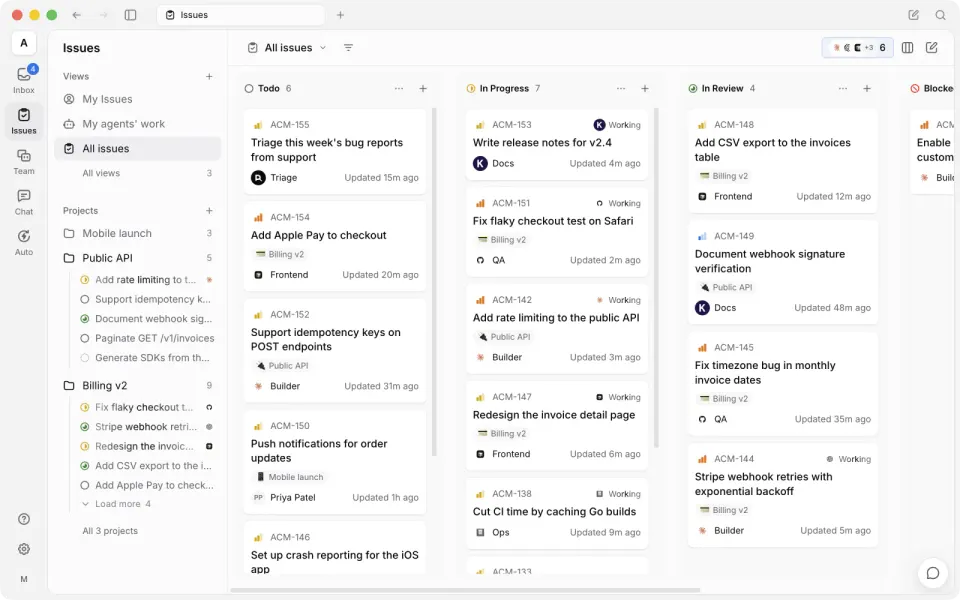
- Desktop app
- Mac, Windows and Linux
- Browser
- Yes
- Phone
- IPhone and phone browser
- Command line
- Yes
- Agents
- Claude Code, Codex, Cursor Agent, OpenCode, Pi, Grok and Antigravity
- Your subscription
- Works with your own plan
- Agents run
- On your computer and on your own server
- Laptop closed
- Keeps going
- Isolation
- Worktree, Container and VM
- Parallel agents
- Yes
- Scheduled runs
- Yes
- Coordinator agent
- Yes
- Built-in issues
- Yes
- Pull requests
- Yes
- Review screen
- No
- Team
- Shared sessions and roles
- Self-hosting
- Yes
- Licence
- Custom terms
- Price from
- Free
- How it charges
- Free plan, subscription, per seat and bring your own key
- Paid plans from
- Contact sales
Receipts
- Checked
- · oldest answer 2026-10-09
- Findings
- 50 published · 42 cross-checked by a second agent · read them all
- Sources
- 114 public pages on 2 sites: multica.ai, github.com
- Screenshot
- github.com, retrieved · first party repository · shows appearance, not capability
- Data
- /products/multica.json · .md
- Method
- Same rules for all 103 researched ADEs. How we check · Report wrong data
What it does
Where you use it
Web app, Desktop app (macOS, Windows, Linux) and a CLI exist; the iOS client is self-built from source, with no App Store or Android client. Release stage is not labelled and versions are pre-1.0. The browser issue view includes a composer layout specifically for phone-sized viewports.
Source and scope for Where you use itAgents it runs
The vendor website, the providers table and the install table each list 29 supported coding tools, including ZeroClaw, Muse Code, Devin CLI and ZCode. Multica launches and drives each tool CLI through a local daemon rather than embedding a harness. Custom runtime profiles must fit an existing protocol family. Multica v0.8.2 detects and invokes Antigravity through the installed agy binary, with optional binary-path and model overrides.
Source and scope for Agents it runsAccounts and subscriptions
Multica does not provide model access in the sources read: each coding tool uses the account, subscription or API key configured for that tool on the user's machine. Multica Cloud requires a Multica account (email code or Google); a self-hosted server has its own email-code sign-in and needs no Multica Cloud account.
Source and scope for Accounts and subscriptionsWhere agents run
Connected computers execute local-tool runs while Cloud or self-hosted Multica coordinates them. Vendor-hosted runtime remains waitlisted. A separate Qoder Cloud Agents bridge connects provider-hosted environments.
Source and scope for Where agents runHow work is kept apart
GitHub repository runs get their own worktree from a cached bare clone; local git directories can use per-run worktrees on agent/<agent>/<issue> branches, while a direct local-directory run uses the user's own checkout in place unless Parallel mode is chosen. Multica states it provides no filesystem, process or network sandbox and recommends a dedicated user, container or VM.
Source and scope for How work is kept apartParallel work
Multiple runs execute concurrently on a daemon (default 20 per daemon and 6 per agent) and work state is visible in the agent list, issue execution log, header chip and runtime page.
Source and scope for Parallel workScheduled runs
Autopilots run on 5-field cron schedules or webhook triggers from the Multica server, and issue wakeup rules can re-wake an agent on a schedule, comment, status change, sub-issue completion or pull request change, with expiry.
Source and scope for Scheduled runsGit and pull requests
Agents run Git and the GitHub CLI themselves; Multica adds per-task worktrees, a task Git identity, optional Co-authored-by trailers, PR auto-linking, CI and mergeability display and merge-driven status changes.
Source and scope for Git and pull requestsLicence and source
Custom Multica License includes extra conditions.
Source and scope for Licence and sourcePrice
No public price list was found: /pricing renders a not-found page and the site offers Get started, Book a demo and Contact sales. The homepage FAQ says use inside your own organization is free, including self-hosting. The changelog mentions subscribing to a Pro plan with billing and seat management, without a published price. Model and compute costs are separate and borne by the user. The public subscription interface confirms monthly/yearly human-seat billing but receives actual prices from the Cloud service.
Source and scope for PriceTyped filters
Every value links to its receipt below. Read plan and surface restrictions before using a filter to decide.
| Filter | Value |
|---|---|
| Desktop OS: macOS | Yes |
| Desktop OS: Windows | Yes |
| Desktop OS: Linux | Yes |
| Web client | Yes |
| Phone access: Native iOS | Yes |
| Phone access: Native Android | No |
| Phone access: Phone browser | Yes |
| CLI | Yes |
| Coding agents: Claude Code | Yes cross-checked |
| Coding agents: Codex | Yes cross-checked |
| Coding agents: Cursor Agent | Yes cross-checked |
| Coding agents: Gemini CLI | Unknown |
| Coding agents: OpenCode | Yes cross-checked |
| Coding agents: Pi | Yes cross-checked |
| Coding agents: Grok | Yes cross-checked |
| Coding agents: Aider | Unknown |
| Coding agents: Antigravity | Yes |
| Use my subscription | Yes cross-checked |
| Where agents run: On your computer | Yes cross-checked |
| Where agents run: On your own server | Yes cross-checked |
| Where agents run: In the vendor's cloud | No |
| Workspace isolation: Git worktree | Yes cross-checked |
| Workspace isolation: Container | Yes cross-checked |
| Workspace isolation: VM or microVM | Yes cross-checked |
| Parallel runs | Yes cross-checked |
| Coordinator | Yes cross-checked |
| Native issue tracking | Yes cross-checked |
| Unattended triggers | Yes cross-checked |
| Shared prompting | Yes cross-checked |
| Team roles | Yes cross-checked |
| SSO | Unknown |
| Pull request workflow | Yes cross-checked |
| Review interface | No |
| Product license: Apache-2.0 | No. Custom terms cross-checked |
| Product license: MIT | No. Custom terms cross-checked |
| Product license: GPL-3.0 | No. Custom terms cross-checked |
| Product license: GPL-3.0-or-later | No. Custom terms cross-checked |
| Product license: AGPL-3.0 | No. Custom terms cross-checked |
| Product license: AGPL-3.0-or-later | No. Custom terms cross-checked |
| Product license: Elastic License 2.0 | No. Custom terms cross-checked |
| Product license: Custom terms | Yes. Custom terms cross-checked |
| Product license: Proprietary | No. Custom terms cross-checked |
| Self-hosting | Yes cross-checked |
| Telemetry opt-out | Yes cross-checked |
| Free access | Yes cross-checked |
| Starting price: Free | Yes. Free cross-checked |
| Starting price: Up to $20/month | No. Free cross-checked |
| Starting price: $21–40/month | No. Free cross-checked |
| Starting price: $41–100/month | No. Free cross-checked |
| Starting price: Over $100/month | No. Free cross-checked |
| Starting price: Contact for pricing | No. Free cross-checked |
| Pricing model: Free, no paid plan | No |
| Pricing model: Free plan | Yes cross-checked |
| Pricing model: Subscription | Yes |
| Pricing model: Per seat | Yes |
| Pricing model: Usage-based | Unknown |
| Pricing model: Per machine or compute | Unknown |
| Pricing model: Bring your own key | Yes |
| Pricing model: One-time purchase | Unknown |
| Paid plans from: No paid plan | No. Contact sales |
| Paid plans from: $10 or less/month | No. Contact sales |
| Paid plans from: $11–20/month | No. Contact sales |
| Paid plans from: $21–40/month | No. Contact sales |
| Paid plans from: $41–100/month | No. Contact sales |
| Paid plans from: Over $100/month | No. Contact sales |
| Paid plans from: Contact sales | Yes. Contact sales |
| Lifecycle status: Active | Unknown |
| Lifecycle status: Sunsetting | Unknown |
| Keeps going with laptop closed | Yes |
| Open-source license | No. Custom terms cross-checked |
| Any desktop app | Yes |
| Paid plan up to $20/month | No. Contact sales |
| Paid plan up to $40/month | No. Contact sales |
| Any phone client | Yes |
Filter receipts
Desktop OS: macOS: Yes
Desktop OS: macOS
Typed value: Yes.
Web app, Desktop app (macOS, Windows, Linux) and a CLI exist; the iOS client is self-built from source, with no App Store or Android client. Release stage is not labelled and versions are pre-1.0. The browser issue view includes a composer layout specifically for phone-sized viewports.
- Desktop os: Desktop installers for macOS (Apple Silicon and Intel), Windows (x64 and ARM64) and Linux (x64 and ARM64; AppImage, deb, rpm). Minimum OS versions are not stated in the sources read.
- Browser: Web app at multica.ai with email-code or Google sign-in; same account and data as Desktop.
- Only the named atomic answers are established by this source pass. Remaining atomic answers retain their documented gaps.
-
Finding: Downloads show macOS Apple Silicon/Intel, Windows x64/ARM64 and Linux x64/ARM64 installers; current v0.8.1. Vendor-hosted runtime remains not live, waitlist-only. It is separate from connecting Qoder Cloud Agents.
-
Finding: Desktop Mac/Windows/Linux shares server data with web, manages separate daemon profiles, auto-updates with OS/architecture feeds and supports self-hosted apiUrl configuration. Terminal issue CLI installed separately.
Desktop OS: Windows: Yes
Desktop OS: Windows
Typed value: Yes.
Web app, Desktop app (macOS, Windows, Linux) and a CLI exist; the iOS client is self-built from source, with no App Store or Android client. Release stage is not labelled and versions are pre-1.0. The browser issue view includes a composer layout specifically for phone-sized viewports.
- Desktop os: Desktop installers for macOS (Apple Silicon and Intel), Windows (x64 and ARM64) and Linux (x64 and ARM64; AppImage, deb, rpm). Minimum OS versions are not stated in the sources read.
- Browser: Web app at multica.ai with email-code or Google sign-in; same account and data as Desktop.
- Only the named atomic answers are established by this source pass. Remaining atomic answers retain their documented gaps.
-
Finding: Downloads show macOS Apple Silicon/Intel, Windows x64/ARM64 and Linux x64/ARM64 installers; current v0.8.1. Vendor-hosted runtime remains not live, waitlist-only. It is separate from connecting Qoder Cloud Agents.
-
Finding: Desktop Mac/Windows/Linux shares server data with web, manages separate daemon profiles, auto-updates with OS/architecture feeds and supports self-hosted apiUrl configuration. Terminal issue CLI installed separately.
Desktop OS: Linux: Yes
Desktop OS: Linux
Typed value: Yes.
Web app, Desktop app (macOS, Windows, Linux) and a CLI exist; the iOS client is self-built from source, with no App Store or Android client. Release stage is not labelled and versions are pre-1.0. The browser issue view includes a composer layout specifically for phone-sized viewports.
- Desktop os: Desktop installers for macOS (Apple Silicon and Intel), Windows (x64 and ARM64) and Linux (x64 and ARM64; AppImage, deb, rpm). Minimum OS versions are not stated in the sources read.
- Browser: Web app at multica.ai with email-code or Google sign-in; same account and data as Desktop.
- Only the named atomic answers are established by this source pass. Remaining atomic answers retain their documented gaps.
-
Finding: Downloads show macOS Apple Silicon/Intel, Windows x64/ARM64 and Linux x64/ARM64 installers; current v0.8.1. Vendor-hosted runtime remains not live, waitlist-only. It is separate from connecting Qoder Cloud Agents.
-
Finding: Desktop Mac/Windows/Linux shares server data with web, manages separate daemon profiles, auto-updates with OS/architecture feeds and supports self-hosted apiUrl configuration. Terminal issue CLI installed separately.
Web client: Yes
Web client
Typed value: Yes.
Web app, Desktop app (macOS, Windows, Linux) and a CLI exist; the iOS client is self-built from source, with no App Store or Android client. Release stage is not labelled and versions are pre-1.0. The browser issue view includes a composer layout specifically for phone-sized viewports.
- Desktop os: Desktop installers for macOS (Apple Silicon and Intel), Windows (x64 and ARM64) and Linux (x64 and ARM64; AppImage, deb, rpm). Minimum OS versions are not stated in the sources read.
- Browser: Web app at multica.ai with email-code or Google sign-in; same account and data as Desktop.
- Only the named atomic answers are established by this source pass. Remaining atomic answers retain their documented gaps.
-
Finding: Desktop Mac/Windows/Linux shares server data with web, manages separate daemon profiles, auto-updates with OS/architecture feeds and supports self-hosted apiUrl configuration. Terminal issue CLI installed separately.
-
Finding: Web/Desktop sign-in uses email code or Google. Desktop connects a computer automatically; other computers install CLI and run setup. At least one installed/authenticated coding tool required; no bundled model quota.
Phone access: Native iOS: Yes
Phone access: Native iOS
Typed value: Yes.
Web app, Desktop app (macOS, Windows, Linux) and a CLI exist; the iOS client is self-built from source, with no App Store or Android client. Release stage is not labelled and versions are pre-1.0. The browser issue view includes a composer layout specifically for phone-sized viewports.
- Mobile apps: iOS only, built from source on a Mac with Xcode and installed over USB; not on the App Store; free-signing installs expire after 7 days; no Android client.
- Cross device continuity: Workspaces, issues, comments and run history live on the server, so the same work is visible from web, Desktop and the iOS app without manual sync.
- Only the named atomic answers are established by this source pass. Remaining atomic answers retain their documented gaps.
-
Finding: Current mobile guide says source-built iPhone client, no App Store and no Android, seven-day free signing, server-owned workspace data. Native iPad support is separately documented in release notes; no device test.
Phone access: Native Android: No
Phone access: Native Android
Typed value: No.
Web app, Desktop app (macOS, Windows, Linux) and a CLI exist; the iOS client is self-built from source, with no App Store or Android client. Release stage is not labelled and versions are pre-1.0. The browser issue view includes a composer layout specifically for phone-sized viewports.
- Mobile apps: iOS only, built from source on a Mac with Xcode and installed over USB; not on the App Store; free-signing installs expire after 7 days; no Android client.
- Cross device continuity: Workspaces, issues, comments and run history live on the server, so the same work is visible from web, Desktop and the iOS app without manual sync.
- Only the named atomic answers are established by this source pass. Remaining atomic answers retain their documented gaps.
-
Finding: Current mobile guide says source-built iPhone client, no App Store and no Android, seven-day free signing, server-owned workspace data. Native iPad support is separately documented in release notes; no device test.
Phone access: Phone browser: Yes
Phone access: Phone browser
Typed value: Yes.
Web app, Desktop app (macOS, Windows, Linux) and a CLI exist; the iOS client is self-built from source, with no App Store or Android client. Release stage is not labelled and versions are pre-1.0. The browser issue view includes a composer layout specifically for phone-sized viewports.
- Mobile browser: The shared web issue composer explicitly adapts to phone-sized viewports.
- Only the named atomic answers are established by this source pass. Remaining atomic answers retain their documented gaps.
-
Multica mobile browser issue composer
Finding: The shared issue view explicitly adapts its comment composer to phone-sized browser viewports via useIsMobile. The application is exposed through the web app as well as desktop clients.
CLI: Yes
CLI
Typed value: Yes.
Web app, Desktop app (macOS, Windows, Linux) and a CLI exist; the iOS client is self-built from source, with no App Store or Android client. Release stage is not labelled and versions are pre-1.0. The browser issue view includes a composer layout specifically for phone-sized viewports.
- Cli: multica CLI for macOS, Linux and Windows (install script or Homebrew) manages issues, agents, skills, runtimes and the daemon.
- Task actions: Web and Desktop: assign, comment or @-mention, stop and retry runs, view transcripts; CLI covers assign, status, comment, cancel-task and rerun. Which actions the iOS app offers is not documented in the sources read.
- Only the named atomic answers are established by this source pass. Remaining atomic answers retain their documented gaps.
-
Finding: CLI manages workspaces, issues, agents, automations and runtimes. OAuth setup/PAT login, shared issue IDs, status/assignment/comments, run inspect/stop/retry documented; installed --help is authoritative for flags.
Coding agents: Claude Code: Yes cross-checked
Coding agents: Claude Code
Typed value: Yes.
The vendor website, the providers table and the install table each list 29 supported coding tools, including ZeroClaw, Muse Code, Devin CLI and ZCode. Multica launches and drives each tool CLI through a local daemon rather than embedding a harness. Custom runtime profiles must fit an existing protocol family. Multica v0.8.2 detects and invokes Antigravity through the installed agy binary, with optional binary-path and model overrides.
- Session integration: The daemon spawns each tool CLI as a child process and drives its structured protocol (Claude Code and Qwen Code stream-json, Codex app-server, ACP or stdio for others); it stores returned session IDs and resumes sessions where the tool supports it.
- Mixed harness operation: Vendor tutorial shows agents on different tools and models in one workspace and one issue (Reviewer on Codex reviewing work of another agent); not observed in a test here.
- Documentation and source based; no run with two different tools was observed.
- Supported means Multica can invoke the CLI; the tool, its account and model access come from the user.
- Install docs set minimum versions for eleven tools (Antigravity 1.1.10, Claude Code 2.0.0, Codex 0.100.0, GitHub Copilot CLI 1.0.0, Grok 0.2.89, Qwen Code 0.20.0, MiniMax Code 0.1.2, OpenCode 1.1.54, Dim 0.3.10, Devin CLI 3000.3.22, ZeroClaw 0.8.0); Muse Code needs 1.4.10 or later. A tool below its minimum is not registered as a runtime.
- The user supplies the Antigravity CLI and account; the existing documented minimum CLI version remains applicable.
-
Finding: Re-read 2026-10-09: Supported tools table (25 CLIs). Model lists come from each runtime. QwenPaw and MiniMax Code do not accept a model chosen in Multica. No full provider list. Session resumption continues for tools marked as supporting it; MiniMax Code starts a fresh session. MCP is not read for Antigravity, GitHub Copilot CLI, DevEco Code or Pi.
Coding agents: Codex: Yes cross-checked
Coding agents: Codex
Typed value: Yes.
The vendor website, the providers table and the install table each list 29 supported coding tools, including ZeroClaw, Muse Code, Devin CLI and ZCode. Multica launches and drives each tool CLI through a local daemon rather than embedding a harness. Custom runtime profiles must fit an existing protocol family. Multica v0.8.2 detects and invokes Antigravity through the installed agy binary, with optional binary-path and model overrides.
- Session integration: The daemon spawns each tool CLI as a child process and drives its structured protocol (Claude Code and Qwen Code stream-json, Codex app-server, ACP or stdio for others); it stores returned session IDs and resumes sessions where the tool supports it.
- Mixed harness operation: Vendor tutorial shows agents on different tools and models in one workspace and one issue (Reviewer on Codex reviewing work of another agent); not observed in a test here.
- Documentation and source based; no run with two different tools was observed.
- Supported means Multica can invoke the CLI; the tool, its account and model access come from the user.
- Install docs set minimum versions for eleven tools (Antigravity 1.1.10, Claude Code 2.0.0, Codex 0.100.0, GitHub Copilot CLI 1.0.0, Grok 0.2.89, Qwen Code 0.20.0, MiniMax Code 0.1.2, OpenCode 1.1.54, Dim 0.3.10, Devin CLI 3000.3.22, ZeroClaw 0.8.0); Muse Code needs 1.4.10 or later. A tool below its minimum is not registered as a runtime.
- The user supplies the Antigravity CLI and account; the existing documented minimum CLI version remains applicable.
-
Finding: Re-read 2026-10-09: Supported tools table (25 CLIs). Model lists come from each runtime. QwenPaw and MiniMax Code do not accept a model chosen in Multica. No full provider list. Session resumption continues for tools marked as supporting it; MiniMax Code starts a fresh session. MCP is not read for Antigravity, GitHub Copilot CLI, DevEco Code or Pi.
Coding agents: Cursor Agent: Yes cross-checked
Coding agents: Cursor Agent
Typed value: Yes.
The vendor website, the providers table and the install table each list 29 supported coding tools, including ZeroClaw, Muse Code, Devin CLI and ZCode. Multica launches and drives each tool CLI through a local daemon rather than embedding a harness. Custom runtime profiles must fit an existing protocol family. Multica v0.8.2 detects and invokes Antigravity through the installed agy binary, with optional binary-path and model overrides.
- Session integration: The daemon spawns each tool CLI as a child process and drives its structured protocol (Claude Code and Qwen Code stream-json, Codex app-server, ACP or stdio for others); it stores returned session IDs and resumes sessions where the tool supports it.
- Mixed harness operation: Vendor tutorial shows agents on different tools and models in one workspace and one issue (Reviewer on Codex reviewing work of another agent); not observed in a test here.
- Documentation and source based; no run with two different tools was observed.
- Supported means Multica can invoke the CLI; the tool, its account and model access come from the user.
- Install docs set minimum versions for eleven tools (Antigravity 1.1.10, Claude Code 2.0.0, Codex 0.100.0, GitHub Copilot CLI 1.0.0, Grok 0.2.89, Qwen Code 0.20.0, MiniMax Code 0.1.2, OpenCode 1.1.54, Dim 0.3.10, Devin CLI 3000.3.22, ZeroClaw 0.8.0); Muse Code needs 1.4.10 or later. A tool below its minimum is not registered as a runtime.
- The user supplies the Antigravity CLI and account; the existing documented minimum CLI version remains applicable.
-
Finding: Re-read 2026-10-09: Supported tools table (25 CLIs). Model lists come from each runtime. QwenPaw and MiniMax Code do not accept a model chosen in Multica. No full provider list. Session resumption continues for tools marked as supporting it; MiniMax Code starts a fresh session. MCP is not read for Antigravity, GitHub Copilot CLI, DevEco Code or Pi.
Coding agents: OpenCode: Yes cross-checked
Coding agents: OpenCode
Typed value: Yes.
The vendor website, the providers table and the install table each list 29 supported coding tools, including ZeroClaw, Muse Code, Devin CLI and ZCode. Multica launches and drives each tool CLI through a local daemon rather than embedding a harness. Custom runtime profiles must fit an existing protocol family. Multica v0.8.2 detects and invokes Antigravity through the installed agy binary, with optional binary-path and model overrides.
- Session integration: The daemon spawns each tool CLI as a child process and drives its structured protocol (Claude Code and Qwen Code stream-json, Codex app-server, ACP or stdio for others); it stores returned session IDs and resumes sessions where the tool supports it.
- Mixed harness operation: Vendor tutorial shows agents on different tools and models in one workspace and one issue (Reviewer on Codex reviewing work of another agent); not observed in a test here.
- Documentation and source based; no run with two different tools was observed.
- Supported means Multica can invoke the CLI; the tool, its account and model access come from the user.
- Install docs set minimum versions for eleven tools (Antigravity 1.1.10, Claude Code 2.0.0, Codex 0.100.0, GitHub Copilot CLI 1.0.0, Grok 0.2.89, Qwen Code 0.20.0, MiniMax Code 0.1.2, OpenCode 1.1.54, Dim 0.3.10, Devin CLI 3000.3.22, ZeroClaw 0.8.0); Muse Code needs 1.4.10 or later. A tool below its minimum is not registered as a runtime.
- The user supplies the Antigravity CLI and account; the existing documented minimum CLI version remains applicable.
-
Finding: Re-read 2026-10-09: Supported tools table (25 CLIs). Model lists come from each runtime. QwenPaw and MiniMax Code do not accept a model chosen in Multica. No full provider list. Session resumption continues for tools marked as supporting it; MiniMax Code starts a fresh session. MCP is not read for Antigravity, GitHub Copilot CLI, DevEco Code or Pi.
Coding agents: Pi: Yes cross-checked
Coding agents: Pi
Typed value: Yes.
The vendor website, the providers table and the install table each list 29 supported coding tools, including ZeroClaw, Muse Code, Devin CLI and ZCode. Multica launches and drives each tool CLI through a local daemon rather than embedding a harness. Custom runtime profiles must fit an existing protocol family. Multica v0.8.2 detects and invokes Antigravity through the installed agy binary, with optional binary-path and model overrides.
- Session integration: The daemon spawns each tool CLI as a child process and drives its structured protocol (Claude Code and Qwen Code stream-json, Codex app-server, ACP or stdio for others); it stores returned session IDs and resumes sessions where the tool supports it.
- Mixed harness operation: Vendor tutorial shows agents on different tools and models in one workspace and one issue (Reviewer on Codex reviewing work of another agent); not observed in a test here.
- Documentation and source based; no run with two different tools was observed.
- Supported means Multica can invoke the CLI; the tool, its account and model access come from the user.
- Install docs set minimum versions for eleven tools (Antigravity 1.1.10, Claude Code 2.0.0, Codex 0.100.0, GitHub Copilot CLI 1.0.0, Grok 0.2.89, Qwen Code 0.20.0, MiniMax Code 0.1.2, OpenCode 1.1.54, Dim 0.3.10, Devin CLI 3000.3.22, ZeroClaw 0.8.0); Muse Code needs 1.4.10 or later. A tool below its minimum is not registered as a runtime.
- The user supplies the Antigravity CLI and account; the existing documented minimum CLI version remains applicable.
-
Finding: Re-read 2026-10-09: Supported tools table (25 CLIs). Model lists come from each runtime. QwenPaw and MiniMax Code do not accept a model chosen in Multica. No full provider list. Session resumption continues for tools marked as supporting it; MiniMax Code starts a fresh session. MCP is not read for Antigravity, GitHub Copilot CLI, DevEco Code or Pi.
Coding agents: Grok: Yes cross-checked
Coding agents: Grok
Typed value: Yes.
The vendor website, the providers table and the install table each list 29 supported coding tools, including ZeroClaw, Muse Code, Devin CLI and ZCode. Multica launches and drives each tool CLI through a local daemon rather than embedding a harness. Custom runtime profiles must fit an existing protocol family. Multica v0.8.2 detects and invokes Antigravity through the installed agy binary, with optional binary-path and model overrides.
- Session integration: The daemon spawns each tool CLI as a child process and drives its structured protocol (Claude Code and Qwen Code stream-json, Codex app-server, ACP or stdio for others); it stores returned session IDs and resumes sessions where the tool supports it.
- Mixed harness operation: Vendor tutorial shows agents on different tools and models in one workspace and one issue (Reviewer on Codex reviewing work of another agent); not observed in a test here.
- Documentation and source based; no run with two different tools was observed.
- Supported means Multica can invoke the CLI; the tool, its account and model access come from the user.
- Install docs set minimum versions for eleven tools (Antigravity 1.1.10, Claude Code 2.0.0, Codex 0.100.0, GitHub Copilot CLI 1.0.0, Grok 0.2.89, Qwen Code 0.20.0, MiniMax Code 0.1.2, OpenCode 1.1.54, Dim 0.3.10, Devin CLI 3000.3.22, ZeroClaw 0.8.0); Muse Code needs 1.4.10 or later. A tool below its minimum is not registered as a runtime.
- The user supplies the Antigravity CLI and account; the existing documented minimum CLI version remains applicable.
-
Finding: Re-read 2026-10-09: Supported tools table (25 CLIs). Model lists come from each runtime. QwenPaw and MiniMax Code do not accept a model chosen in Multica. No full provider list. Session resumption continues for tools marked as supporting it; MiniMax Code starts a fresh session. MCP is not read for Antigravity, GitHub Copilot CLI, DevEco Code or Pi.
Coding agents: Antigravity: Yes
Coding agents: Antigravity
Typed value: Yes.
The vendor website, the providers table and the install table each list 29 supported coding tools, including ZeroClaw, Muse Code, Devin CLI and ZCode. Multica launches and drives each tool CLI through a local daemon rather than embedding a harness. Custom runtime profiles must fit an existing protocol family. Multica v0.8.2 detects and invokes Antigravity through the installed agy binary, with optional binary-path and model overrides.
- Harnesses: Website, providers table and install table name the same 29 tools: Antigravity, Claude Code, CodeBuddy, CodeArts, Codex, GitHub Copilot CLI, Cursor Agent, DeepSeek Harness, DevEco Code, Devin CLI, Dim, Grok, Hermes, Kimi, Kiro CLI, MiniMax Code, Muse Code, Oh-My-Pi, OpenClaw, OpenCode, Pi, Qoder, Qoder CN, Qwen Code, QwenPaw, Reasonix, Trae CLI, ZeroClaw and ZCode. ZeroClaw first shipped as a native ACP runtime in v0.4.33 (2026-08-24). Supported means Multica can invoke the CLI; the tool and its account come from the user. Multica v0.8.2 detects and invokes Antigravity through the installed agy binary, with optional binary-path and model overrides.
- Documentation and source based; no run with two different tools was observed.
- Supported means Multica can invoke the CLI; the tool, its account and model access come from the user.
- Install docs set minimum versions for eleven tools (Antigravity 1.1.10, Claude Code 2.0.0, Codex 0.100.0, GitHub Copilot CLI 1.0.0, Grok 0.2.89, Qwen Code 0.20.0, MiniMax Code 0.1.2, OpenCode 1.1.54, Dim 0.3.10, Devin CLI 3000.3.22, ZeroClaw 0.8.0); Muse Code needs 1.4.10 or later. A tool below its minimum is not registered as a runtime.
- The user supplies the Antigravity CLI and account; the existing documented minimum CLI version remains applicable.
-
Multica Antigravity support at v0.8.2
Finding: Multica v0.8.2 detects and invokes Antigravity through the installed agy binary, with optional binary-path and model overrides.
-
Multica Antigravity support at v0.8.2
Finding: Multica v0.8.2 detects and invokes Antigravity through the installed agy binary, with optional binary-path and model overrides.
Use my subscription: Yes cross-checked
Use my subscription
Typed value: Yes.
Multica does not provide model access in the sources read: each coding tool uses the account, subscription or API key configured for that tool on the user's machine. Multica Cloud requires a Multica account (email code or Google); a self-hosted server has its own email-code sign-in and needs no Multica Cloud account.
- Agent subscriptions: Tools sign in on the user's machine and Multica never receives their login tokens, so a tool's own subscription login is the route; which subscription plans or modes work per tool is not enumerated by Multica.
- Api accounts: Local tools use their own credentials; custom_env may also supply keys. Those values are plaintext in server storage; owner/admin unlock/read/change is audited and list/detail APIs expose only a count.
- Vendor account requirement: Multica Cloud requires a Multica account (email code or Google). A self-hosted server has its own email-code sign-in and needs no Multica Cloud account; codes go to the backend logs until email is configured. A signed-in coding tool account is always separate and required.
- Per-tool subscription support, local models and account switching were not established.
- Existing subscription support cannot be inferred from API-key support.
-
Finding: Re-read 2026-10-09: Sign in to each tool on its own machine; Multica never receives login tokens. "Supported" means Multica can invoke the CLI; it does not supply the tool account, subscription or model quota. The table lists 25 CLIs. Minimum versions for eight tools; below minimum the runtime is not registered.
Where agents run: On your computer: Yes cross-checked
Where agents run: On your computer
Typed value: Yes.
Connected computers execute local-tool runs while Cloud or self-hosted Multica coordinates them. Vendor-hosted runtime remains waitlisted. A separate Qoder Cloud Agents bridge connects provider-hosted environments.
- Local: Desktop starts a built-in daemon, or the CLI daemon runs on the laptop.
- Byo remote: The CLI install and setup commands run on a remote or headless computer over SSH; runs execute there.
- Managed cloud: Multica-hosted runtime remains not live on downloads; Qoder Cloud Agents is a distinct PAT-configured remote runtime, not Multica compute provisioning.
- Hybrid: One workspace can mix several connected computers as runtimes, each private or public.
- Payer: The user pays for their own machines and tool accounts; Multica does not supply model quota.
- Expiry: A runtime offline more than 7 days with no bound agents is cleaned up automatically; session expiry not established.
- Client disconnect: CLI daemon runs in the background; autostart at login requires explicit enable. Desktop owns its own daemon. Execution requires the selected runtime online; no browser-disconnect test.
- Hosted coordination and execution are separate services.
- Qoder credentials, remote environment and provider setup are required; this is not a universal Multica-hosted compute claim.
- No run, disconnect or self-host deployment test.
-
Finding: Connected-computer daemon claims local-tool runs, stores results on server, and has explicit login autostart. Runtimes offline over seven days with no bound agents are cleaned up. Separate Qoder Cloud Agents bridge uses a PAT and remote provider environment without a local daemon; defaults three concurrent runs and 60-minute timeout, configurable.
-
Finding: Desktop Mac/Windows/Linux shares server data with web, manages separate daemon profiles, auto-updates with OS/architecture feeds and supports self-hosted apiUrl configuration. Terminal issue CLI installed separately.
Where agents run: On your own server: Yes cross-checked
Where agents run: On your own server
Typed value: Yes.
Connected computers execute local-tool runs while Cloud or self-hosted Multica coordinates them. Vendor-hosted runtime remains waitlisted. A separate Qoder Cloud Agents bridge connects provider-hosted environments.
- Local: Desktop starts a built-in daemon, or the CLI daemon runs on the laptop.
- Byo remote: The CLI install and setup commands run on a remote or headless computer over SSH; runs execute there.
- Managed cloud: Multica-hosted runtime remains not live on downloads; Qoder Cloud Agents is a distinct PAT-configured remote runtime, not Multica compute provisioning.
- Hybrid: One workspace can mix several connected computers as runtimes, each private or public.
- Payer: The user pays for their own machines and tool accounts; Multica does not supply model quota.
- Expiry: A runtime offline more than 7 days with no bound agents is cleaned up automatically; session expiry not established.
- Client disconnect: CLI daemon runs in the background; autostart at login requires explicit enable. Desktop owns its own daemon. Execution requires the selected runtime online; no browser-disconnect test.
- Hosted coordination and execution are separate services.
- Qoder credentials, remote environment and provider setup are required; this is not a universal Multica-hosted compute claim.
- No run, disconnect or self-host deployment test.
-
Finding: Downloads show macOS Apple Silicon/Intel, Windows x64/ARM64 and Linux x64/ARM64 installers; current v0.8.1. Vendor-hosted runtime remains not live, waitlist-only. It is separate from connecting Qoder Cloud Agents.
-
Finding: Connected-computer daemon claims local-tool runs, stores results on server, and has explicit login autostart. Runtimes offline over seven days with no bound agents are cleaned up. Separate Qoder Cloud Agents bridge uses a PAT and remote provider environment without a local daemon; defaults three concurrent runs and 60-minute timeout, configurable.
Where agents run: In the vendor's cloud: No
Where agents run: In the vendor's cloud
Typed value: No.
Connected computers execute local-tool runs while Cloud or self-hosted Multica coordinates them. Vendor-hosted runtime remains waitlisted. A separate Qoder Cloud Agents bridge connects provider-hosted environments.
- Byo remote: The CLI install and setup commands run on a remote or headless computer over SSH; runs execute there.
- Managed cloud: Multica-hosted runtime remains not live on downloads; Qoder Cloud Agents is a distinct PAT-configured remote runtime, not Multica compute provisioning.
- Hosted coordination and execution are separate services.
- Qoder credentials, remote environment and provider setup are required; this is not a universal Multica-hosted compute claim.
- No run, disconnect or self-host deployment test.
-
Finding: Downloads show macOS Apple Silicon/Intel, Windows x64/ARM64 and Linux x64/ARM64 installers; current v0.8.1. Vendor-hosted runtime remains not live, waitlist-only. It is separate from connecting Qoder Cloud Agents.
Workspace isolation: Git worktree: Yes cross-checked
Workspace isolation: Git worktree
Typed value: Yes.
GitHub repository runs get their own worktree from a cached bare clone; local git directories can use per-run worktrees on agent/<agent>/<issue> branches, while a direct local-directory run uses the user's own checkout in place unless Parallel mode is chosen. Multica states it provides no filesystem, process or network sandbox and recommends a dedicated user, container or VM.
- Checkout: Per-run working directory for GitHub resources; local directories run in place against the user's own checkout unless Parallel mode is chosen.
- Branch: Parallel local-directory mode commits to agent/<agent>/<issue> branches; GitHub-resource branching is up to the agent and its instructions.
- Worktree: Repository checkouts use per-task git worktrees from cached bare clones; local directories can use per-run worktrees.
- Default daemon path; Windows opt-in Codex sandbox is the one documented exception.
- Two-change code separation was not tested.
-
Finding: Re-read 2026-10-09: GitHub repositories are checked out per run through worktrees in a runtime-managed workspace. Local git directories run in place (serialized, directory lock) or in Parallel worktree mode on agent/<agent>/<issue> branches. Non-git directories run serially. Dependency caches, snapshots and port allocation are not mentioned.
-
Finding: Re-read 2026-10-09: Pinned source repocache/cache.go (8db6cfe): the daemon keeps cached bare clones and creates per-task git worktrees from them. The file also calls isolateWorktreeIdentityContext for each worktree checkout and reconciles a Co-authored-by hook.
Workspace isolation: Container: Yes cross-checked
Workspace isolation: Container
Typed value: Yes.
GitHub repository runs get their own worktree from a cached bare clone; local git directories can use per-run worktrees on agent/<agent>/<issue> branches, while a direct local-directory run uses the user's own checkout in place unless Parallel mode is chosen. Multica states it provides no filesystem, process or network sandbox and recommends a dedicated user, container or VM.
- Checkout: Per-run working directory for GitHub resources; local directories run in place against the user's own checkout unless Parallel mode is chosen.
- Container: Not provided by Multica; the daemon can be run inside a container the operator sets up, which is the recommended boundary.
- Vm: Not provided by Multica; operator-provided VM is recommended for isolation.
- Os sandbox: Multica states it makes no filesystem-sandbox guarantee and runs tools unsandboxed by default (Codex danger-full-access, Claude Code bypassPermissions); an opt-in native Codex sandbox exists on Windows only.
- Filesystem: Per-run directories avoid collisions but a run has the full file access of the daemon OS user.
- Process: Runs execute with the full permissions of the daemon user; no process isolation is provided (documented).
- Network: Runs can reach the network without restriction (documented).
- Secrets: Run-scoped API tokens are used, but the whole HOME and tool credentials of the daemon user are reachable; custom_env is stored server-side.
- Security boundary: Per-run directories and tokens are conveniences and not a boundary against a run that tries to escape (documented).
- Default daemon path; Windows opt-in Codex sandbox is the one documented exception.
- Two-change code separation was not tested.
-
Finding: Re-read 2026-10-09: A run executes with the full permissions of the daemon OS user. Multica does not sandbox the filesystem. Approval prompts are answered automatically. Per-run working directories and per-run API tokens are called conveniences, not a boundary. On the default path Codex runs full-access and Claude Code bypasses permission checks; Codex native sandbox is an optional Windows setting.
Workspace isolation: VM or microVM: Yes cross-checked
Workspace isolation: VM or microVM
Typed value: Yes.
GitHub repository runs get their own worktree from a cached bare clone; local git directories can use per-run worktrees on agent/<agent>/<issue> branches, while a direct local-directory run uses the user's own checkout in place unless Parallel mode is chosen. Multica states it provides no filesystem, process or network sandbox and recommends a dedicated user, container or VM.
- Checkout: Per-run working directory for GitHub resources; local directories run in place against the user's own checkout unless Parallel mode is chosen.
- Container: Not provided by Multica; the daemon can be run inside a container the operator sets up, which is the recommended boundary.
- Vm: Not provided by Multica; operator-provided VM is recommended for isolation.
- Os sandbox: Multica states it makes no filesystem-sandbox guarantee and runs tools unsandboxed by default (Codex danger-full-access, Claude Code bypassPermissions); an opt-in native Codex sandbox exists on Windows only.
- Filesystem: Per-run directories avoid collisions but a run has the full file access of the daemon OS user.
- Process: Runs execute with the full permissions of the daemon user; no process isolation is provided (documented).
- Network: Runs can reach the network without restriction (documented).
- Secrets: Run-scoped API tokens are used, but the whole HOME and tool credentials of the daemon user are reachable; custom_env is stored server-side.
- Security boundary: Per-run directories and tokens are conveniences and not a boundary against a run that tries to escape (documented).
- Default daemon path; Windows opt-in Codex sandbox is the one documented exception.
- Two-change code separation was not tested.
-
Finding: Re-read 2026-10-09: A run executes with the full permissions of the daemon OS user. Multica does not sandbox the filesystem. Approval prompts are answered automatically. Per-run working directories and per-run API tokens are called conveniences, not a boundary. On the default path Codex runs full-access and Claude Code bypasses permission checks; Codex native sandbox is an optional Windows setting.
Parallel runs: Yes cross-checked
Parallel runs
Typed value: Yes.
Multiple runs execute concurrently on a daemon (default 20 per daemon and 6 per agent) and work state is visible in the agent list, issue execution log, header chip and runtime page.
- Concurrent sessions: A daemon runs up to 20 runs at once by default; each agent up to 6; the effective limit is the smaller.
- Concurrent tasks: Many issues can have active runs across agents and runtimes; runs beyond the limit queue.
- Quotas: Documented defaults configurable per agent and through MULTICA_DAEMON_MAX_CONCURRENT_TASKS.
- Observed concurrency was not tested; squads do not raise concurrency by themselves.
-
Finding: Re-read 2026-10-09: The daemon is the background process on one computer. A runtime is one computer plus one tool or custom profile. Code and tool credentials stay on the computer; the server stores issues, comments, run records and results. Runtimes offline more than 7 days with no bound agents are cleaned up. Default 20 runs per daemon and 6 per agent. Runtimes are private by default. Custom profiles must fit an existing protocol family; "A custom profile does not add a new communication protocol."
-
Finding: Re-read 2026-10-09: Agents start blank or with Build with AI (needs an online runtime). Runtime, model and thinking level. custom_env values are stored in plaintext in the Multica server database; only workspace owners and admins can view or change them. Critical variables such as PATH, HOME and MULTICA_* cannot be overridden.
Coordinator: Yes cross-checked
Coordinator
Typed value: Yes.
Squads provide product-owned delegation: an agent leader receives the issue, @-mentions member agents, records an evaluation, and is re-triggered by replies; members can run on different tools. No provider-native subagent claims were evaluated.
- Roles: Squad leader and members with role descriptions and squad instructions.
- Model harness effort: Each agent has its own runtime, model and thinking level.
- Messages: Delegation and replies are issue comments with explicit @-mention markdown.
- Results return: Members post results back on the issue and the leader is re-triggered by defined rules.
- Cross harness: Vendor tutorial builds a squad from agents using different tools; not tested.
- Orchestration owner: Multica squads orchestrate; the leader is an ordinary agent run with a Squad Operating Protocol appended.
- Activation: Assigning or @-mentioning a squad; an archived or unrunnable leader blocks it.
- Authentication: Agent writes use run-scoped tokens; Access is checked against the leader.
- Live progress: Queue position, run status, steps and logs show inside comment threads and the execution log.
- Retained results: Comments and transcripts persist on the issue.
- Followup: Reply or @-mention to continue with a member or the leader after completion.
- Child identity, live progress and reopen behavior were not observed; invocation specifics beyond mention markdown not tested.
-
Finding: Re-read 2026-10-09: States deferred, queued, dispatched, waiting_local_directory, running, completed, failed, cancelled. Runs can be stopped from the execution log while deferred, queued, starting, waiting or running. A status change does not stop an active run. Retry from the execution log invokes the original agent and keeps files and session when possible. No pause control. Failure reasons include agent_blocked and missing_config. Dispatched runs fail after 5 minutes. Heartbeat every 15 seconds. Automatic retries only for transient faults (2 attempts, 3 for network interruptions). Transcripts kept.
-
Finding: Re-read 2026-10-09: Re-read first 100,000 of 188,543 characters (remainder not read). Releases v0.1.0 (2026-03-22) to v0.6.1 (2026-10-01). Dated entries cited in claims: v0.4.35 (2026-08-26) Pro-plan billing and seat management behind one Cloud address; v0.4.37 (2026-08-31) says Multica installs natively on iPad; v0.5.2 (2026-09-23) and v0.5.3 (2026-09-24) steering of Claude Code, Codex and Grok tasks; v0.5.1 (2026-09-21) issue wakeup rules; v0.6.0 (2026-09-28) wakeups on status change, sub-issue completion and pull request movement, plus add, queue or restart when replying. No dated forward-looking plans in the part read.
-
Finding: Re-read 2026-10-09: Assignment to a squad wakes only the leader, which @-mentions members, records an evaluation and stops. The leader is woken again when a delegated member replies, a non-member comments or a member posts progress without a mention. Members can be agents or humans. Provider-native subagents are not described.
-
Finding: Re-read 2026-10-09: Agent settings: name, instructions, skills, runtime, model and thinking level, Access (Only me default, Specific people, Entire workspace), concurrency, env, MCP. Availability comes from the runtime and workload from runs. Archiving cancels unfinished runs.
-
Finding: Re-read 2026-10-09: Agents start blank or with Build with AI (needs an online runtime). Runtime, model and thinking level. custom_env values are stored in plaintext in the Multica server database; only workspace owners and admins can view or change them. Critical variables such as PATH, HOME and MULTICA_* cannot be overridden.
-
Finding: Re-read 2026-10-09: Mentions and replies start runs; a trigger preview is shown before sending. Simultaneous mentions of different agents are not merged; consecutive comments to one agent merge into the pending run. Runs wait when the runtime is offline. Access settings apply to mentions. No presence indicators.
-
Finding: Re-read 2026-10-09: Browser sessions last 30 days. Personal access tokens (mul_ prefix, 30 days, 90 days, 1 year or never) work against REST endpoints. multica login creates a 90-day token. Run-scoped mat_ tokens last at most 24 hours and attribute actions to the agent. No dedicated REST API reference.
-
Finding: Re-read 2026-10-09: walkthrough. The first agent uses Claude with Sonnet (line 60); the Engineer agent, created through Multica helper, uses Opus (line 85); Reviewer uses Codex with GPT-5.6 Sol in a fresh context and never edits code (line 208). The Engineer opens the PR using the GitHub CLI on the user's computer (line 95). Merging is requested in a comment. Merge-driven status is configurable: the GitHub integration docs say that after PRs merge the issue moves to Done by default or is left alone (github-integration, "After PRs merge, move the issue to"). A PR that references an issue identifier links automatically (line 107).
Native issue tracking: Yes cross-checked
Native issue tracking
Typed value: Yes.
Native issues include creation, editing, comments, priority, labels, assignment, search, filters, projects, five views, backlog parking and explicit dispatch with separate retained runs.
- Create: Title-only creation from the Issues page, projects, CLI or quick create.
- Edit: Issues are editable in the app and by multica issue update.
- Discuss: Threaded comments, mentions, annotations and resolve.
- Prioritize: Priority field and CLI --priority.
- Label: Labels and custom properties, with CLI label commands.
- Assign: Member, agent or squad assignee.
- Search: Issue search in the CLI and instant issue and project search on web and desktop.
- Filter: Filter and sort by status, assignee, project, properties and project status.
- Reopen: No fixed flow between statuses, so a done issue can be moved back by changing status.
- Project epic views: Projects and list, board, table, Gantt and swimlane views.
- Idea parking: The built-in backlog prevents assignment-triggered execution; a follow-up comment to the assignee can still trigger a run while the issue is in backlog (assigning-issues docs).
- Explicit dispatch: Moving out of backlog or confirming Start dispatches the assigned agent.
- Task session separation: An issue retains distinct run records over time.
- Metadata: Status, priority, labels, dates, custom properties and key-value metadata.
- Durable states: Built-in and workspace custom statuses in four lifecycle categories, stored on the server.
- External tracker requirement: No external tracker is required; GitHub is optional for PR linking.
- Custom unstarted statuses do not inherit backlog suppression.
- Issue archive was not found (deletion is permanent; cancelled keeps the record); the full save-refine-dispatch scenario with a second person was not run.
-
Finding: Re-read 2026-10-09: Seven built-in statuses: backlog, todo, in_progress, in_review, done, blocked, cancelled. Sub-issues with stages and a parent completion notification. No dependency or blocked-by relation documented. Labels and priority described only briefly. When every linked PR merges, the issue moves to the workspace-chosen status, default done.
-
Finding: Re-read 2026-10-09: States deferred, queued, dispatched, waiting_local_directory, running, completed, failed, cancelled. Runs can be stopped from the execution log while deferred, queued, starting, waiting or running. A status change does not stop an active run. Retry from the execution log invokes the original agent and keeps files and session when possible. No pause control. Failure reasons include agent_blocked and missing_config. Dispatched runs fail after 5 minutes. Heartbeat every 15 seconds. Automatic retries only for transient faults (2 attempts, 3 for network interruptions). Transcripts kept.
-
Finding: Re-read 2026-10-09: Pinned source cmd_issue.go (8db6cfe): issue subcommands include list, get, pull-requests, children, create, update, assign, status, comment, runs, run-messages, usage, rerun, cancel-task and search; comment update requires --expected-revision; calls go through the shared server API.
-
Finding: Re-read 2026-10-09: Re-read first 100,000 of 188,543 characters (remainder not read). Releases v0.1.0 (2026-03-22) to v0.6.1 (2026-10-01). Dated entries cited in claims: v0.4.35 (2026-08-26) Pro-plan billing and seat management behind one Cloud address; v0.4.37 (2026-08-31) says Multica installs natively on iPad; v0.5.2 (2026-09-23) and v0.5.3 (2026-09-24) steering of Claude Code, Codex and Grok tasks; v0.5.1 (2026-09-21) issue wakeup rules; v0.6.0 (2026-09-28) wakeups on status change, sub-issue completion and pull request movement, plus add, queue or restart when replying. No dated forward-looking plans in the part read.
-
Finding: Re-read 2026-10-09: Commands cover issues, projects, labels, agents, skills, autopilots, workspaces, repos, daemon and runtimes. `multica issue cancel-task <task-id> --issue <issue-id>` cancels a run. `multica issue rerun <id>` re-enqueues for the current assignee. Install via curl script, Homebrew or PowerShell. `issue comment update` requires --expected-revision (source, cmd_issue.go).
-
Finding: Re-read 2026-10-09: GitHub App is read-only and "never pushes commits, comments, or status checks". PRs auto-link by identifier in branch name or title, or with closing keywords in the body. PR card shows state, size, CI status and mergeability. Merging all linked PRs can move the issue to a chosen status. Optional Co-authored-by trailer "multica-agent <github@multica.ai>". No statement on who merges or on importing GitHub Issues, Linear or Jira.
-
Finding: Re-read 2026-10-09: Projects group issues (one project per issue) with status, priority, lead, dates, description and resources. The description enters agent execution context. Lead is not a permission and does not auto-assign or run agents. No code search or indexing statement.
-
Finding: Re-read 2026-10-09: Assignment starts a run unless the issue is in backlog or "Don't start yet" is chosen. Access options: Only me, Specific people, Entire workspace. "a run is bound to its runtime and never moves to another machine." CLI assign commands including --no-start.
-
Finding: Re-read 2026-10-09: Threaded comments with attachments, annotations, resolve or conclusion, mentions and reactions. Authors edit or delete their own comments; owners and admins edit or delete anyone's; agent-posted comments can only be deleted. Deletion is permanent. Drafts expire after 30 days. Retention and export not stated.
Unattended triggers: Yes cross-checked
Unattended triggers
Typed value: Yes.
Autopilots run on 5-field cron schedules or webhook triggers from the Multica server, and issue wakeup rules can re-wake an agent on a schedule, comment, status change, sub-issue completion or pull request change, with expiry.
- Schedules: Cron schedules with IANA time zone, multiple schedules per autopilot, run-now.
- Events: Webhook triggers with event filters (GitHub, GitLab and generic events) and replay of deliveries.
- Recurring tasks: Create-issue mode makes an issue per trigger; run-only mode creates runs without issues.
- Scheduler location: Server-side scheduler; execution still needs an online runtime.
- Overlaps: Run-only failures are not retried automatically, and the next scheduled run still fires as planned. The autopilot docs do not say whether runs can overlap or how an overlap is handled.
- Retries: Create-issue mode follows run retry rules; run-only mode never retries; autopilots pause after sustained failure.
- Client independence: Schedules fire from the server regardless of clients, but run-only mode is skipped when the runtime is offline. The quickstart troubleshooting says to keep Desktop open for a Desktop runtime to stay online.
- No schedule or wakeup scenario was run.
- An autopilot pauses itself after at least 50 completed or failed runs in seven days with a 90% failure rate, and its creator must resume it.
-
Finding: Re-read 2026-10-09: Autopilots use 5-field cron with IANA time zones, several schedules per autopilot, and run-now. Webhook triggers (JSON up to 256 KiB, idempotency key, GitHub, GitLab and generic event inference, event filters, replay). Create-issue and run-only modes. Run-only failures are not retried and the next schedule still fires. Create-issue waits for an offline runtime; run-only is skipped. Manual pause stops schedules, webhooks and run-now. Automatic pause after at least 50 completed or failed runs in 7 days with a 90% failure rate. The page does not say whether runs can overlap.
Shared prompting: Yes cross-checked
Shared prompting
Typed value: Yes.
Workspace members share issues and comments with attribution; members can each comment, mention and steer agents with coalescing of simultaneous instructions; presence indicators and plan restrictions were not found.
- Coprompting: Any member who can run an agent can comment, mention or reply; a reply to a running agent can be added, queued or restart it. Two-account steering not tested.
- Ordering: Consecutive comments merge into one pending run; later comments wait and merge into one follow-up run; separate threads queue separately.
- Presence and plan restrictions not found.
-
Finding: Re-read 2026-10-09: Re-read first 100,000 of 188,543 characters (remainder not read). Releases v0.1.0 (2026-03-22) to v0.6.1 (2026-10-01). Dated entries cited in claims: v0.4.35 (2026-08-26) Pro-plan billing and seat management behind one Cloud address; v0.4.37 (2026-08-31) says Multica installs natively on iPad; v0.5.2 (2026-09-23) and v0.5.3 (2026-09-24) steering of Claude Code, Codex and Grok tasks; v0.5.1 (2026-09-21) issue wakeup rules; v0.6.0 (2026-09-28) wakeups on status change, sub-issue completion and pull request movement, plus add, queue or restart when replying. No dated forward-looking plans in the part read.
-
Finding: Re-read 2026-10-09: Mentions and replies start runs; a trigger preview is shown before sending. Simultaneous mentions of different agents are not merged; consecutive comments to one agent merge into the pending run. Runs wait when the runtime is offline. Access settings apply to mentions. No presence indicators.
Team roles: Yes cross-checked
Team roles
Typed value: Yes.
Workspaces have owner, admin and member roles, 7-day invitations and immediate revocation on removal; agent Access (only me, specific people, entire workspace) governs who can run an agent. SSO and provisioning were not found.
- Organization roles: Owner, admin and member with a permission matrix.
- Membership: Invitations by email valid 7 days; removed members lose access immediately and their runtimes and agents are deactivated.
- Unauthorized access: Documented enforcement through Access and roles; not tested with test accounts.
- Revocation: Member removal and PAT revocation take effect immediately (documented).
- Project and task roles, SSO and provisioning were not found; SSO requests are open (#5423, #1392).
- Plan scope of roles unknown.
-
Finding: Re-read 2026-10-09: Roles owner, admin, member. Invitations valid 7 days. "A removed member loses workspace access immediately"; their runtimes are deactivated, agents archived and unfinished runs cancelled. Roles do not decide who can run an agent. No SSO or provisioning mention.
Pull request workflow: Yes cross-checked
Pull request workflow
Typed value: Yes.
Agents run Git and the GitHub CLI themselves; Multica adds per-task worktrees, a task Git identity, optional Co-authored-by trailers, PR auto-linking, CI and mergeability display and merge-driven status changes.
- Commits: Commits use the task Git identity. isolateWorktreeIdentityContext is defined in server/internal/daemon/repocache/identity.go lines 15 to 26 (8db6cfe) and called from cache.go on each worktree checkout; the docs do not describe that identity. Co-authored-by is an optional switch; when it is on, agent commits carry "Co-authored-by: multica-agent <github@multica.ai>".
- Pull requests: PRs are opened by the agent using the GitHub CLI on the user's computer (tutorial); the GitHub App does not create PRs.
- Comments: PR review comments are on GitHub; the integration posts none.
- Conflicts: In Parallel mode merge conflicts with the user's edits are resolved by the agent; PR mergeability shown.
- Product state: PR links, CI, mergeability and merge-driven status moves are product state.
- No draft PR was completed in a fixture; rebase and CI response flows not found.
- The task Git identity is source-inspected only; the docs do not describe it.
-
Finding: Re-read 2026-10-09: GitHub App is read-only and "never pushes commits, comments, or status checks". PRs auto-link by identifier in branch name or title, or with closing keywords in the body. PR card shows state, size, CI status and mergeability. Merging all linked PRs can move the issue to a chosen status. Optional Co-authored-by trailer "multica-agent <github@multica.ai>". No statement on who merges or on importing GitHub Issues, Linear or Jira.
-
Finding: Re-read 2026-10-09: walkthrough. The first agent uses Claude with Sonnet (line 60); the Engineer agent, created through Multica helper, uses Opus (line 85); Reviewer uses Codex with GPT-5.6 Sol in a fresh context and never edits code (line 208). The Engineer opens the PR using the GitHub CLI on the user's computer (line 95). Merging is requested in a comment. Merge-driven status is configurable: the GitHub integration docs say that after PRs merge the issue moves to Done by default or is left alone (github-integration, "After PRs merge, move the issue to"). A PR that references an issue identifier links automatically (line 107).
Review interface: No
Review interface
Typed value: No.
Review is issue- and PR-centric: in_review status, a pull request card with state, size, CI and mergeability, reviewer agents commenting on the issue, and a deliverables sidebar; the diff itself is reviewed on GitHub.
- Pending reviews: in_review status and board or list filters; inbox notifications.
- Change understanding: PR card shows changed files, added and deleted lines, CI status and mergeability.
- Comments: Issue comments; the GitHub integration does not post PR comments.
- Request changes: A project workflow step can set 'If rejected, send back to' so unacceptable work returns for rework; in the vendor tutorial a reviewer agent posts required changes as issue comments and the builder agent is @-mentioned to fix them. The GitHub integration posts nothing to the PR itself.
- Shipping guidance: A line under the PR list says what happens when linked PRs merge.
- Keyboard and narrow-screen use, effort and missed evidence were not measured; request-changes rests on documented workflow send-back and comments, not a test.
-
Finding: Re-read 2026-10-09: GitHub App is read-only and "never pushes commits, comments, or status checks". PRs auto-link by identifier in branch name or title, or with closing keywords in the body. PR card shows state, size, CI status and mergeability. Merging all linked PRs can move the issue to a chosen status. Optional Co-authored-by trailer "multica-agent <github@multica.ai>". No statement on who merges or on importing GitHub Issues, Linear or Jira.
-
Finding: Re-read 2026-10-09: Inbox covers assignments, updates on subscribed issues, mentions, reactions, run failures on subscribed issues, results of agent-created issues and autopilot notices. Run-failure notices archive once an issue reaches in_review, started, done or closed; blocked keeps them. Banners follow system and browser settings. Mobile push is not covered on this page.
-
Finding: Workflow columns can hand issues to an agent or person, define the next state after completion and a send-back path. Blocked is reserved for outside obstacles.
Product license: Apache-2.0: No. Custom terms cross-checked
Product license: Apache-2.0
Typed value: No. Custom terms.
Custom Multica License includes extra conditions.
- Client license: The repository-root LICENSE (Multica License: Apache-2.0 plus Part I conditions) at commit 8db6cfe is the only license file read. Part I requires keeping the Multica logo, product name and attribution in the Multica interface unless a branding waiver is granted. No client-specific license was found in the sources read.
- Server license: Same repository license; hosted or embedded service for third parties needs a commercial license, internal use incl. self-hosting is free.
- Source visibility: Public repository.
- Source revision: 8db6cfe19ae6fd5c35ec71bd8fea42a3ef3861ec
- No legal compliance verdict; inspect the full license for a specific use.
- The plugin SDK package declares Apache-2.0 separately; hosted parity is unknown.
-
Finding: Re-read 2026-10-09: Pinned LICENSE header (8db6cfe): "Multica License", provided under the Apache License 2.0 with additional conditions. Full conditions are summarized on the licensing page re-read today.
-
Finding: Re-read 2026-10-09: Internal use, including self-hosting for a whole organization, is free. Running for clients, letting outsiders sign in or interact, managed service, or embedding needs a commercial license. Branding and attribution conditions apply. Commercial license requests go through Contact Sales with a stated reply "within three business days".
Product license: MIT: No. Custom terms cross-checked
Product license: MIT
Typed value: No. Custom terms.
Custom Multica License includes extra conditions.
- Client license: The repository-root LICENSE (Multica License: Apache-2.0 plus Part I conditions) at commit 8db6cfe is the only license file read. Part I requires keeping the Multica logo, product name and attribution in the Multica interface unless a branding waiver is granted. No client-specific license was found in the sources read.
- Server license: Same repository license; hosted or embedded service for third parties needs a commercial license, internal use incl. self-hosting is free.
- Source visibility: Public repository.
- Source revision: 8db6cfe19ae6fd5c35ec71bd8fea42a3ef3861ec
- No legal compliance verdict; inspect the full license for a specific use.
- The plugin SDK package declares Apache-2.0 separately; hosted parity is unknown.
-
Finding: Re-read 2026-10-09: Pinned LICENSE header (8db6cfe): "Multica License", provided under the Apache License 2.0 with additional conditions. Full conditions are summarized on the licensing page re-read today.
-
Finding: Re-read 2026-10-09: Internal use, including self-hosting for a whole organization, is free. Running for clients, letting outsiders sign in or interact, managed service, or embedding needs a commercial license. Branding and attribution conditions apply. Commercial license requests go through Contact Sales with a stated reply "within three business days".
Product license: GPL-3.0: No. Custom terms cross-checked
Product license: GPL-3.0
Typed value: No. Custom terms.
Custom Multica License includes extra conditions.
- Client license: The repository-root LICENSE (Multica License: Apache-2.0 plus Part I conditions) at commit 8db6cfe is the only license file read. Part I requires keeping the Multica logo, product name and attribution in the Multica interface unless a branding waiver is granted. No client-specific license was found in the sources read.
- Server license: Same repository license; hosted or embedded service for third parties needs a commercial license, internal use incl. self-hosting is free.
- Source visibility: Public repository.
- Source revision: 8db6cfe19ae6fd5c35ec71bd8fea42a3ef3861ec
- No legal compliance verdict; inspect the full license for a specific use.
- The plugin SDK package declares Apache-2.0 separately; hosted parity is unknown.
-
Finding: Re-read 2026-10-09: Pinned LICENSE header (8db6cfe): "Multica License", provided under the Apache License 2.0 with additional conditions. Full conditions are summarized on the licensing page re-read today.
-
Finding: Re-read 2026-10-09: Internal use, including self-hosting for a whole organization, is free. Running for clients, letting outsiders sign in or interact, managed service, or embedding needs a commercial license. Branding and attribution conditions apply. Commercial license requests go through Contact Sales with a stated reply "within three business days".
Product license: GPL-3.0-or-later: No. Custom terms cross-checked
Product license: GPL-3.0-or-later
Typed value: No. Custom terms.
Custom Multica License includes extra conditions.
- Client license: The repository-root LICENSE (Multica License: Apache-2.0 plus Part I conditions) at commit 8db6cfe is the only license file read. Part I requires keeping the Multica logo, product name and attribution in the Multica interface unless a branding waiver is granted. No client-specific license was found in the sources read.
- Server license: Same repository license; hosted or embedded service for third parties needs a commercial license, internal use incl. self-hosting is free.
- Source visibility: Public repository.
- Source revision: 8db6cfe19ae6fd5c35ec71bd8fea42a3ef3861ec
- No legal compliance verdict; inspect the full license for a specific use.
- The plugin SDK package declares Apache-2.0 separately; hosted parity is unknown.
-
Finding: Re-read 2026-10-09: Pinned LICENSE header (8db6cfe): "Multica License", provided under the Apache License 2.0 with additional conditions. Full conditions are summarized on the licensing page re-read today.
-
Finding: Re-read 2026-10-09: Internal use, including self-hosting for a whole organization, is free. Running for clients, letting outsiders sign in or interact, managed service, or embedding needs a commercial license. Branding and attribution conditions apply. Commercial license requests go through Contact Sales with a stated reply "within three business days".
Product license: AGPL-3.0: No. Custom terms cross-checked
Product license: AGPL-3.0
Typed value: No. Custom terms.
Custom Multica License includes extra conditions.
- Client license: The repository-root LICENSE (Multica License: Apache-2.0 plus Part I conditions) at commit 8db6cfe is the only license file read. Part I requires keeping the Multica logo, product name and attribution in the Multica interface unless a branding waiver is granted. No client-specific license was found in the sources read.
- Server license: Same repository license; hosted or embedded service for third parties needs a commercial license, internal use incl. self-hosting is free.
- Source visibility: Public repository.
- Source revision: 8db6cfe19ae6fd5c35ec71bd8fea42a3ef3861ec
- No legal compliance verdict; inspect the full license for a specific use.
- The plugin SDK package declares Apache-2.0 separately; hosted parity is unknown.
-
Finding: Re-read 2026-10-09: Pinned LICENSE header (8db6cfe): "Multica License", provided under the Apache License 2.0 with additional conditions. Full conditions are summarized on the licensing page re-read today.
-
Finding: Re-read 2026-10-09: Internal use, including self-hosting for a whole organization, is free. Running for clients, letting outsiders sign in or interact, managed service, or embedding needs a commercial license. Branding and attribution conditions apply. Commercial license requests go through Contact Sales with a stated reply "within three business days".
Product license: AGPL-3.0-or-later: No. Custom terms cross-checked
Product license: AGPL-3.0-or-later
Typed value: No. Custom terms.
Custom Multica License includes extra conditions.
- Client license: The repository-root LICENSE (Multica License: Apache-2.0 plus Part I conditions) at commit 8db6cfe is the only license file read. Part I requires keeping the Multica logo, product name and attribution in the Multica interface unless a branding waiver is granted. No client-specific license was found in the sources read.
- Server license: Same repository license; hosted or embedded service for third parties needs a commercial license, internal use incl. self-hosting is free.
- Source visibility: Public repository.
- Source revision: 8db6cfe19ae6fd5c35ec71bd8fea42a3ef3861ec
- No legal compliance verdict; inspect the full license for a specific use.
- The plugin SDK package declares Apache-2.0 separately; hosted parity is unknown.
-
Finding: Re-read 2026-10-09: Pinned LICENSE header (8db6cfe): "Multica License", provided under the Apache License 2.0 with additional conditions. Full conditions are summarized on the licensing page re-read today.
-
Finding: Re-read 2026-10-09: Internal use, including self-hosting for a whole organization, is free. Running for clients, letting outsiders sign in or interact, managed service, or embedding needs a commercial license. Branding and attribution conditions apply. Commercial license requests go through Contact Sales with a stated reply "within three business days".
Product license: Elastic License 2.0: No. Custom terms cross-checked
Product license: Elastic License 2.0
Typed value: No. Custom terms.
Custom Multica License includes extra conditions.
- Client license: The repository-root LICENSE (Multica License: Apache-2.0 plus Part I conditions) at commit 8db6cfe is the only license file read. Part I requires keeping the Multica logo, product name and attribution in the Multica interface unless a branding waiver is granted. No client-specific license was found in the sources read.
- Server license: Same repository license; hosted or embedded service for third parties needs a commercial license, internal use incl. self-hosting is free.
- Source visibility: Public repository.
- Source revision: 8db6cfe19ae6fd5c35ec71bd8fea42a3ef3861ec
- No legal compliance verdict; inspect the full license for a specific use.
- The plugin SDK package declares Apache-2.0 separately; hosted parity is unknown.
-
Finding: Re-read 2026-10-09: Pinned LICENSE header (8db6cfe): "Multica License", provided under the Apache License 2.0 with additional conditions. Full conditions are summarized on the licensing page re-read today.
-
Finding: Re-read 2026-10-09: Internal use, including self-hosting for a whole organization, is free. Running for clients, letting outsiders sign in or interact, managed service, or embedding needs a commercial license. Branding and attribution conditions apply. Commercial license requests go through Contact Sales with a stated reply "within three business days".
Product license: Custom terms: Yes. Custom terms cross-checked
Product license: Custom terms
Typed value: Yes. Custom terms.
Custom Multica License includes extra conditions.
- Client license: The repository-root LICENSE (Multica License: Apache-2.0 plus Part I conditions) at commit 8db6cfe is the only license file read. Part I requires keeping the Multica logo, product name and attribution in the Multica interface unless a branding waiver is granted. No client-specific license was found in the sources read.
- Server license: Same repository license; hosted or embedded service for third parties needs a commercial license, internal use incl. self-hosting is free.
- Source visibility: Public repository.
- Source revision: 8db6cfe19ae6fd5c35ec71bd8fea42a3ef3861ec
- No legal compliance verdict; inspect the full license for a specific use.
- The plugin SDK package declares Apache-2.0 separately; hosted parity is unknown.
-
Finding: Re-read 2026-10-09: Pinned LICENSE header (8db6cfe): "Multica License", provided under the Apache License 2.0 with additional conditions. Full conditions are summarized on the licensing page re-read today.
-
Finding: Re-read 2026-10-09: Internal use, including self-hosting for a whole organization, is free. Running for clients, letting outsiders sign in or interact, managed service, or embedding needs a commercial license. Branding and attribution conditions apply. Commercial license requests go through Contact Sales with a stated reply "within three business days".
Product license: Proprietary: No. Custom terms cross-checked
Product license: Proprietary
Typed value: No. Custom terms.
Custom Multica License includes extra conditions.
- Client license: The repository-root LICENSE (Multica License: Apache-2.0 plus Part I conditions) at commit 8db6cfe is the only license file read. Part I requires keeping the Multica logo, product name and attribution in the Multica interface unless a branding waiver is granted. No client-specific license was found in the sources read.
- Server license: Same repository license; hosted or embedded service for third parties needs a commercial license, internal use incl. self-hosting is free.
- Source visibility: Public repository.
- Source revision: 8db6cfe19ae6fd5c35ec71bd8fea42a3ef3861ec
- No legal compliance verdict; inspect the full license for a specific use.
- The plugin SDK package declares Apache-2.0 separately; hosted parity is unknown.
-
Finding: Re-read 2026-10-09: Pinned LICENSE header (8db6cfe): "Multica License", provided under the Apache License 2.0 with additional conditions. Full conditions are summarized on the licensing page re-read today.
-
Finding: Re-read 2026-10-09: Internal use, including self-hosting for a whole organization, is free. Running for clients, letting outsiders sign in or interact, managed service, or embedding needs a commercial license. Branding and attribution conditions apply. Commercial license requests go through Contact Sales with a stated reply "within three business days".
Self-hosting: Yes cross-checked
Self-hosting
Typed value: Yes.
Multica can be self-hosted (Docker Compose, Kubernetes) with Desktop and CLI pointed at it; self-hosted use needs no vendor account, though a daily anonymous telemetry snapshot is on by default. Workspace export and history portability were not found.
- Self hosting: Docker Compose and Kubernetes (Helm) deployment of web, API and Postgres.
- Vendor dependencies: Self-hosting needs no Multica account; optional vendor-run telemetry endpoint (opt-out) and optional Resend, Google OAuth, S3 and LLM services; Cloud uses AWS, Vercel, Stripe, Resend and PostHog.
- Formats: JSON from the CLI; PostgreSQL dumps for self-hosted data.
- Account independence: A self-hosted server and Desktop pointed at it via desktop.json run without a Multica Cloud account.
- Deployment tested parity, import, cancellation and history portability remain unknown.
-
Finding: Re-read 2026-10-09: Names 26 coding tools including ZeroClaw. "Start free trial" button, no price list, "no artificial caps when you self-host", source-available wording. Dashboard mockup shows a "Cloud (Anthropic)" runtime, which the download page describes as not live.
-
Finding: Re-read 2026-10-09: Self-hosting runs Web, API and PostgreSQL through Docker Compose; Kubernetes via Helm is referenced. No email service by default; codes are printed to backend logs until Resend or SMTP is set. Migrations are forward-only. "Self-hosting replaces only the Multica Cloud part."
-
Finding: Re-read 2026-10-09: Pinned SELF_HOSTING.md (8db6cfe): configure RESEND_API_KEY for email codes; without email the code is printed to backend logs; fixed code only when APP_ENV=development.
Telemetry opt-out: Yes cross-checked
Telemetry opt-out
Typed value: Yes.
Workspace content (issues, comments, run records, attachments) is stored by Multica; code and tool credentials stay on the connected computer except what agents write back; tools send prompts and code to their model providers. The privacy policy states no training use and lists subprocessors; telemetry is documented with opt-outs.
- Artifacts: Attachments stored by Multica (AWS) or the self-hosted storage.
- Telemetry disclosure: Self-host snapshot contents and Cloud analytics are disclosed.
- Telemetry defaults: Self-host snapshot is on by default; Cloud uses PostHog analytics and crash reports.
- Telemetry controls: DO_NOT_TRACK=1 and ANALYTICS_DISABLED=true on self-hosted servers.
- Vendor statements only; no network traffic or first-run consent prompt was observed; chat titles and follow-ups send chat text to a configured LLM endpoint.
-
Finding: Re-read 2026-10-09: Telemetry on by default: one anonymous self-host snapshot per UTC day; DO_NOT_TRACK=1 or true disables it; ANALYTICS_DISABLED=true turns off PostHog. MULTICA_DAEMON_MAX_CONCURRENT_TASKS default 20. MULTICA_AGENT_TIMEOUT default 0 (no limit). MULTICA_AGENT_IDLE_WATCHDOG default 2h; tool watchdog same by default. No iteration limit variable listed. Optional server-side LLM for chat titles sends chat content to a configured endpoint.
Free access: Yes cross-checked
Free access
Typed value: Yes.
Self-hosting is free for internal use (infrastructure and tool accounts are the user's), the website offers a Start free trial for Cloud with undisclosed terms, and the hosted cloud runtime is an early-access waitlist.
- Self host cost: Self-hosting for use inside one organization is free under the license; hosting for outsiders needs a commercial license.
- Card requirement, ongoing free tier and paid evaluation terms are not published.
-
Finding: Re-read 2026-10-09: Internal use, including self-hosting for a whole organization, is free. Running for clients, letting outsiders sign in or interact, managed service, or embedding needs a commercial license. Branding and attribution conditions apply. Commercial license requests go through Contact Sales with a stated reply "within three business days".
Starting price: Free: Yes. Free cross-checked
Starting price: Free
Typed value: Yes. Free.
Self-hosting is free for internal use (infrastructure and tool accounts are the user's), the website offers a Start free trial for Cloud with undisclosed terms, and the hosted cloud runtime is an early-access waitlist.
- Self host cost: Self-hosting for use inside one organization is free under the license; hosting for outsiders needs a commercial license.
- Card requirement, ongoing free tier and paid evaluation terms are not published.
-
Finding: Re-read 2026-10-09: Internal use, including self-hosting for a whole organization, is free. Running for clients, letting outsiders sign in or interact, managed service, or embedding needs a commercial license. Branding and attribution conditions apply. Commercial license requests go through Contact Sales with a stated reply "within three business days".
Starting price: Up to $20/month: No. Free cross-checked
Starting price: Up to $20/month
Typed value: No. Free.
Self-hosting is free for internal use (infrastructure and tool accounts are the user's), the website offers a Start free trial for Cloud with undisclosed terms, and the hosted cloud runtime is an early-access waitlist.
- Self host cost: Self-hosting for use inside one organization is free under the license; hosting for outsiders needs a commercial license.
- Card requirement, ongoing free tier and paid evaluation terms are not published.
-
Finding: Re-read 2026-10-09: Internal use, including self-hosting for a whole organization, is free. Running for clients, letting outsiders sign in or interact, managed service, or embedding needs a commercial license. Branding and attribution conditions apply. Commercial license requests go through Contact Sales with a stated reply "within three business days".
Starting price: $21–40/month: No. Free cross-checked
Starting price: $21–40/month
Typed value: No. Free.
Self-hosting is free for internal use (infrastructure and tool accounts are the user's), the website offers a Start free trial for Cloud with undisclosed terms, and the hosted cloud runtime is an early-access waitlist.
- Self host cost: Self-hosting for use inside one organization is free under the license; hosting for outsiders needs a commercial license.
- Card requirement, ongoing free tier and paid evaluation terms are not published.
-
Finding: Re-read 2026-10-09: Internal use, including self-hosting for a whole organization, is free. Running for clients, letting outsiders sign in or interact, managed service, or embedding needs a commercial license. Branding and attribution conditions apply. Commercial license requests go through Contact Sales with a stated reply "within three business days".
Starting price: $41–100/month: No. Free cross-checked
Starting price: $41–100/month
Typed value: No. Free.
Self-hosting is free for internal use (infrastructure and tool accounts are the user's), the website offers a Start free trial for Cloud with undisclosed terms, and the hosted cloud runtime is an early-access waitlist.
- Self host cost: Self-hosting for use inside one organization is free under the license; hosting for outsiders needs a commercial license.
- Card requirement, ongoing free tier and paid evaluation terms are not published.
-
Finding: Re-read 2026-10-09: Internal use, including self-hosting for a whole organization, is free. Running for clients, letting outsiders sign in or interact, managed service, or embedding needs a commercial license. Branding and attribution conditions apply. Commercial license requests go through Contact Sales with a stated reply "within three business days".
Starting price: Over $100/month: No. Free cross-checked
Starting price: Over $100/month
Typed value: No. Free.
Self-hosting is free for internal use (infrastructure and tool accounts are the user's), the website offers a Start free trial for Cloud with undisclosed terms, and the hosted cloud runtime is an early-access waitlist.
- Self host cost: Self-hosting for use inside one organization is free under the license; hosting for outsiders needs a commercial license.
- Card requirement, ongoing free tier and paid evaluation terms are not published.
-
Finding: Re-read 2026-10-09: Internal use, including self-hosting for a whole organization, is free. Running for clients, letting outsiders sign in or interact, managed service, or embedding needs a commercial license. Branding and attribution conditions apply. Commercial license requests go through Contact Sales with a stated reply "within three business days".
Starting price: Contact for pricing: No. Free cross-checked
Starting price: Contact for pricing
Typed value: No. Free.
Self-hosting is free for internal use (infrastructure and tool accounts are the user's), the website offers a Start free trial for Cloud with undisclosed terms, and the hosted cloud runtime is an early-access waitlist.
- Self host cost: Self-hosting for use inside one organization is free under the license; hosting for outsiders needs a commercial license.
- Card requirement, ongoing free tier and paid evaluation terms are not published.
-
Finding: Re-read 2026-10-09: Internal use, including self-hosting for a whole organization, is free. Running for clients, letting outsiders sign in or interact, managed service, or embedding needs a commercial license. Branding and attribution conditions apply. Commercial license requests go through Contact Sales with a stated reply "within three business days".
Pricing model: Free, no paid plan: No
Pricing model: Free, no paid plan
Typed value: No.
No public price list was found: /pricing renders a not-found page and the site offers Get started, Book a demo and Contact sales. The homepage FAQ says use inside your own organization is free, including self-hosting. The changelog mentions subscribing to a Pro plan with billing and seat management, without a published price. Model and compute costs are separate and borne by the user. The public subscription interface confirms monthly/yearly human-seat billing but receives actual prices from the Cloud service.
- Interval: Workspace subscriptions have monthly and yearly billing intervals.
- Seats: Subscription unitAmount is per licensed human seat, with additional seat purchases.
- Only the named atomic answers are established by this source pass. Remaining atomic answers retain their documented gaps.
-
Finding: Says a single Cloud address turns on cloud runtimes, billing and seat management together, and that billing reflects your Pro plan right after you subscribe. No price is given.
-
Multica workspace subscription contract
Finding: Cloud workspace subscriptions have monthly/yearly intervals and purchasable human seats. Displayed prices are unitAmount per licensed seat. The actual price and currency are server-supplied, so example values are not public prices.
Pricing model: Free plan: Yes cross-checked
Pricing model: Free plan
Typed value: Yes.
Self-hosting is free for internal use (infrastructure and tool accounts are the user's), the website offers a Start free trial for Cloud with undisclosed terms, and the hosted cloud runtime is an early-access waitlist.
- Self host cost: Self-hosting for use inside one organization is free under the license; hosting for outsiders needs a commercial license.
- Card requirement, ongoing free tier and paid evaluation terms are not published.
-
Finding: Re-read 2026-10-09: Internal use, including self-hosting for a whole organization, is free. Running for clients, letting outsiders sign in or interact, managed service, or embedding needs a commercial license. Branding and attribution conditions apply. Commercial license requests go through Contact Sales with a stated reply "within three business days".
Pricing model: Subscription: Yes
Pricing model: Subscription
Typed value: Yes.
No public price list was found: /pricing renders a not-found page and the site offers Get started, Book a demo and Contact sales. The homepage FAQ says use inside your own organization is free, including self-hosting. The changelog mentions subscribing to a Pro plan with billing and seat management, without a published price. Model and compute costs are separate and borne by the user. The public subscription interface confirms monthly/yearly human-seat billing but receives actual prices from the Cloud service.
- Interval: Workspace subscriptions have monthly and yearly billing intervals.
- Seats: Subscription unitAmount is per licensed human seat, with additional seat purchases.
- Only the named atomic answers are established by this source pass. Remaining atomic answers retain their documented gaps.
-
Finding: Says a single Cloud address turns on cloud runtimes, billing and seat management together, and that billing reflects your Pro plan right after you subscribe. No price is given.
-
Multica workspace subscription contract
Finding: Cloud workspace subscriptions have monthly/yearly intervals and purchasable human seats. Displayed prices are unitAmount per licensed seat. The actual price and currency are server-supplied, so example values are not public prices.
Pricing model: Per seat: Yes
Pricing model: Per seat
Typed value: Yes.
No public price list was found: /pricing renders a not-found page and the site offers Get started, Book a demo and Contact sales. The homepage FAQ says use inside your own organization is free, including self-hosting. The changelog mentions subscribing to a Pro plan with billing and seat management, without a published price. Model and compute costs are separate and borne by the user. The public subscription interface confirms monthly/yearly human-seat billing but receives actual prices from the Cloud service.
- Interval: Workspace subscriptions have monthly and yearly billing intervals.
- Seats: Subscription unitAmount is per licensed human seat, with additional seat purchases.
- Only the named atomic answers are established by this source pass. Remaining atomic answers retain their documented gaps.
-
Finding: Says a single Cloud address turns on cloud runtimes, billing and seat management together, and that billing reflects your Pro plan right after you subscribe. No price is given.
-
Multica workspace subscription contract
Finding: Cloud workspace subscriptions have monthly/yearly intervals and purchasable human seats. Displayed prices are unitAmount per licensed seat. The actual price and currency are server-supplied, so example values are not public prices.
Pricing model: Bring your own key: Yes
Pricing model: Bring your own key
Typed value: Yes.
No public price list was found: /pricing renders a not-found page and the site offers Get started, Book a demo and Contact sales. The homepage FAQ says use inside your own organization is free, including self-hosting. The changelog mentions subscribing to a Pro plan with billing and seat management, without a published price. Model and compute costs are separate and borne by the user. The public subscription interface confirms monthly/yearly human-seat billing but receives actual prices from the Cloud service.
- Model cost: Model usage uses the user coding-tool accounts or API credentials and is paid separately to those providers.
- Only the named atomic answers are established by this source pass. Remaining atomic answers retain their documented gaps.
-
Multica coding-tool credentials
Finding: A Multica runtime invokes the coding tool already installed and signed in on the user computer. Tool account access determines available models; Amp explicitly requires AMP_API_KEY in the daemon/agent environment. Model credentials and billing stay with that user/provider account.
Paid plans from: No paid plan: No. Contact sales
Paid plans from: No paid plan
Typed value: No. Contact sales.
No public price list was found: /pricing renders a not-found page and the site offers Get started, Book a demo and Contact sales. The homepage FAQ says use inside your own organization is free, including self-hosting. The changelog mentions subscribing to a Pro plan with billing and seat management, without a published price. Model and compute costs are separate and borne by the user. The public subscription interface confirms monthly/yearly human-seat billing but receives actual prices from the Cloud service.
- Only the named atomic answers are established by this source pass. Remaining atomic answers retain their documented gaps.
-
Finding: Offers "Get started", "Book a demo" and a footer "Contact sales" link. FAQ: using Multica inside your own organization is free, including self-hosting; a commercial licence is needed only to offer it to others or embed it in a product. Page metadata lists an offer at price 0 USD. No price list.
-
Finding: Says a single Cloud address turns on cloud runtimes, billing and seat management together, and that billing reflects your Pro plan right after you subscribe. No price is given.
Paid plans from: $10 or less/month: No. Contact sales
Paid plans from: $10 or less/month
Typed value: No. Contact sales.
No public price list was found: /pricing renders a not-found page and the site offers Get started, Book a demo and Contact sales. The homepage FAQ says use inside your own organization is free, including self-hosting. The changelog mentions subscribing to a Pro plan with billing and seat management, without a published price. Model and compute costs are separate and borne by the user. The public subscription interface confirms monthly/yearly human-seat billing but receives actual prices from the Cloud service.
- Only the named atomic answers are established by this source pass. Remaining atomic answers retain their documented gaps.
-
Finding: Offers "Get started", "Book a demo" and a footer "Contact sales" link. FAQ: using Multica inside your own organization is free, including self-hosting; a commercial licence is needed only to offer it to others or embed it in a product. Page metadata lists an offer at price 0 USD. No price list.
-
Finding: Says a single Cloud address turns on cloud runtimes, billing and seat management together, and that billing reflects your Pro plan right after you subscribe. No price is given.
Paid plans from: $11–20/month: No. Contact sales
Paid plans from: $11–20/month
Typed value: No. Contact sales.
No public price list was found: /pricing renders a not-found page and the site offers Get started, Book a demo and Contact sales. The homepage FAQ says use inside your own organization is free, including self-hosting. The changelog mentions subscribing to a Pro plan with billing and seat management, without a published price. Model and compute costs are separate and borne by the user. The public subscription interface confirms monthly/yearly human-seat billing but receives actual prices from the Cloud service.
- Only the named atomic answers are established by this source pass. Remaining atomic answers retain their documented gaps.
-
Finding: Offers "Get started", "Book a demo" and a footer "Contact sales" link. FAQ: using Multica inside your own organization is free, including self-hosting; a commercial licence is needed only to offer it to others or embed it in a product. Page metadata lists an offer at price 0 USD. No price list.
-
Finding: Says a single Cloud address turns on cloud runtimes, billing and seat management together, and that billing reflects your Pro plan right after you subscribe. No price is given.
Paid plans from: $21–40/month: No. Contact sales
Paid plans from: $21–40/month
Typed value: No. Contact sales.
No public price list was found: /pricing renders a not-found page and the site offers Get started, Book a demo and Contact sales. The homepage FAQ says use inside your own organization is free, including self-hosting. The changelog mentions subscribing to a Pro plan with billing and seat management, without a published price. Model and compute costs are separate and borne by the user. The public subscription interface confirms monthly/yearly human-seat billing but receives actual prices from the Cloud service.
- Only the named atomic answers are established by this source pass. Remaining atomic answers retain their documented gaps.
-
Finding: Offers "Get started", "Book a demo" and a footer "Contact sales" link. FAQ: using Multica inside your own organization is free, including self-hosting; a commercial licence is needed only to offer it to others or embed it in a product. Page metadata lists an offer at price 0 USD. No price list.
-
Finding: Says a single Cloud address turns on cloud runtimes, billing and seat management together, and that billing reflects your Pro plan right after you subscribe. No price is given.
Paid plans from: $41–100/month: No. Contact sales
Paid plans from: $41–100/month
Typed value: No. Contact sales.
No public price list was found: /pricing renders a not-found page and the site offers Get started, Book a demo and Contact sales. The homepage FAQ says use inside your own organization is free, including self-hosting. The changelog mentions subscribing to a Pro plan with billing and seat management, without a published price. Model and compute costs are separate and borne by the user. The public subscription interface confirms monthly/yearly human-seat billing but receives actual prices from the Cloud service.
- Only the named atomic answers are established by this source pass. Remaining atomic answers retain their documented gaps.
-
Finding: Offers "Get started", "Book a demo" and a footer "Contact sales" link. FAQ: using Multica inside your own organization is free, including self-hosting; a commercial licence is needed only to offer it to others or embed it in a product. Page metadata lists an offer at price 0 USD. No price list.
-
Finding: Says a single Cloud address turns on cloud runtimes, billing and seat management together, and that billing reflects your Pro plan right after you subscribe. No price is given.
Paid plans from: Over $100/month: No. Contact sales
Paid plans from: Over $100/month
Typed value: No. Contact sales.
No public price list was found: /pricing renders a not-found page and the site offers Get started, Book a demo and Contact sales. The homepage FAQ says use inside your own organization is free, including self-hosting. The changelog mentions subscribing to a Pro plan with billing and seat management, without a published price. Model and compute costs are separate and borne by the user. The public subscription interface confirms monthly/yearly human-seat billing but receives actual prices from the Cloud service.
- Only the named atomic answers are established by this source pass. Remaining atomic answers retain their documented gaps.
-
Finding: Offers "Get started", "Book a demo" and a footer "Contact sales" link. FAQ: using Multica inside your own organization is free, including self-hosting; a commercial licence is needed only to offer it to others or embed it in a product. Page metadata lists an offer at price 0 USD. No price list.
-
Finding: Says a single Cloud address turns on cloud runtimes, billing and seat management together, and that billing reflects your Pro plan right after you subscribe. No price is given.
Paid plans from: Contact sales: Yes. Contact sales
Paid plans from: Contact sales
Typed value: Yes. Contact sales.
No public price list was found: /pricing renders a not-found page and the site offers Get started, Book a demo and Contact sales. The homepage FAQ says use inside your own organization is free, including self-hosting. The changelog mentions subscribing to a Pro plan with billing and seat management, without a published price. Model and compute costs are separate and borne by the user. The public subscription interface confirms monthly/yearly human-seat billing but receives actual prices from the Cloud service.
- Only the named atomic answers are established by this source pass. Remaining atomic answers retain their documented gaps.
-
Finding: Offers "Get started", "Book a demo" and a footer "Contact sales" link. FAQ: using Multica inside your own organization is free, including self-hosting; a commercial licence is needed only to offer it to others or embed it in a product. Page metadata lists an offer at price 0 USD. No price list.
-
Finding: Says a single Cloud address turns on cloud runtimes, billing and seat management together, and that billing reflects your Pro plan right after you subscribe. No price is given.
Keeps going with laptop closed: Yes
Keeps going with laptop closed
Typed value: Yes.
Connected computers execute local-tool runs while Cloud or self-hosted Multica coordinates them. Vendor-hosted runtime remains waitlisted. A separate Qoder Cloud Agents bridge connects provider-hosted environments.
- Local: Desktop starts a built-in daemon, or the CLI daemon runs on the laptop.
- Byo remote: The CLI install and setup commands run on a remote or headless computer over SSH; runs execute there.
- Self hosted: Docker Compose (and Helm) self-hosting of the web, API and database; computers still run the daemon.
- Managed cloud: Multica-hosted runtime remains not live on downloads; Qoder Cloud Agents is a distinct PAT-configured remote runtime, not Multica compute provisioning.
- Hybrid: One workspace can mix several connected computers as runtimes, each private or public.
- Payer: The user pays for their own machines and tool accounts; Multica does not supply model quota.
- Expiry: A runtime offline more than 7 days with no bound agents is cleaned up automatically; session expiry not established.
- Client disconnect: CLI daemon runs in the background; autostart at login requires explicit enable. Desktop owns its own daemon. Execution requires the selected runtime online; no browser-disconnect test.
- Hosted coordination and execution are separate services.
- Qoder credentials, remote environment and provider setup are required; this is not a universal Multica-hosted compute claim.
- No run, disconnect or self-host deployment test.
-
Finding: Connected-computer daemon claims local-tool runs, stores results on server, and has explicit login autostart. Runtimes offline over seven days with no bound agents are cleaned up. Separate Qoder Cloud Agents bridge uses a PAT and remote provider environment without a local daemon; defaults three concurrent runs and 60-minute timeout, configurable.
-
Finding: Re-read 2026-10-09: Self-hosting runs Web, API and PostgreSQL through Docker Compose; Kubernetes via Helm is referenced. No email service by default; codes are printed to backend logs until Resend or SMTP is set. Migrations are forward-only. "Self-hosting replaces only the Multica Cloud part."
-
Finding: Re-read 2026-10-09: The server coordinates and records work; connected computers execute it. Code directories and local files stay on the connected computer. The server stores issues, comments, statuses, run records and results. Custom env values are stored on the server. The boundary is the same on Cloud and self-hosted.
Open-source license: No. Custom terms cross-checked
Open-source license
Typed value: No. Custom terms.
Custom Multica License includes extra conditions.
- Client license: The repository-root LICENSE (Multica License: Apache-2.0 plus Part I conditions) at commit 8db6cfe is the only license file read. Part I requires keeping the Multica logo, product name and attribution in the Multica interface unless a branding waiver is granted. No client-specific license was found in the sources read.
- Server license: Same repository license; hosted or embedded service for third parties needs a commercial license, internal use incl. self-hosting is free.
- Source visibility: Public repository.
- Source revision: 8db6cfe19ae6fd5c35ec71bd8fea42a3ef3861ec
- No legal compliance verdict; inspect the full license for a specific use.
- The plugin SDK package declares Apache-2.0 separately; hosted parity is unknown.
-
Finding: Re-read 2026-10-09: Pinned LICENSE header (8db6cfe): "Multica License", provided under the Apache License 2.0 with additional conditions. Full conditions are summarized on the licensing page re-read today.
-
Finding: Re-read 2026-10-09: Internal use, including self-hosting for a whole organization, is free. Running for clients, letting outsiders sign in or interact, managed service, or embedding needs a commercial license. Branding and attribution conditions apply. Commercial license requests go through Contact Sales with a stated reply "within three business days".
Any desktop app: Yes
Any desktop app
Typed value: Yes.
Web app, Desktop app (macOS, Windows, Linux) and a CLI exist; the iOS client is self-built from source, with no App Store or Android client. Release stage is not labelled and versions are pre-1.0. The browser issue view includes a composer layout specifically for phone-sized viewports.
- Desktop os: Desktop installers for macOS (Apple Silicon and Intel), Windows (x64 and ARM64) and Linux (x64 and ARM64; AppImage, deb, rpm). Minimum OS versions are not stated in the sources read.
- Browser: Web app at multica.ai with email-code or Google sign-in; same account and data as Desktop.
- Only the named atomic answers are established by this source pass. Remaining atomic answers retain their documented gaps.
-
Finding: Downloads show macOS Apple Silicon/Intel, Windows x64/ARM64 and Linux x64/ARM64 installers; current v0.8.1. Vendor-hosted runtime remains not live, waitlist-only. It is separate from connecting Qoder Cloud Agents.
-
Finding: Desktop Mac/Windows/Linux shares server data with web, manages separate daemon profiles, auto-updates with OS/architecture feeds and supports self-hosted apiUrl configuration. Terminal issue CLI installed separately.
Paid plan up to $20/month: No. Contact sales
Paid plan up to $20/month
Typed value: No. Contact sales.
No public price list was found: /pricing renders a not-found page and the site offers Get started, Book a demo and Contact sales. The homepage FAQ says use inside your own organization is free, including self-hosting. The changelog mentions subscribing to a Pro plan with billing and seat management, without a published price. Model and compute costs are separate and borne by the user. The public subscription interface confirms monthly/yearly human-seat billing but receives actual prices from the Cloud service.
- Only the named atomic answers are established by this source pass. Remaining atomic answers retain their documented gaps.
-
Finding: Offers "Get started", "Book a demo" and a footer "Contact sales" link. FAQ: using Multica inside your own organization is free, including self-hosting; a commercial licence is needed only to offer it to others or embed it in a product. Page metadata lists an offer at price 0 USD. No price list.
-
Finding: Says a single Cloud address turns on cloud runtimes, billing and seat management together, and that billing reflects your Pro plan right after you subscribe. No price is given.
Paid plan up to $40/month: No. Contact sales
Paid plan up to $40/month
Typed value: No. Contact sales.
No public price list was found: /pricing renders a not-found page and the site offers Get started, Book a demo and Contact sales. The homepage FAQ says use inside your own organization is free, including self-hosting. The changelog mentions subscribing to a Pro plan with billing and seat management, without a published price. Model and compute costs are separate and borne by the user. The public subscription interface confirms monthly/yearly human-seat billing but receives actual prices from the Cloud service.
- Only the named atomic answers are established by this source pass. Remaining atomic answers retain their documented gaps.
-
Finding: Offers "Get started", "Book a demo" and a footer "Contact sales" link. FAQ: using Multica inside your own organization is free, including self-hosting; a commercial licence is needed only to offer it to others or embed it in a product. Page metadata lists an offer at price 0 USD. No price list.
-
Finding: Says a single Cloud address turns on cloud runtimes, billing and seat management together, and that billing reflects your Pro plan right after you subscribe. No price is given.
Any phone client: Yes
Any phone client
Typed value: Yes.
Web app, Desktop app (macOS, Windows, Linux) and a CLI exist; the iOS client is self-built from source, with no App Store or Android client. Release stage is not labelled and versions are pre-1.0. The browser issue view includes a composer layout specifically for phone-sized viewports.
- Mobile apps: iOS only, built from source on a Mac with Xcode and installed over USB; not on the App Store; free-signing installs expire after 7 days; no Android client.
- Cross device continuity: Workspaces, issues, comments and run history live on the server, so the same work is visible from web, Desktop and the iOS app without manual sync.
- Only the named atomic answers are established by this source pass. Remaining atomic answers retain their documented gaps.
-
Finding: Current mobile guide says source-built iPhone client, no App Store and no Android, seven-day free signing, server-owned workspace data. Native iPad support is separately documented in release notes; no device test.
All public findings
Findings may summarize a source. They are not presented as verbatim statements.
multica:ACC-01: Web app, Desktop app (macOS, Windows, Linux) and a CLI exist; the iOS client is self-built from source, with no App Store or Android client. Release stage is not labelled and versions are pre-1.0. The browser issue view includes a composer layout specifically for phone-sized viewports.
multica:ACC-01
Web app, Desktop app (macOS, Windows, Linux) and a CLI exist; the iOS client is self-built from source, with no App Store or Android client. Release stage is not labelled and versions are pre-1.0. The browser issue view includes a composer layout specifically for phone-sized viewports.
- Only the named atomic answers are established by this source pass. Remaining atomic answers retain their documented gaps.
-
Finding: Re-read 2026-10-09: States deferred, queued, dispatched, waiting_local_directory, running, completed, failed, cancelled. Runs can be stopped from the execution log while deferred, queued, starting, waiting or running. A status change does not stop an active run. Retry from the execution log invokes the original agent and keeps files and session when possible. No pause control. Failure reasons include agent_blocked and missing_config. Dispatched runs fail after 5 minutes. Heartbeat every 15 seconds. Automatic retries only for transient faults (2 attempts, 3 for network interruptions). Transcripts kept.
-
Finding: Current mobile guide says source-built iPhone client, no App Store and no Android, seven-day free signing, server-owned workspace data. Native iPad support is separately documented in release notes; no device test.
-
Finding: Current changelog lists v0.8.1 dated November 6, 2026, after v0.8.0 November 3. Skills revision history, unread filters and Qoder updates are released, not future promises.
-
Finding: Downloads show macOS Apple Silicon/Intel, Windows x64/ARM64 and Linux x64/ARM64 installers; current v0.8.1. Vendor-hosted runtime remains not live, waitlist-only. It is separate from connecting Qoder Cloud Agents.
-
Finding: Desktop Mac/Windows/Linux shares server data with web, manages separate daemon profiles, auto-updates with OS/architecture feeds and supports self-hosted apiUrl configuration. Terminal issue CLI installed separately.
-
Finding: Web/Desktop sign-in uses email code or Google. Desktop connects a computer automatically; other computers install CLI and run setup. At least one installed/authenticated coding tool required; no bundled model quota.
-
Finding: CLI manages workspaces, issues, agents, automations and runtimes. OAuth setup/PAT login, shared issue IDs, status/assignment/comments, run inspect/stop/retry documented; installed --help is authoritative for flags.
-
Finding: Re-read 2026-10-09: Assignment starts a run unless the issue is in backlog or "Don't start yet" is chosen. Access options: Only me, Specific people, Entire workspace. "a run is bound to its runtime and never moves to another machine." CLI assign commands including --no-start.
-
Finding: Inbox collects assignment, comment, mention and agent-failure attention events; full history remains on the issue.
-
Finding: Newest issue list reread November 7. Requests are not vendor announcements; prior October counts are not refreshed.
-
Multica v0.4.37 release (2026-08-31)
Finding: Re-read 2026-10-09 via the GitHub API: the v0.4.37 body lists commit 9c8c7f0 "feat(mobile): enable native iPad support (#7793)". The live changelog entry ("Install Multica natively on iPad, in any screen orientation") could not be re-fetched (HTTP 403); it rests on the reviewer read.
-
Multica mobile browser issue composer
Finding: The shared issue view explicitly adapts its comment composer to phone-sized browser viewports via useIsMobile. The application is exposed through the web app as well as desktop clients.
multica:ACC-02: The vendor website, the providers table and the install table each list 29 supported coding tools, including ZeroClaw, Muse Code, Devin CLI and ZCode. Multica launches and drives each tool CLI through a local daemon rather than embedding a harness. Custom runtime profiles must fit an existing protocol family. Multica v0.8.2 detects and invokes Antigravity through the installed agy binary, with optional binary-path and model overrides. cross-checked
multica:ACC-02
The vendor website, the providers table and the install table each list 29 supported coding tools, including ZeroClaw, Muse Code, Devin CLI and ZCode. Multica launches and drives each tool CLI through a local daemon rather than embedding a harness. Custom runtime profiles must fit an existing protocol family. Multica v0.8.2 detects and invokes Antigravity through the installed agy binary, with optional binary-path and model overrides.
- Documentation and source based; no run with two different tools was observed.
- Supported means Multica can invoke the CLI; the tool, its account and model access come from the user.
- Install docs set minimum versions for eleven tools (Antigravity 1.1.10, Claude Code 2.0.0, Codex 0.100.0, GitHub Copilot CLI 1.0.0, Grok 0.2.89, Qwen Code 0.20.0, MiniMax Code 0.1.2, OpenCode 1.1.54, Dim 0.3.10, Devin CLI 3000.3.22, ZeroClaw 0.8.0); Muse Code needs 1.4.10 or later. A tool below its minimum is not registered as a runtime.
- The user supplies the Antigravity CLI and account; the existing documented minimum CLI version remains applicable.
-
Finding: Re-read 2026-10-09: Names 26 coding tools including ZeroClaw. "Start free trial" button, no price list, "no artificial caps when you self-host", source-available wording. Dashboard mockup shows a "Cloud (Anthropic)" runtime, which the download page describes as not live.
-
Finding: Re-read 2026-10-09: Supported tools table (25 CLIs). Model lists come from each runtime. QwenPaw and MiniMax Code do not accept a model chosen in Multica. No full provider list. Session resumption continues for tools marked as supporting it; MiniMax Code starts a fresh session. MCP is not read for Antigravity, GitHub Copilot CLI, DevEco Code or Pi.
-
Finding: Re-read 2026-10-09: The daemon is the background process on one computer. A runtime is one computer plus one tool or custom profile. Code and tool credentials stay on the computer; the server stores issues, comments, run records and results. Runtimes offline more than 7 days with no bound agents are cleaned up. Default 20 runs per daemon and 6 per agent. Runtimes are private by default. Custom profiles must fit an existing protocol family; "A custom profile does not add a new communication protocol."
-
Finding: Re-read 2026-10-09: Sign in to each tool on its own machine; Multica never receives login tokens. "Supported" means Multica can invoke the CLI; it does not supply the tool account, subscription or model quota. The table lists 25 CLIs. Minimum versions for eight tools; below minimum the runtime is not registered.
-
Finding: Re-read 2026-10-09: walkthrough. The first agent uses Claude with Sonnet (line 60); the Engineer agent, created through Multica helper, uses Opus (line 85); Reviewer uses Codex with GPT-5.6 Sol in a fresh context and never edits code (line 208). The Engineer opens the PR using the GitHub CLI on the user's computer (line 95). Merging is requested in a comment. Merge-driven status is configurable: the GitHub integration docs say that after PRs merge the issue moves to Done by default or is left alone (github-integration, "After PRs merge, move the issue to"). A PR that references an issue identifier links automatically (line 107).
-
Finding: Re-read 2026-10-09: Pinned CLI_AND_DAEMON.md (8db6cfe): runtime table with protocol families including ACP for several tools; MCP servers passed over ACP session/new and resume requests; MiniMax Code 0.1.2 has no session-loading capability; remote MCP transports depend on declared capability.
-
Finding: Re-read 2026-10-09: Pinned claude.go (8db6cfe): runs Claude Code with stream-json input and output and keeps stdin open after the first message. Passes --max-turns from the run MaxTurns option (line 1110).
-
Finding: Re-read 2026-10-09: Pinned runtimes/utils.ts (8db6cfe): static MODEL_PRICING table of provider rates; estimateCost computes cost from token counts and can prefer per-turn prices.
-
Finding: Re-read 2026-10-09: Pinned codex.go (8db6cfe): drives the Codex app-server subcommand and turn events, with turn-interrupt timeouts.
-
Multica v0.4.33 release (2026-08-24)
Finding: Re-read 2026-10-09 via the GitHub API: v0.4.33 body lists "feat(agent): add ZeroClaw as a native ACP runtime (MUL-6511) (#7351)". ZeroClaw is shipped in this release.
-
Finding: Homepage now names 29 coding tools, source-available internal self-hosting, a free-trial button with no numeric trial terms, and connected-computer execution. Self-hosted Qoder Cloud Agents is a separately configured remote runtime.
-
AI coding tools comparison (docs source, v0.8.1)
Finding: Docs source behind multica.ai/docs/providers at v0.8.1 lists 29 tools, adding Muse Code, Devin CLI, ZCode and ZeroClaw to the table. QwenPaw, MiniMax Code and ZeroClaw take their model from their own configuration. Antigravity, GitHub Copilot CLI, DevEco Code, Muse Code and ZeroClaw do not read the agent MCP configuration; managed MCP for Pi needs Pi 0.99.0 or later. Dim and ZeroClaw have no skill injection path.
-
Install AI coding tools (docs source, v0.8.1)
Finding: Docs source behind multica.ai/docs/install-agent-runtime at v0.8.1 lists 29 detected commands and minimum versions for 11 tools (Antigravity, Claude Code, Codex, Copilot, Grok, Qwen Code, MiniMax Code, OpenCode, Dim, Devin CLI, ZeroClaw); Muse Code needs 1.4.10 or later. Tools below minimum are not registered.
-
Multica Antigravity support at v0.8.2
Finding: Multica v0.8.2 detects and invokes Antigravity through the installed agy binary, with optional binary-path and model overrides.
-
Multica Antigravity support at v0.8.2
Finding: Multica v0.8.2 detects and invokes Antigravity through the installed agy binary, with optional binary-path and model overrides.
multica:ACC-03: Multica does not provide model access in the sources read: each coding tool uses the account, subscription or API key configured for that tool on the user's machine. Multica Cloud requires a Multica account (email code or Google); a self-hosted server has its own email-code sign-in and needs no Multica Cloud account. cross-checked
multica:ACC-03
Multica does not provide model access in the sources read: each coding tool uses the account, subscription or API key configured for that tool on the user's machine. Multica Cloud requires a Multica account (email code or Google); a self-hosted server has its own email-code sign-in and needs no Multica Cloud account.
- Per-tool subscription support, local models and account switching were not established.
- Existing subscription support cannot be inferred from API-key support.
-
Finding: Re-read 2026-10-09: States deferred, queued, dispatched, waiting_local_directory, running, completed, failed, cancelled. Runs can be stopped from the execution log while deferred, queued, starting, waiting or running. A status change does not stop an active run. Retry from the execution log invokes the original agent and keeps files and session when possible. No pause control. Failure reasons include agent_blocked and missing_config. Dispatched runs fail after 5 minutes. Heartbeat every 15 seconds. Automatic retries only for transient faults (2 attempts, 3 for network interruptions). Transcripts kept.
-
Finding: Downloads show macOS Apple Silicon/Intel, Windows x64/ARM64 and Linux x64/ARM64 installers; current v0.8.1. Vendor-hosted runtime remains not live, waitlist-only. It is separate from connecting Qoder Cloud Agents.
-
Finding: Current provider table documents local-tool account/model/MCP/skill differences; table demo says 28 while it also includes ZCode and homepage says 29. No universal account compatibility inferred from count.
-
Finding: Web/Desktop sign-in uses email code or Google. Desktop connects a computer automatically; other computers install CLI and run setup. At least one installed/authenticated coding tool required; no bundled model quota.
-
Finding: Current agent config docs: custom_env stays plaintext in server database; owner/admin unlock/read/change is audited and list/detail APIs expose only an opaque count. Agent Access can only be changed by its owner. Runtime/model/thinking/MCP settings have separate scope.
-
Finding: Re-read 2026-10-09: Self-hosting runs Web, API and PostgreSQL through Docker Compose; Kubernetes via Helm is referenced. No email service by default; codes are printed to backend logs until Resend or SMTP is set. Migrations are forward-only. "Self-hosting replaces only the Multica Cloud part."
-
Finding: Re-read 2026-10-09: Sign in to each tool on its own machine; Multica never receives login tokens. "Supported" means Multica can invoke the CLI; it does not supply the tool account, subscription or model quota. The table lists 25 CLIs. Minimum versions for eight tools; below minimum the runtime is not registered.
-
Finding: Re-read 2026-10-09: Pinned billing types (8db6cfe): credit wallet with 1 USD = 1000 credits, credit batches and top-up states. Header states a separate multica-cloud billing service. No public description of what credits purchase.
multica:ACC-04: Documented onboarding is: sign in, connect a computer with Desktop or multica setup, create an agent, assign the first issue. Local non-git directories, local git repositories and any reachable Git URL are supported as project resources; first-task time was not measured. cross-checked
multica:ACC-04
Documented onboarding is: sign in, connect a computer with Desktop or multica setup, create an agent, assign the first issue. Local non-git directories, local git repositories and any reachable Git URL are supported as project resources; first-task time was not measured.
- No fresh-install test was run; steps are from documentation.
- Cloud runtime onboarding is not available (waitlist).
-
Finding: Re-read 2026-10-09: Current version v0.6.1. Installers: macOS Apple Silicon and Intel (.dmg/.zip), Windows x64 and ARM64 (.exe), Linux x64 and ARM64 (.AppImage, .deb, .rpm). CLI install over SSH. Cloud runtime shown as waitlist, "Not live yet". No iOS, Android or minimum OS statement.
-
Finding: Re-read 2026-10-09: Installers: macOS (.dmg), Windows (.exe), Linux (.AppImage, .deb, .rpm). Desktop starts a built-in daemon after sign-in. Auto-update on by default. Self-hosted connection through desktop.json. No minimum OS version stated.
-
Finding: Re-read 2026-10-09: Sign in by email code or Google on web or Desktop. Connect a computer: Desktop registers it automatically; web uses an install script then multica setup. Create an agent, create an issue and submit. Common problems: offline runtime, "Keep Desktop open".
-
Finding: Re-read 2026-10-09: GitHub App is read-only and "never pushes commits, comments, or status checks". PRs auto-link by identifier in branch name or title, or with closing keywords in the body. PR card shows state, size, CI status and mergeability. Merging all linked PRs can move the issue to a chosen status. Optional Co-authored-by trailer "multica-agent <github@multica.ai>". No statement on who merges or on importing GitHub Issues, Linear or Jira.
-
Finding: Re-read 2026-10-09: GitHub repositories are checked out per run through worktrees in a runtime-managed workspace. Local git directories run in place (serialized, directory lock) or in Parallel worktree mode on agent/<agent>/<issue> branches. Non-git directories run serially. Dependency caches, snapshots and port allocation are not mentioned.
-
Finding: Re-read 2026-10-09: Assignment starts a run unless the issue is in backlog or "Don't start yet" is chosen. Access options: Only me, Specific people, Entire workspace. "a run is bound to its runtime and never moves to another machine." CLI assign commands including --no-start.
-
Finding: Re-read 2026-10-09: Mentions and replies start runs; a trigger preview is shown before sending. Simultaneous mentions of different agents are not merged; consecutive comments to one agent merge into the pending run. Runs wait when the runtime is offline. Access settings apply to mentions. No presence indicators.
-
Finding: Re-read 2026-10-09: Self-hosting runs Web, API and PostgreSQL through Docker Compose; Kubernetes via Helm is referenced. No email service by default; codes are printed to backend logs until Resend or SMTP is set. Migrations are forward-only. "Self-hosting replaces only the Multica Cloud part."
-
Finding: Re-read 2026-10-09: Sign in to each tool on its own machine; Multica never receives login tokens. "Supported" means Multica can invoke the CLI; it does not supply the tool account, subscription or model quota. The table lists 25 CLIs. Minimum versions for eight tools; below minimum the runtime is not registered.
multica:ACC-05: The CLI exposes broad issue, agent, project, autopilot and runtime operations over the shared server API, authenticated by personal access tokens; a REST API is used in documentation but no general API reference or MCP server was found. cross-checked
multica:ACC-05
The CLI exposes broad issue, agent, project, autopilot and runtime operations over the shared server API, authenticated by personal access tokens; a REST API is used in documentation but no general API reference or MCP server was found.
- Public SDK and general REST API stability unknown; MCP server exposure not found.
- Deployed parity between source and hosted service was not tested.
-
Finding: Re-read 2026-10-09: Pinned source cmd_issue.go (8db6cfe): issue subcommands include list, get, pull-requests, children, create, update, assign, status, comment, runs, run-messages, usage, rerun, cancel-task and search; comment update requires --expected-revision; calls go through the shared server API.
-
Finding: Re-read 2026-10-09: The daemon is the background process on one computer. A runtime is one computer plus one tool or custom profile. Code and tool credentials stay on the computer; the server stores issues, comments, run records and results. Runtimes offline more than 7 days with no bound agents are cleaned up. Default 20 runs per daemon and 6 per agent. Runtimes are private by default. Custom profiles must fit an existing protocol family; "A custom profile does not add a new communication protocol."
-
Finding: Re-read 2026-10-09: Commands cover issues, projects, labels, agents, skills, autopilots, workspaces, repos, daemon and runtimes. `multica issue cancel-task <task-id> --issue <issue-id>` cancels a run. `multica issue rerun <id>` re-enqueues for the current assignee. Install via curl script, Homebrew or PowerShell. `issue comment update` requires --expected-revision (source, cmd_issue.go).
-
Finding: Re-read 2026-10-09: Autopilots use 5-field cron with IANA time zones, several schedules per autopilot, and run-now. Webhook triggers (JSON up to 256 KiB, idempotency key, GitHub, GitLab and generic event inference, event filters, replay). Create-issue and run-only modes. Run-only failures are not retried and the next schedule still fires. Create-issue waits for an offline runtime; run-only is skipped. Manual pause stops schedules, webhooks and run-now. Automatic pause after at least 50 completed or failed runs in 7 days with a 90% failure rate. The page does not say whether runs can overlap.
-
Finding: Re-read 2026-10-09: Browser sessions last 30 days. Personal access tokens (mul_ prefix, 30 days, 90 days, 1 year or never) work against REST endpoints. multica login creates a 90-day token. Run-scoped mat_ tokens last at most 24 hours and attribute actions to the agent. No dedicated REST API reference.
-
Finding: Re-read 2026-10-09: Pinned featureflags/keys.go (8db6cfe): billing_workspace_subscriptions defaults to off and gates workspace entitlement, Stripe Checkout and seat reconcile; composio_mcp_apps, plugins_v1 and triage_v1 are other gates.
-
Finding: Re-read 2026-10-09: Pinned source publicapi/v1/openapi.yaml (8db6cfe): OpenAPI v1 covers plugin-token access to context, issues, comments and storage. It is a plugin contract, not a general REST reference.
-
Finding: Re-read 2026-10-09: Pinned source plugin-sdk README (8db6cfe): plugin surfaces run in a sandboxed iframe with allow-scripts only; they read issues, post comments authored by the user without @-mention dispatch, and use scoped storage. Catalog gated by plugins_v1.
-
Finding: Re-read 2026-10-09: GitHub searches on 2026-10-09 return 16 open Android results, 12 App Store results and 13 SSO results. Open community requests: #3864 and #3412 (Android), #6996 (mobile push), #7794 and #1218 (blocker dependencies), #6950 (spending limit), #5423 (Azure AAD), #4151 (open-source the hosted runtime). None is a vendor announcement. The repository reports 1,839 open issues and pull requests combined.
multica:ACC-06: Workspace owners/admins keep an MCP server library that is assigned per agent and passed to most supported tools; skills import from GitHub, ClawHub, Skills.sh, local archives or a connected computer. Setup is product-managed for MCP and skills, while some tools keep their own MCP configuration.
multica:ACC-06
Workspace owners/admins keep an MCP server library that is assigned per agent and passed to most supported tools; skills import from GitHub, ClawHub, Skills.sh, local archives or a connected computer. Setup is product-managed for MCP and skills, while some tools keep their own MCP configuration.
- No external-tool call and access boundary was verified.
- Custom tools beyond MCP and skills were not found.
-
Finding: Re-read 2026-10-09: Re-read first 100,000 of 188,543 characters (remainder not read). Releases v0.1.0 (2026-03-22) to v0.6.1 (2026-10-01). Dated entries cited in claims: v0.4.35 (2026-08-26) Pro-plan billing and seat management behind one Cloud address; v0.4.37 (2026-08-31) says Multica installs natively on iPad; v0.5.2 (2026-09-23) and v0.5.3 (2026-09-24) steering of Claude Code, Codex and Grok tasks; v0.5.1 (2026-09-21) issue wakeup rules; v0.6.0 (2026-09-28) wakeups on status change, sub-issue completion and pull request movement, plus add, queue or restart when replying. No dated forward-looking plans in the part read.
-
Finding: Re-read 2026-10-09: Supported tools table (25 CLIs). Model lists come from each runtime. QwenPaw and MiniMax Code do not accept a model chosen in Multica. No full provider list. Session resumption continues for tools marked as supporting it; MiniMax Code starts a fresh session. MCP is not read for Antigravity, GitHub Copilot CLI, DevEco Code or Pi.
-
Finding: Re-read 2026-10-09: The daemon is the background process on one computer. A runtime is one computer plus one tool or custom profile. Code and tool credentials stay on the computer; the server stores issues, comments, run records and results. Runtimes offline more than 7 days with no bound agents are cleaned up. Default 20 runs per daemon and 6 per agent. Runtimes are private by default. Custom profiles must fit an existing protocol family; "A custom profile does not add a new communication protocol."
-
Finding: Re-read 2026-10-09: Commands cover issues, projects, labels, agents, skills, autopilots, workspaces, repos, daemon and runtimes. `multica issue cancel-task <task-id> --issue <issue-id>` cancels a run. `multica issue rerun <id>` re-enqueues for the current assignee. Install via curl script, Homebrew or PowerShell. `issue comment update` requires --expected-revision (source, cmd_issue.go).
-
Finding: Re-read 2026-10-09: Agents start blank or with Build with AI (needs an online runtime). Runtime, model and thinking level. custom_env values are stored in plaintext in the Multica server database; only workspace owners and admins can view or change them. Critical variables such as PATH, HOME and MULTICA_* cannot be overridden.
-
Finding: Re-read 2026-10-09: Skills are SKILL.md bundles, created manually or imported from a local folder or archive, GitHub, ClawHub, Skills.sh, or copied from a connected runtime. Skills attach per agent; changes apply from the next run. No review or sandbox of imported content stated.
-
Finding: Re-read 2026-10-09: Pinned featureflags/keys.go (8db6cfe): billing_workspace_subscriptions defaults to off and gates workspace entitlement, Stripe Checkout and seat reconcile; composio_mcp_apps, plugins_v1 and triage_v1 are other gates.
-
Finding: Multica invokes installed signed-in coding tools, including Claude Code, Codex, Cursor Agent, Grok, OpenCode and Pi. MCP custom tools follow each runtime’s documented configuration support.
-
AI coding tools comparison (docs source, v0.8.1)
Finding: Docs source behind multica.ai/docs/providers at v0.8.1 lists 29 tools, adding Muse Code, Devin CLI, ZCode and ZeroClaw to the table. QwenPaw, MiniMax Code and ZeroClaw take their model from their own configuration. Antigravity, GitHub Copilot CLI, DevEco Code, Muse Code and ZeroClaw do not read the agent MCP configuration; managed MCP for Pi needs Pi 0.99.0 or later. Dim and ZeroClaw have no skill injection path.
multica:ACC-07: Desktop uses Electron; mobile docs specify React Native. cross-checked
multica:ACC-07
Desktop uses Electron; mobile docs specify React Native.
- Installed binary parity with the pinned source is unverified.
- Hybrid structure (shared web UI inside Electron) was not inspected.
-
Finding: Re-read 2026-10-09: The iOS client is "not on the App Store yet". Build a Release from the public repository on a Mac with Xcode and install over USB. Free Apple ID signing "only work for 7 days". The self-installed build does not auto-update. "There is no Android client yet." No iPad statement. No feature list.
-
Finding: Re-read 2026-10-09: Pinned source apps/desktop/package.json (8db6cfe): Electron ^39.2.6, electron-builder ^26.0.12, electron-vite ^5.0.0. The Desktop app is an Electron build.
-
Finding: Re-read 2026-10-09: Pinned source apps/mobile/package.json (8db6cfe): Expo ~55.0.23 and react-native 0.83.6; the mobile client is an Expo and React Native app.
multica:PLAN-01: Multica issues are the native record: issues are created in the app, CLI, chat bots or by prompting an agent. GitHub is linked only for pull requests, read-only; no import from Linear, GitHub Issues or Jira was found. cross-checked
multica:PLAN-01
Multica issues are the native record: issues are created in the app, CLI, chat bots or by prompting an agent. GitHub is linked only for pull requests, read-only; no import from Linear, GitHub Issues or Jira was found.
- External issue import, edit sync and round trips were not found; an open GitHub issues request exists (#8822).
- Documentation based; no intake scenario was run.
-
Finding: Re-read 2026-10-09: Seven built-in statuses: backlog, todo, in_progress, in_review, done, blocked, cancelled. Sub-issues with stages and a parent completion notification. No dependency or blocked-by relation documented. Labels and priority described only briefly. When every linked PR merges, the issue moves to the workspace-chosen status, default done.
-
Finding: Re-read 2026-10-09: Sign in by email code or Google on web or Desktop. Connect a computer: Desktop registers it automatically; web uses an install script then multica setup. Create an agent, create an issue and submit. Common problems: offline runtime, "Keep Desktop open".
-
Finding: Re-read 2026-10-09: Commands cover issues, projects, labels, agents, skills, autopilots, workspaces, repos, daemon and runtimes. `multica issue cancel-task <task-id> --issue <issue-id>` cancels a run. `multica issue rerun <id>` re-enqueues for the current assignee. Install via curl script, Homebrew or PowerShell. `issue comment update` requires --expected-revision (source, cmd_issue.go).
-
Finding: Re-read 2026-10-09: Autopilots use 5-field cron with IANA time zones, several schedules per autopilot, and run-now. Webhook triggers (JSON up to 256 KiB, idempotency key, GitHub, GitLab and generic event inference, event filters, replay). Create-issue and run-only modes. Run-only failures are not retried and the next schedule still fires. Create-issue waits for an offline runtime; run-only is skipped. Manual pause stops schedules, webhooks and run-now. Automatic pause after at least 50 completed or failed runs in 7 days with a 90% failure rate. The page does not say whether runs can overlap.
-
Finding: Re-read 2026-10-09: GitHub App is read-only and "never pushes commits, comments, or status checks". PRs auto-link by identifier in branch name or title, or with closing keywords in the body. PR card shows state, size, CI status and mergeability. Merging all linked PRs can move the issue to a chosen status. Optional Co-authored-by trailer "multica-agent <github@multica.ai>". No statement on who merges or on importing GitHub Issues, Linear or Jira.
-
Finding: Re-read 2026-10-09: Private one-to-one chat with an agent outside issues. Attachments supported ("attach images or files"). Session continues where possible. Stopping a run restores unprocessed input to the editor. Offline runtime makes messages wait. No code search, indexing or retrieval statement.
-
Finding: Re-read 2026-10-09: Feishu/Lark, Slack, DingTalk, WeCom and Telegram. "New connections are currently open only for mainland-China Feishu." Account binding on first message; membership re-checked on every message.
-
Finding: Re-read 2026-10-09: A workspace is the isolation boundary for members, issues, projects, agents, skills and run history. Owners and admins manage settings; members view them. Deletion is permanent. No export or portability statement. No SSO mention.
-
Finding: Re-read 2026-10-09: GitHub searches on 2026-10-09 return 16 open Android results, 12 App Store results and 13 SSO results. Open community requests: #3864 and #3412 (Android), #6996 (mobile push), #7794 and #1218 (blocker dependencies), #6950 (spending limit), #5423 (Azure AAD), #4151 (open-source the hosted runtime). None is a vendor announcement. The repository reports 1,839 open issues and pull requests combined.
multica:PLAN-02: Issues hold the task brief and requirements (description text, comments, attachments); no separate structured plan object or acceptance-criteria field was found in docs or the CLI. cross-checked
multica:PLAN-02
Issues hold the task brief and requirements (description text, comments, attachments); no separate structured plan object or acceptance-criteria field was found in docs or the CLI.
- No test of amendment while running was executed.
- Editors for plans and acceptance criteria not found as a separate feature.
-
Finding: Re-read 2026-10-09: Seven built-in statuses: backlog, todo, in_progress, in_review, done, blocked, cancelled. Sub-issues with stages and a parent completion notification. No dependency or blocked-by relation documented. Labels and priority described only briefly. When every linked PR merges, the issue moves to the workspace-chosen status, default done.
-
Finding: Re-read 2026-10-09: States deferred, queued, dispatched, waiting_local_directory, running, completed, failed, cancelled. Runs can be stopped from the execution log while deferred, queued, starting, waiting or running. A status change does not stop an active run. Retry from the execution log invokes the original agent and keeps files and session when possible. No pause control. Failure reasons include agent_blocked and missing_config. Dispatched runs fail after 5 minutes. Heartbeat every 15 seconds. Automatic retries only for transient faults (2 attempts, 3 for network interruptions). Transcripts kept.
-
Finding: Re-read 2026-10-09: Pinned source cmd_issue.go (8db6cfe): issue subcommands include list, get, pull-requests, children, create, update, assign, status, comment, runs, run-messages, usage, rerun, cancel-task and search; comment update requires --expected-revision; calls go through the shared server API.
-
Finding: Re-read 2026-10-09: Pinned source internal/handler/issue.go (8db6cfe): the issue response carries parent_issue_id, stage, revision, custom properties and status; status keys resolve against the workspace status catalog.
-
Finding: Re-read 2026-10-09: Re-read first 100,000 of 188,543 characters (remainder not read). Releases v0.1.0 (2026-03-22) to v0.6.1 (2026-10-01). Dated entries cited in claims: v0.4.35 (2026-08-26) Pro-plan billing and seat management behind one Cloud address; v0.4.37 (2026-08-31) says Multica installs natively on iPad; v0.5.2 (2026-09-23) and v0.5.3 (2026-09-24) steering of Claude Code, Codex and Grok tasks; v0.5.1 (2026-09-21) issue wakeup rules; v0.6.0 (2026-09-28) wakeups on status change, sub-issue completion and pull request movement, plus add, queue or restart when replying. No dated forward-looking plans in the part read.
-
Finding: Re-read 2026-10-09: GitHub App is read-only and "never pushes commits, comments, or status checks". PRs auto-link by identifier in branch name or title, or with closing keywords in the body. PR card shows state, size, CI status and mergeability. Merging all linked PRs can move the issue to a chosen status. Optional Co-authored-by trailer "multica-agent <github@multica.ai>". No statement on who merges or on importing GitHub Issues, Linear or Jira.
-
Finding: Re-read 2026-10-09: Mentions and replies start runs; a trigger preview is shown before sending. Simultaneous mentions of different agents are not merged; consecutive comments to one agent merge into the pending run. Runs wait when the runtime is offline. Access settings apply to mentions. No presence indicators.
-
Finding: Re-read 2026-10-09: Pinned source internal/handler/activity.go (8db6cfe): the issue timeline interleaves activity and comments with durable actor_type and actor_id attribution; deleted thread roots keep a tombstone.
multica:PLAN-03: Issues have parent-child relationships. cross-checked
multica:PLAN-03
Issues have parent-child relationships.
- Blocker dependencies are not documented and no CLI command uses them; open requests #7794 and #1218 ask for blocked_by with dispatch admission.
- Dependency enforcement, readiness and identity retention while growing a task were not tested.
-
Finding: Re-read 2026-10-09: Seven built-in statuses: backlog, todo, in_progress, in_review, done, blocked, cancelled. Sub-issues with stages and a parent completion notification. No dependency or blocked-by relation documented. Labels and priority described only briefly. When every linked PR merges, the issue moves to the workspace-chosen status, default done.
-
Finding: Re-read 2026-10-09: Pinned source internal/handler/issue.go (8db6cfe): the issue response carries parent_issue_id, stage, revision, custom properties and status; status keys resolve against the workspace status catalog.
-
Finding: Re-read 2026-10-09: Re-read first 100,000 of 188,543 characters (remainder not read). Releases v0.1.0 (2026-03-22) to v0.6.1 (2026-10-01). Dated entries cited in claims: v0.4.35 (2026-08-26) Pro-plan billing and seat management behind one Cloud address; v0.4.37 (2026-08-31) says Multica installs natively on iPad; v0.5.2 (2026-09-23) and v0.5.3 (2026-09-24) steering of Claude Code, Codex and Grok tasks; v0.5.1 (2026-09-21) issue wakeup rules; v0.6.0 (2026-09-28) wakeups on status change, sub-issue completion and pull request movement, plus add, queue or restart when replying. No dated forward-looking plans in the part read.
-
Finding: Re-read 2026-10-09: Projects group issues (one project per issue) with status, priority, lead, dates, description and resources. The description enters agent execution context. Lead is not a permission and does not auto-assign or run agents. No code search or indexing statement.
-
Finding: Re-read 2026-10-09: GitHub searches on 2026-10-09 return 16 open Android results, 12 App Store results and 13 SSO results. Open community requests: #3864 and #3412 (Android), #6996 (mobile push), #7794 and #1218 (blocker dependencies), #6950 (spending limit), #5423 (Azure AAD), #4151 (open-source the hosted runtime). None is a vendor announcement. The repository reports 1,839 open issues and pull requests combined.
-
Finding: Workflow columns can hand issues to an agent or person, define the next state after completion and a send-back path. Blocked is reserved for outside obstacles.
multica:PLAN-04: Agent instructions, workspace context, project descriptions and reusable skills provide shared context; sessions resume where the tool supports it. No managed cross-harness memory or stale-context controls were found. cross-checked
multica:PLAN-04
Agent instructions, workspace context, project descriptions and reusable skills provide shared context; sessions resume where the tool supports it. No managed cross-harness memory or stale-context controls were found.
- Managed memory across sessions or harnesses was not found; tool-native memory is the tool's.
- No new-session or colleague takeover test was run.
-
Finding: Re-read 2026-10-09: States deferred, queued, dispatched, waiting_local_directory, running, completed, failed, cancelled. Runs can be stopped from the execution log while deferred, queued, starting, waiting or running. A status change does not stop an active run. Retry from the execution log invokes the original agent and keeps files and session when possible. No pause control. Failure reasons include agent_blocked and missing_config. Dispatched runs fail after 5 minutes. Heartbeat every 15 seconds. Automatic retries only for transient faults (2 attempts, 3 for network interruptions). Transcripts kept.
-
Finding: Re-read 2026-10-09: Supported tools table (25 CLIs). Model lists come from each runtime. QwenPaw and MiniMax Code do not accept a model chosen in Multica. No full provider list. Session resumption continues for tools marked as supporting it; MiniMax Code starts a fresh session. MCP is not read for Antigravity, GitHub Copilot CLI, DevEco Code or Pi.
-
Finding: Re-read 2026-10-09: Agent settings: name, instructions, skills, runtime, model and thinking level, Access (Only me default, Specific people, Entire workspace), concurrency, env, MCP. Availability comes from the runtime and workload from runs. Archiving cancels unfinished runs.
-
Finding: Re-read 2026-10-09: Skills are SKILL.md bundles, created manually or imported from a local folder or archive, GitHub, ClawHub, Skills.sh, or copied from a connected runtime. Skills attach per agent; changes apply from the next run. No review or sandbox of imported content stated.
-
Finding: Re-read 2026-10-09: Projects group issues (one project per issue) with status, priority, lead, dates, description and resources. The description enters agent execution context. Lead is not a permission and does not auto-assign or run agents. No code search or indexing statement.
-
Finding: Re-read 2026-10-09: Private one-to-one chat with an agent outside issues. Attachments supported ("attach images or files"). Session continues where possible. Stopping a run restores unprocessed input to the editor. Offline runtime makes messages wait. No code search, indexing or retrieval statement.
-
Finding: Re-read 2026-10-09: A workspace is the isolation boundary for members, issues, projects, agents, skills and run history. Owners and admins manage settings; members view them. Deletion is permanent. No export or portability statement. No SSO mention.
-
Finding: Codex native memory is off by default per run and can be enabled with MULTICA_CODEX_MEMORY. Hermes memory is per agent with a 90-day unused retention policy.
multica:PLAN-05: Multica passes attachments and chat media to agents but no product-level code search, indexing, architecture retrieval or conflict detection was found; code understanding comes from the underlying coding tool. cross-checked
multica:PLAN-05
Multica passes attachments and chat media to agents but no product-level code search, indexing, architecture retrieval or conflict detection was found; code understanding comes from the underlying coding tool.
- Everything except multimodal inputs was not established; no architecture-conflict scenario was run.
-
Finding: Re-read 2026-10-09: Re-read first 100,000 of 188,543 characters (remainder not read). Releases v0.1.0 (2026-03-22) to v0.6.1 (2026-10-01). Dated entries cited in claims: v0.4.35 (2026-08-26) Pro-plan billing and seat management behind one Cloud address; v0.4.37 (2026-08-31) says Multica installs natively on iPad; v0.5.2 (2026-09-23) and v0.5.3 (2026-09-24) steering of Claude Code, Codex and Grok tasks; v0.5.1 (2026-09-21) issue wakeup rules; v0.6.0 (2026-09-28) wakeups on status change, sub-issue completion and pull request movement, plus add, queue or restart when replying. No dated forward-looking plans in the part read.
-
Finding: Re-read 2026-10-09: Private one-to-one chat with an agent outside issues. Attachments supported ("attach images or files"). Session continues where possible. Stopping a run restores unprocessed input to the editor. Offline runtime makes messages wait. No code search, indexing or retrieval statement.
-
Finding: Re-read 2026-10-09: Feishu/Lark, Slack, DingTalk, WeCom and Telegram. "New connections are currently open only for mainland-China Feishu." Account binding on first message; membership re-checked on every message.
multica:PLAN-06: Native issues include creation, editing, comments, priority, labels, assignment, search, filters, projects, five views, backlog parking and explicit dispatch with separate retained runs. cross-checked
multica:PLAN-06
Native issues include creation, editing, comments, priority, labels, assignment, search, filters, projects, five views, backlog parking and explicit dispatch with separate retained runs.
- Custom unstarted statuses do not inherit backlog suppression.
- Issue archive was not found (deletion is permanent; cancelled keeps the record); the full save-refine-dispatch scenario with a second person was not run.
-
Finding: Re-read 2026-10-09: Seven built-in statuses: backlog, todo, in_progress, in_review, done, blocked, cancelled. Sub-issues with stages and a parent completion notification. No dependency or blocked-by relation documented. Labels and priority described only briefly. When every linked PR merges, the issue moves to the workspace-chosen status, default done.
-
Finding: Re-read 2026-10-09: States deferred, queued, dispatched, waiting_local_directory, running, completed, failed, cancelled. Runs can be stopped from the execution log while deferred, queued, starting, waiting or running. A status change does not stop an active run. Retry from the execution log invokes the original agent and keeps files and session when possible. No pause control. Failure reasons include agent_blocked and missing_config. Dispatched runs fail after 5 minutes. Heartbeat every 15 seconds. Automatic retries only for transient faults (2 attempts, 3 for network interruptions). Transcripts kept.
-
Finding: Re-read 2026-10-09: Pinned source cmd_issue.go (8db6cfe): issue subcommands include list, get, pull-requests, children, create, update, assign, status, comment, runs, run-messages, usage, rerun, cancel-task and search; comment update requires --expected-revision; calls go through the shared server API.
-
Finding: Re-read 2026-10-09: Re-read first 100,000 of 188,543 characters (remainder not read). Releases v0.1.0 (2026-03-22) to v0.6.1 (2026-10-01). Dated entries cited in claims: v0.4.35 (2026-08-26) Pro-plan billing and seat management behind one Cloud address; v0.4.37 (2026-08-31) says Multica installs natively on iPad; v0.5.2 (2026-09-23) and v0.5.3 (2026-09-24) steering of Claude Code, Codex and Grok tasks; v0.5.1 (2026-09-21) issue wakeup rules; v0.6.0 (2026-09-28) wakeups on status change, sub-issue completion and pull request movement, plus add, queue or restart when replying. No dated forward-looking plans in the part read.
-
Finding: Re-read 2026-10-09: Commands cover issues, projects, labels, agents, skills, autopilots, workspaces, repos, daemon and runtimes. `multica issue cancel-task <task-id> --issue <issue-id>` cancels a run. `multica issue rerun <id>` re-enqueues for the current assignee. Install via curl script, Homebrew or PowerShell. `issue comment update` requires --expected-revision (source, cmd_issue.go).
-
Finding: Re-read 2026-10-09: GitHub App is read-only and "never pushes commits, comments, or status checks". PRs auto-link by identifier in branch name or title, or with closing keywords in the body. PR card shows state, size, CI status and mergeability. Merging all linked PRs can move the issue to a chosen status. Optional Co-authored-by trailer "multica-agent <github@multica.ai>". No statement on who merges or on importing GitHub Issues, Linear or Jira.
-
Finding: Re-read 2026-10-09: Projects group issues (one project per issue) with status, priority, lead, dates, description and resources. The description enters agent execution context. Lead is not a permission and does not auto-assign or run agents. No code search or indexing statement.
-
Finding: Re-read 2026-10-09: Assignment starts a run unless the issue is in backlog or "Don't start yet" is chosen. Access options: Only me, Specific people, Entire workspace. "a run is bound to its runtime and never moves to another machine." CLI assign commands including --no-start.
-
Finding: Re-read 2026-10-09: Threaded comments with attachments, annotations, resolve or conclusion, mentions and reactions. Authors edit or delete their own comments; owners and admins edit or delete anyone's; agent-posted comments can only be deleted. Deletion is permanent. Drafts expire after 30 days. Retention and export not stated.
multica:PLAN-07: Agents use CLI against shared issue records. cross-checked
multica:PLAN-07
Agents use CLI against shared issue records.
- Claiming work and dependency creation by agents were not found.
- Issue-wide locking and permission end-to-end tests remain open.
-
Finding: Re-read 2026-10-09: Seven built-in statuses: backlog, todo, in_progress, in_review, done, blocked, cancelled. Sub-issues with stages and a parent completion notification. No dependency or blocked-by relation documented. Labels and priority described only briefly. When every linked PR merges, the issue moves to the workspace-chosen status, default done.
-
Finding: Re-read 2026-10-09: Pinned source cmd_issue.go (8db6cfe): issue subcommands include list, get, pull-requests, children, create, update, assign, status, comment, runs, run-messages, usage, rerun, cancel-task and search; comment update requires --expected-revision; calls go through the shared server API.
-
Finding: Re-read 2026-10-09: Pinned source internal/handler/issue.go (8db6cfe): the issue response carries parent_issue_id, stage, revision, custom properties and status; status keys resolve against the workspace status catalog.
-
Finding: Re-read 2026-10-09: The daemon is the background process on one computer. A runtime is one computer plus one tool or custom profile. Code and tool credentials stay on the computer; the server stores issues, comments, run records and results. Runtimes offline more than 7 days with no bound agents are cleaned up. Default 20 runs per daemon and 6 per agent. Runtimes are private by default. Custom profiles must fit an existing protocol family; "A custom profile does not add a new communication protocol."
-
Finding: Re-read 2026-10-09: Commands cover issues, projects, labels, agents, skills, autopilots, workspaces, repos, daemon and runtimes. `multica issue cancel-task <task-id> --issue <issue-id>` cancels a run. `multica issue rerun <id>` re-enqueues for the current assignee. Install via curl script, Homebrew or PowerShell. `issue comment update` requires --expected-revision (source, cmd_issue.go).
-
Finding: Re-read 2026-10-09: Assignment starts a run unless the issue is in backlog or "Don't start yet" is chosen. Access options: Only me, Specific people, Entire workspace. "a run is bound to its runtime and never moves to another machine." CLI assign commands including --no-start.
-
Finding: Re-read 2026-10-09: Browser sessions last 30 days. Personal access tokens (mul_ prefix, 30 days, 90 days, 1 year or never) work against REST endpoints. multica login creates a 90-day token. Run-scoped mat_ tokens last at most 24 hours and attribute actions to the agent. No dedicated REST API reference.
-
Finding: Re-read 2026-10-09: Pinned source internal/handler/activity.go (8db6cfe): the issue timeline interleaves activity and comments with durable actor_type and actor_id attribution; deleted thread roots keep a tombstone.
multica:PLAN-08: Issue descriptions can hold persistent requirements editable by people and agents. A dedicated living specification, revision approval and drift checking remain unestablished. cross-checked
multica:PLAN-08
Issue descriptions can hold persistent requirements editable by people and agents. A dedicated living specification, revision approval and drift checking remain unestablished.
- Requirements live in issue descriptions; specification revision history, code links and drift detection are not established.
-
Finding: Re-read 2026-10-09: Pinned source cmd_issue.go (8db6cfe): issue subcommands include list, get, pull-requests, children, create, update, assign, status, comment, runs, run-messages, usage, rerun, cancel-task and search; comment update requires --expected-revision; calls go through the shared server API.
-
Finding: An issue description contains goals, requirements and acceptance criteria; discussions, state changes and execution history remain with the issue.
multica:COORD-01: Multiple runs execute concurrently on a daemon (default 20 per daemon and 6 per agent) and work state is visible in the agent list, issue execution log, header chip and runtime page. cross-checked
multica:COORD-01
Multiple runs execute concurrently on a daemon (default 20 per daemon and 6 per agent) and work state is visible in the agent list, issue execution log, header chip and runtime page.
- Observed concurrency was not tested; squads do not raise concurrency by themselves.
-
Finding: Re-read 2026-10-09: States deferred, queued, dispatched, waiting_local_directory, running, completed, failed, cancelled. Runs can be stopped from the execution log while deferred, queued, starting, waiting or running. A status change does not stop an active run. Retry from the execution log invokes the original agent and keeps files and session when possible. No pause control. Failure reasons include agent_blocked and missing_config. Dispatched runs fail after 5 minutes. Heartbeat every 15 seconds. Automatic retries only for transient faults (2 attempts, 3 for network interruptions). Transcripts kept.
-
Finding: Re-read 2026-10-09: The daemon is the background process on one computer. A runtime is one computer plus one tool or custom profile. Code and tool credentials stay on the computer; the server stores issues, comments, run records and results. Runtimes offline more than 7 days with no bound agents are cleaned up. Default 20 runs per daemon and 6 per agent. Runtimes are private by default. Custom profiles must fit an existing protocol family; "A custom profile does not add a new communication protocol."
-
Finding: Re-read 2026-10-09: Assignment to a squad wakes only the leader, which @-mentions members, records an evaluation and stops. The leader is woken again when a delegated member replies, a non-member comments or a member posts progress without a mention. Members can be agents or humans. Provider-native subagents are not described.
-
Finding: Re-read 2026-10-09: Agent settings: name, instructions, skills, runtime, model and thinking level, Access (Only me default, Specific people, Entire workspace), concurrency, env, MCP. Availability comes from the runtime and workload from runs. Archiving cancels unfinished runs.
-
Finding: Re-read 2026-10-09: Agents start blank or with Build with AI (needs an online runtime). Runtime, model and thinking level. custom_env values are stored in plaintext in the Multica server database; only workspace owners and admins can view or change them. Critical variables such as PATH, HOME and MULTICA_* cannot be overridden.
-
Finding: Re-read 2026-10-09: Telemetry on by default: one anonymous self-host snapshot per UTC day; DO_NOT_TRACK=1 or true disables it; ANALYTICS_DISABLED=true turns off PostHog. MULTICA_DAEMON_MAX_CONCURRENT_TASKS default 20. MULTICA_AGENT_TIMEOUT default 0 (no limit). MULTICA_AGENT_IDLE_WATCHDOG default 2h; tool watchdog same by default. No iteration limit variable listed. Optional server-side LLM for chat titles sends chat content to a configured endpoint.
multica:COORD-02: Issues can be assigned to members, agents or squads; runs queue for a runtime and are claimed by it; consecutive triggers coalesce and a local directory lock can defer execution. cross-checked
multica:COORD-02
Issues can be assigned to members, agents or squads; runs queue for a runtime and are claimed by it; consecutive triggers coalesce and a local directory lock can defer execution.
- Concurrent duplicate-claim behavior not tested.
-
Finding: Re-read 2026-10-09: Seven built-in statuses: backlog, todo, in_progress, in_review, done, blocked, cancelled. Sub-issues with stages and a parent completion notification. No dependency or blocked-by relation documented. Labels and priority described only briefly. When every linked PR merges, the issue moves to the workspace-chosen status, default done.
-
Finding: Re-read 2026-10-09: States deferred, queued, dispatched, waiting_local_directory, running, completed, failed, cancelled. Runs can be stopped from the execution log while deferred, queued, starting, waiting or running. A status change does not stop an active run. Retry from the execution log invokes the original agent and keeps files and session when possible. No pause control. Failure reasons include agent_blocked and missing_config. Dispatched runs fail after 5 minutes. Heartbeat every 15 seconds. Automatic retries only for transient faults (2 attempts, 3 for network interruptions). Transcripts kept.
-
Finding: Re-read 2026-10-09: The daemon is the background process on one computer. A runtime is one computer plus one tool or custom profile. Code and tool credentials stay on the computer; the server stores issues, comments, run records and results. Runtimes offline more than 7 days with no bound agents are cleaned up. Default 20 runs per daemon and 6 per agent. Runtimes are private by default. Custom profiles must fit an existing protocol family; "A custom profile does not add a new communication protocol."
-
Finding: Re-read 2026-10-09: Assignment to a squad wakes only the leader, which @-mentions members, records an evaluation and stops. The leader is woken again when a delegated member replies, a non-member comments or a member posts progress without a mention. Members can be agents or humans. Provider-native subagents are not described.
-
Finding: Re-read 2026-10-09: Agent settings: name, instructions, skills, runtime, model and thinking level, Access (Only me default, Specific people, Entire workspace), concurrency, env, MCP. Availability comes from the runtime and workload from runs. Archiving cancels unfinished runs.
-
Finding: Re-read 2026-10-09: GitHub repositories are checked out per run through worktrees in a runtime-managed workspace. Local git directories run in place (serialized, directory lock) or in Parallel worktree mode on agent/<agent>/<issue> branches. Non-git directories run serially. Dependency caches, snapshots and port allocation are not mentioned.
-
Finding: Re-read 2026-10-09: Assignment starts a run unless the issue is in backlog or "Don't start yet" is chosen. Access options: Only me, Specific people, Entire workspace. "a run is bound to its runtime and never moves to another machine." CLI assign commands including --no-start.
-
Finding: Re-read 2026-10-09: Mentions and replies start runs; a trigger preview is shown before sending. Simultaneous mentions of different agents are not merged; consecutive comments to one agent merge into the pending run. Runs wait when the runtime is offline. Access settings apply to mentions. No presence indicators.
multica:COORD-03: Squads provide product-owned delegation: an agent leader receives the issue, @-mentions member agents, records an evaluation, and is re-triggered by replies; members can run on different tools. No provider-native subagent claims were evaluated. cross-checked
multica:COORD-03
Squads provide product-owned delegation: an agent leader receives the issue, @-mentions member agents, records an evaluation, and is re-triggered by replies; members can run on different tools. No provider-native subagent claims were evaluated.
- Child identity, live progress and reopen behavior were not observed; invocation specifics beyond mention markdown not tested.
-
Finding: Re-read 2026-10-09: States deferred, queued, dispatched, waiting_local_directory, running, completed, failed, cancelled. Runs can be stopped from the execution log while deferred, queued, starting, waiting or running. A status change does not stop an active run. Retry from the execution log invokes the original agent and keeps files and session when possible. No pause control. Failure reasons include agent_blocked and missing_config. Dispatched runs fail after 5 minutes. Heartbeat every 15 seconds. Automatic retries only for transient faults (2 attempts, 3 for network interruptions). Transcripts kept.
-
Finding: Re-read 2026-10-09: Re-read first 100,000 of 188,543 characters (remainder not read). Releases v0.1.0 (2026-03-22) to v0.6.1 (2026-10-01). Dated entries cited in claims: v0.4.35 (2026-08-26) Pro-plan billing and seat management behind one Cloud address; v0.4.37 (2026-08-31) says Multica installs natively on iPad; v0.5.2 (2026-09-23) and v0.5.3 (2026-09-24) steering of Claude Code, Codex and Grok tasks; v0.5.1 (2026-09-21) issue wakeup rules; v0.6.0 (2026-09-28) wakeups on status change, sub-issue completion and pull request movement, plus add, queue or restart when replying. No dated forward-looking plans in the part read.
-
Finding: Re-read 2026-10-09: Assignment to a squad wakes only the leader, which @-mentions members, records an evaluation and stops. The leader is woken again when a delegated member replies, a non-member comments or a member posts progress without a mention. Members can be agents or humans. Provider-native subagents are not described.
-
Finding: Re-read 2026-10-09: Agent settings: name, instructions, skills, runtime, model and thinking level, Access (Only me default, Specific people, Entire workspace), concurrency, env, MCP. Availability comes from the runtime and workload from runs. Archiving cancels unfinished runs.
-
Finding: Re-read 2026-10-09: Agents start blank or with Build with AI (needs an online runtime). Runtime, model and thinking level. custom_env values are stored in plaintext in the Multica server database; only workspace owners and admins can view or change them. Critical variables such as PATH, HOME and MULTICA_* cannot be overridden.
-
Finding: Re-read 2026-10-09: Mentions and replies start runs; a trigger preview is shown before sending. Simultaneous mentions of different agents are not merged; consecutive comments to one agent merge into the pending run. Runs wait when the runtime is offline. Access settings apply to mentions. No presence indicators.
-
Finding: Re-read 2026-10-09: Browser sessions last 30 days. Personal access tokens (mul_ prefix, 30 days, 90 days, 1 year or never) work against REST endpoints. multica login creates a 90-day token. Run-scoped mat_ tokens last at most 24 hours and attribute actions to the agent. No dedicated REST API reference.
-
Finding: Re-read 2026-10-09: walkthrough. The first agent uses Claude with Sonnet (line 60); the Engineer agent, created through Multica helper, uses Opus (line 85); Reviewer uses Codex with GPT-5.6 Sol in a fresh context and never edits code (line 208). The Engineer opens the PR using the GitHub CLI on the user's computer (line 95). Merging is requested in a comment. Merge-driven status is configurable: the GitHub integration docs say that after PRs merge the issue moves to Done by default or is left alone (github-integration, "After PRs merge, move the issue to"). A PR that references an issue identifier links automatically (line 107).
multica:COORD-04: Autopilots run on 5-field cron schedules or webhook triggers from the Multica server, and issue wakeup rules can re-wake an agent on a schedule, comment, status change, sub-issue completion or pull request change, with expiry. cross-checked
multica:COORD-04
Autopilots run on 5-field cron schedules or webhook triggers from the Multica server, and issue wakeup rules can re-wake an agent on a schedule, comment, status change, sub-issue completion or pull request change, with expiry.
- No schedule or wakeup scenario was run.
- An autopilot pauses itself after at least 50 completed or failed runs in seven days with a 90% failure rate, and its creator must resume it.
-
Finding: Re-read 2026-10-09: States deferred, queued, dispatched, waiting_local_directory, running, completed, failed, cancelled. Runs can be stopped from the execution log while deferred, queued, starting, waiting or running. A status change does not stop an active run. Retry from the execution log invokes the original agent and keeps files and session when possible. No pause control. Failure reasons include agent_blocked and missing_config. Dispatched runs fail after 5 minutes. Heartbeat every 15 seconds. Automatic retries only for transient faults (2 attempts, 3 for network interruptions). Transcripts kept.
-
Finding: Re-read 2026-10-09: Re-read first 100,000 of 188,543 characters (remainder not read). Releases v0.1.0 (2026-03-22) to v0.6.1 (2026-10-01). Dated entries cited in claims: v0.4.35 (2026-08-26) Pro-plan billing and seat management behind one Cloud address; v0.4.37 (2026-08-31) says Multica installs natively on iPad; v0.5.2 (2026-09-23) and v0.5.3 (2026-09-24) steering of Claude Code, Codex and Grok tasks; v0.5.1 (2026-09-21) issue wakeup rules; v0.6.0 (2026-09-28) wakeups on status change, sub-issue completion and pull request movement, plus add, queue or restart when replying. No dated forward-looking plans in the part read.
-
Finding: Re-read 2026-10-09: Sign in by email code or Google on web or Desktop. Connect a computer: Desktop registers it automatically; web uses an install script then multica setup. Create an agent, create an issue and submit. Common problems: offline runtime, "Keep Desktop open".
-
Finding: Re-read 2026-10-09: Autopilots use 5-field cron with IANA time zones, several schedules per autopilot, and run-now. Webhook triggers (JSON up to 256 KiB, idempotency key, GitHub, GitLab and generic event inference, event filters, replay). Create-issue and run-only modes. Run-only failures are not retried and the next schedule still fires. Create-issue waits for an offline runtime; run-only is skipped. Manual pause stops schedules, webhooks and run-now. Automatic pause after at least 50 completed or failed runs in 7 days with a 90% failure rate. The page does not say whether runs can overlap.
-
Finding: Re-read 2026-10-09: Pinned scheduler/jobs_autopilot.go (8db6cfe): autopilot cron occurrences are planned against database time with the sys_cron_executions lease, on the server and independent of clients.
-
Finding: Re-read 2026-10-09: Pinned issue_wakeup_system.go and issue_wakeup_condition.go (8db6cfe): wakeup condition types issue_field, children_done, pull_request (checks_finished or merged) and other_issue, with condition state and evidence records.
-
Multica v0.5.1 release (2026-09-21)
Finding: Re-read 2026-10-09 via the GitHub API: release v0.5.1, published 2026-09-21. The body lists "MUL-7418: add issue event and time wakeups (#8467)".
-
Multica v0.6.0 release (2026-09-28)
Finding: Re-read 2026-10-09 via the GitHub API: release v0.6.0, published 2026-09-28. The body lists "MUL-7680: issue wakeup v2 - conditions, runaway protection, check-ins and visibility (#8807)".
multica:COORD-05: Run history exposes stop and retry; running Claude Code, Codex and Grok tasks can be steered with new instructions; failures and blocked agents surface in the issue and inbox. cross-checked
multica:COORD-05
Run history exposes stop and retry; running Claude Code, Codex and Grok tasks can be steered with new instructions; failures and blocked agents surface in the issue and inbox.
- Task status change does not automatically stop an active run.
- Run-level pause was not found; autopilot pause is a trigger control. Chat versus terminal-mode parity and silent waits were not tested.
-
Finding: Re-read 2026-10-09: Seven built-in statuses: backlog, todo, in_progress, in_review, done, blocked, cancelled. Sub-issues with stages and a parent completion notification. No dependency or blocked-by relation documented. Labels and priority described only briefly. When every linked PR merges, the issue moves to the workspace-chosen status, default done.
-
Finding: Re-read 2026-10-09: States deferred, queued, dispatched, waiting_local_directory, running, completed, failed, cancelled. Runs can be stopped from the execution log while deferred, queued, starting, waiting or running. A status change does not stop an active run. Retry from the execution log invokes the original agent and keeps files and session when possible. No pause control. Failure reasons include agent_blocked and missing_config. Dispatched runs fail after 5 minutes. Heartbeat every 15 seconds. Automatic retries only for transient faults (2 attempts, 3 for network interruptions). Transcripts kept.
-
Finding: Re-read 2026-10-09: Re-read first 100,000 of 188,543 characters (remainder not read). Releases v0.1.0 (2026-03-22) to v0.6.1 (2026-10-01). Dated entries cited in claims: v0.4.35 (2026-08-26) Pro-plan billing and seat management behind one Cloud address; v0.4.37 (2026-08-31) says Multica installs natively on iPad; v0.5.2 (2026-09-23) and v0.5.3 (2026-09-24) steering of Claude Code, Codex and Grok tasks; v0.5.1 (2026-09-21) issue wakeup rules; v0.6.0 (2026-09-28) wakeups on status change, sub-issue completion and pull request movement, plus add, queue or restart when replying. No dated forward-looking plans in the part read.
-
Finding: Re-read 2026-10-09: Commands cover issues, projects, labels, agents, skills, autopilots, workspaces, repos, daemon and runtimes. `multica issue cancel-task <task-id> --issue <issue-id>` cancels a run. `multica issue rerun <id>` re-enqueues for the current assignee. Install via curl script, Homebrew or PowerShell. `issue comment update` requires --expected-revision (source, cmd_issue.go).
-
Finding: Re-read 2026-10-09: Autopilots use 5-field cron with IANA time zones, several schedules per autopilot, and run-now. Webhook triggers (JSON up to 256 KiB, idempotency key, GitHub, GitLab and generic event inference, event filters, replay). Create-issue and run-only modes. Run-only failures are not retried and the next schedule still fires. Create-issue waits for an offline runtime; run-only is skipped. Manual pause stops schedules, webhooks and run-now. Automatic pause after at least 50 completed or failed runs in 7 days with a 90% failure rate. The page does not say whether runs can overlap.
-
Finding: Re-read 2026-10-09: A run executes with the full permissions of the daemon OS user. Multica does not sandbox the filesystem. Approval prompts are answered automatically. Per-run working directories and per-run API tokens are called conveniences, not a boundary. On the default path Codex runs full-access and Claude Code bypasses permission checks; Codex native sandbox is an optional Windows setting.
-
Finding: Re-read 2026-10-09: Assignment starts a run unless the issue is in backlog or "Don't start yet" is chosen. Access options: Only me, Specific people, Entire workspace. "a run is bound to its runtime and never moves to another machine." CLI assign commands including --no-start.
-
Finding: Re-read 2026-10-09: Inbox covers assignments, updates on subscribed issues, mentions, reactions, run failures on subscribed issues, results of agent-created issues and autopilot notices. Run-failure notices archive once an issue reaches in_review, started, done or closed; blocked keeps them. Banners follow system and browser settings. Mobile push is not covered on this page.
multica:COORD-06: Issues can be browsed in list, board, table, Gantt and swimlane views with status, assignee and project filters, parent/sub-issue stages and a workspace dashboard; no dependency graph and no fixture-based test. cross-checked
multica:COORD-06
Issues can be browsed in list, board, table, Gantt and swimlane views with status, assignee and project filters, parent/sub-issue stages and a workspace dashboard; no dependency graph and no fixture-based test.
- No 12-state fixture was run; navigation steps and errors were not measured; no dependency view found.
-
Finding: Re-read 2026-10-09: Seven built-in statuses: backlog, todo, in_progress, in_review, done, blocked, cancelled. Sub-issues with stages and a parent completion notification. No dependency or blocked-by relation documented. Labels and priority described only briefly. When every linked PR merges, the issue moves to the workspace-chosen status, default done.
-
Finding: Re-read 2026-10-09: States deferred, queued, dispatched, waiting_local_directory, running, completed, failed, cancelled. Runs can be stopped from the execution log while deferred, queued, starting, waiting or running. A status change does not stop an active run. Retry from the execution log invokes the original agent and keeps files and session when possible. No pause control. Failure reasons include agent_blocked and missing_config. Dispatched runs fail after 5 minutes. Heartbeat every 15 seconds. Automatic retries only for transient faults (2 attempts, 3 for network interruptions). Transcripts kept.
-
Finding: Re-read 2026-10-09: Re-read first 100,000 of 188,543 characters (remainder not read). Releases v0.1.0 (2026-03-22) to v0.6.1 (2026-10-01). Dated entries cited in claims: v0.4.35 (2026-08-26) Pro-plan billing and seat management behind one Cloud address; v0.4.37 (2026-08-31) says Multica installs natively on iPad; v0.5.2 (2026-09-23) and v0.5.3 (2026-09-24) steering of Claude Code, Codex and Grok tasks; v0.5.1 (2026-09-21) issue wakeup rules; v0.6.0 (2026-09-28) wakeups on status change, sub-issue completion and pull request movement, plus add, queue or restart when replying. No dated forward-looking plans in the part read.
-
Finding: Re-read 2026-10-09: Commands cover issues, projects, labels, agents, skills, autopilots, workspaces, repos, daemon and runtimes. `multica issue cancel-task <task-id> --issue <issue-id>` cancels a run. `multica issue rerun <id>` re-enqueues for the current assignee. Install via curl script, Homebrew or PowerShell. `issue comment update` requires --expected-revision (source, cmd_issue.go).
-
Finding: Re-read 2026-10-09: Agent settings: name, instructions, skills, runtime, model and thinking level, Access (Only me default, Specific people, Entire workspace), concurrency, env, MCP. Availability comes from the runtime and workload from runs. Archiving cancels unfinished runs.
-
Finding: Re-read 2026-10-09: Inbox covers assignments, updates on subscribed issues, mentions, reactions, run failures on subscribed issues, results of agent-created issues and autopilot notices. Run-failure notices archive once an issue reaches in_review, started, done or closed; blocked keeps them. Banners follow system and browser settings. Mobile push is not covered on this page.
-
Finding: Re-read 2026-10-09: Pinned source dashboard-page.tsx (8db6cfe): workspace dashboard shows tokens and estimated cost by day and agent, run time, and failure classes; runtime page shows usage per runtime.
-
Finding: Re-read 2026-10-09: Pinned source internal/handler/activity.go (8db6cfe): the issue timeline interleaves activity and comments with durable actor_type and actor_id attribution; deleted thread roots keep a tombstone.
multica:COORD-07: No mandatory workflow preset is required; a quick chat or issue works alone, work can grow into sub-issues, and an Agent Builder configures agents from natural language. Per-agent model and thinking level are set on the agent; what ran is visible in the execution log. cross-checked
multica:COORD-07
No mandatory workflow preset is required; a quick chat or issue works alone, work can grow into sub-issues, and an Agent Builder configures agents from natural language. Per-agent model and thinking level are set on the agent; what ran is visible in the execution log.
- Discoverability and auth friction not evaluated.
-
Finding: Re-read 2026-10-09: Seven built-in statuses: backlog, todo, in_progress, in_review, done, blocked, cancelled. Sub-issues with stages and a parent completion notification. No dependency or blocked-by relation documented. Labels and priority described only briefly. When every linked PR merges, the issue moves to the workspace-chosen status, default done.
-
Finding: Re-read 2026-10-09: States deferred, queued, dispatched, waiting_local_directory, running, completed, failed, cancelled. Runs can be stopped from the execution log while deferred, queued, starting, waiting or running. A status change does not stop an active run. Retry from the execution log invokes the original agent and keeps files and session when possible. No pause control. Failure reasons include agent_blocked and missing_config. Dispatched runs fail after 5 minutes. Heartbeat every 15 seconds. Automatic retries only for transient faults (2 attempts, 3 for network interruptions). Transcripts kept.
-
Finding: Re-read 2026-10-09: Re-read first 100,000 of 188,543 characters (remainder not read). Releases v0.1.0 (2026-03-22) to v0.6.1 (2026-10-01). Dated entries cited in claims: v0.4.35 (2026-08-26) Pro-plan billing and seat management behind one Cloud address; v0.4.37 (2026-08-31) says Multica installs natively on iPad; v0.5.2 (2026-09-23) and v0.5.3 (2026-09-24) steering of Claude Code, Codex and Grok tasks; v0.5.1 (2026-09-21) issue wakeup rules; v0.6.0 (2026-09-28) wakeups on status change, sub-issue completion and pull request movement, plus add, queue or restart when replying. No dated forward-looking plans in the part read.
-
Finding: Re-read 2026-10-09: Sign in by email code or Google on web or Desktop. Connect a computer: Desktop registers it automatically; web uses an install script then multica setup. Create an agent, create an issue and submit. Common problems: offline runtime, "Keep Desktop open".
-
Finding: Re-read 2026-10-09: Assignment to a squad wakes only the leader, which @-mentions members, records an evaluation and stops. The leader is woken again when a delegated member replies, a non-member comments or a member posts progress without a mention. Members can be agents or humans. Provider-native subagents are not described.
-
Finding: Re-read 2026-10-09: Agents start blank or with Build with AI (needs an online runtime). Runtime, model and thinking level. custom_env values are stored in plaintext in the Multica server database; only workspace owners and admins can view or change them. Critical variables such as PATH, HOME and MULTICA_* cannot be overridden.
-
Finding: Re-read 2026-10-09: Private one-to-one chat with an agent outside issues. Attachments supported ("attach images or files"). Session continues where possible. Stopping a run restores unprocessed input to the editor. Offline runtime makes messages wait. No code search, indexing or retrieval statement.
multica:RUN-01: Connected computers execute local-tool runs while Cloud or self-hosted Multica coordinates them. Vendor-hosted runtime remains waitlisted. A separate Qoder Cloud Agents bridge connects provider-hosted environments. cross-checked
multica:RUN-01
Connected computers execute local-tool runs while Cloud or self-hosted Multica coordinates them. Vendor-hosted runtime remains waitlisted. A separate Qoder Cloud Agents bridge connects provider-hosted environments.
- Hosted coordination and execution are separate services.
- Qoder credentials, remote environment and provider setup are required; this is not a universal Multica-hosted compute claim.
- No run, disconnect or self-host deployment test.
-
Finding: Current mobile guide says source-built iPhone client, no App Store and no Android, seven-day free signing, server-owned workspace data. Native iPad support is separately documented in release notes; no device test.
-
Finding: Current changelog lists v0.8.1 dated November 6, 2026, after v0.8.0 November 3. Skills revision history, unread filters and Qoder updates are released, not future promises.
-
Finding: Downloads show macOS Apple Silicon/Intel, Windows x64/ARM64 and Linux x64/ARM64 installers; current v0.8.1. Vendor-hosted runtime remains not live, waitlist-only. It is separate from connecting Qoder Cloud Agents.
-
Finding: Connected-computer daemon claims local-tool runs, stores results on server, and has explicit login autostart. Runtimes offline over seven days with no bound agents are cleaned up. Separate Qoder Cloud Agents bridge uses a PAT and remote provider environment without a local daemon; defaults three concurrent runs and 60-minute timeout, configurable.
-
Finding: Desktop Mac/Windows/Linux shares server data with web, manages separate daemon profiles, auto-updates with OS/architecture feeds and supports self-hosted apiUrl configuration. Terminal issue CLI installed separately.
-
Finding: Web/Desktop sign-in uses email code or Google. Desktop connects a computer automatically; other computers install CLI and run setup. At least one installed/authenticated coding tool required; no bundled model quota.
-
Finding: Re-read 2026-10-09: Assignment starts a run unless the issue is in backlog or "Don't start yet" is chosen. Access options: Only me, Specific people, Entire workspace. "a run is bound to its runtime and never moves to another machine." CLI assign commands including --no-start.
-
Finding: Re-read 2026-10-09: Self-hosting runs Web, API and PostgreSQL through Docker Compose; Kubernetes via Helm is referenced. No email service by default; codes are printed to backend logs until Resend or SMTP is set. Migrations are forward-only. "Self-hosting replaces only the Multica Cloud part."
-
Finding: Re-read 2026-10-09: Sign in to each tool on its own machine; Multica never receives login tokens. "Supported" means Multica can invoke the CLI; it does not supply the tool account, subscription or model quota. The table lists 25 CLIs. Minimum versions for eight tools; below minimum the runtime is not registered.
-
Finding: Re-read 2026-10-09: The server coordinates and records work; connected computers execute it. Code directories and local files stay on the connected computer. The server stores issues, comments, statuses, run records and results. Custom env values are stored on the server. The boundary is the same on Cloud and self-hosted.
-
Finding: Re-read 2026-10-09: Pinned billing types (8db6cfe): credit wallet with 1 USD = 1000 credits, credit batches and top-up states. Header states a separate multica-cloud billing service. No public description of what credits purchase.
-
Finding: Re-read 2026-10-09: Pinned SELF_HOSTING.md (8db6cfe): configure RESEND_API_KEY for email codes; without email the code is printed to backend logs; fixed code only when APP_ENV=development.
multica:RUN-02: GitHub repository runs get their own worktree from a cached bare clone; local git directories can use per-run worktrees on agent/<agent>/<issue> branches, while a direct local-directory run uses the user's own checkout in place unless Parallel mode is chosen. Multica states it provides no filesystem, process or network sandbox and recommends a dedicated user, container or VM. cross-checked
multica:RUN-02
GitHub repository runs get their own worktree from a cached bare clone; local git directories can use per-run worktrees on agent/<agent>/<issue> branches, while a direct local-directory run uses the user's own checkout in place unless Parallel mode is chosen. Multica states it provides no filesystem, process or network sandbox and recommends a dedicated user, container or VM.
- Default daemon path; Windows opt-in Codex sandbox is the one documented exception.
- Two-change code separation was not tested.
-
Finding: Re-read 2026-10-09: The daemon is the background process on one computer. A runtime is one computer plus one tool or custom profile. Code and tool credentials stay on the computer; the server stores issues, comments, run records and results. Runtimes offline more than 7 days with no bound agents are cleaned up. Default 20 runs per daemon and 6 per agent. Runtimes are private by default. Custom profiles must fit an existing protocol family; "A custom profile does not add a new communication protocol."
-
Finding: Re-read 2026-10-09: A run executes with the full permissions of the daemon OS user. Multica does not sandbox the filesystem. Approval prompts are answered automatically. Per-run working directories and per-run API tokens are called conveniences, not a boundary. On the default path Codex runs full-access and Claude Code bypasses permission checks; Codex native sandbox is an optional Windows setting.
-
Finding: Re-read 2026-10-09: Agents start blank or with Build with AI (needs an online runtime). Runtime, model and thinking level. custom_env values are stored in plaintext in the Multica server database; only workspace owners and admins can view or change them. Critical variables such as PATH, HOME and MULTICA_* cannot be overridden.
-
Finding: Re-read 2026-10-09: GitHub repositories are checked out per run through worktrees in a runtime-managed workspace. Local git directories run in place (serialized, directory lock) or in Parallel worktree mode on agent/<agent>/<issue> branches. Non-git directories run serially. Dependency caches, snapshots and port allocation are not mentioned.
-
Finding: Re-read 2026-10-09: Pinned source repocache/cache.go (8db6cfe): the daemon keeps cached bare clones and creates per-task git worktrees from them. The file also calls isolateWorktreeIdentityContext for each worktree checkout and reconciles a Co-authored-by hook.
multica:RUN-03: Transient failures auto-retry (default 2 attempts, 3 for tool network errors) and a daemon restart reclaims interrupted runs; retries keep files and continue the session where possible. Credential, quota and configuration errors need a manual fix and retry. cross-checked
multica:RUN-03
Transient failures auto-retry (default 2 attempts, 3 for tool network errors) and a daemon restart reclaims interrupted runs; retries keep files and continue the session where possible. Credential, quota and configuration errors need a manual fix and retry.
- Recovery and duplicate-action safety not observed.
- Compute replacement for a multi-day epic is not supported by moving runs between machines.
-
Finding: Re-read 2026-10-09: States deferred, queued, dispatched, waiting_local_directory, running, completed, failed, cancelled. Runs can be stopped from the execution log while deferred, queued, starting, waiting or running. A status change does not stop an active run. Retry from the execution log invokes the original agent and keeps files and session when possible. No pause control. Failure reasons include agent_blocked and missing_config. Dispatched runs fail after 5 minutes. Heartbeat every 15 seconds. Automatic retries only for transient faults (2 attempts, 3 for network interruptions). Transcripts kept.
-
Finding: Re-read 2026-10-09: Supported tools table (25 CLIs). Model lists come from each runtime. QwenPaw and MiniMax Code do not accept a model chosen in Multica. No full provider list. Session resumption continues for tools marked as supporting it; MiniMax Code starts a fresh session. MCP is not read for Antigravity, GitHub Copilot CLI, DevEco Code or Pi.
-
Finding: Re-read 2026-10-09: The daemon is the background process on one computer. A runtime is one computer plus one tool or custom profile. Code and tool credentials stay on the computer; the server stores issues, comments, run records and results. Runtimes offline more than 7 days with no bound agents are cleaned up. Default 20 runs per daemon and 6 per agent. Runtimes are private by default. Custom profiles must fit an existing protocol family; "A custom profile does not add a new communication protocol."
-
Finding: Re-read 2026-10-09: Installers: macOS (.dmg), Windows (.exe), Linux (.AppImage, .deb, .rpm). Desktop starts a built-in daemon after sign-in. Auto-update on by default. Self-hosted connection through desktop.json. No minimum OS version stated.
-
Finding: Re-read 2026-10-09: Sign in by email code or Google on web or Desktop. Connect a computer: Desktop registers it automatically; web uses an install script then multica setup. Create an agent, create an issue and submit. Common problems: offline runtime, "Keep Desktop open".
-
Finding: Re-read 2026-10-09: Assignment starts a run unless the issue is in backlog or "Don't start yet" is chosen. Access options: Only me, Specific people, Entire workspace. "a run is bound to its runtime and never moves to another machine." CLI assign commands including --no-start.
multica:RUN-04: Repository checkouts use cached bare clones and per-task worktrees; the user supplies and maintains tool installs and environments. No product-managed dependency caches, snapshots, service or port allocation were found. cross-checked
multica:RUN-04
Repository checkouts use cached bare clones and per-task worktrees; the user supplies and maintains tool installs and environments. No product-managed dependency caches, snapshots, service or port allocation were found.
- Dependency installs, ports, collisions, snapshots and services were not found as product features.
-
Finding: Re-read 2026-10-09: The daemon is the background process on one computer. A runtime is one computer plus one tool or custom profile. Code and tool credentials stay on the computer; the server stores issues, comments, run records and results. Runtimes offline more than 7 days with no bound agents are cleaned up. Default 20 runs per daemon and 6 per agent. Runtimes are private by default. Custom profiles must fit an existing protocol family; "A custom profile does not add a new communication protocol."
-
Finding: Re-read 2026-10-09: Sign in by email code or Google on web or Desktop. Connect a computer: Desktop registers it automatically; web uses an install script then multica setup. Create an agent, create an issue and submit. Common problems: offline runtime, "Keep Desktop open".
-
Finding: Re-read 2026-10-09: Agents start blank or with Build with AI (needs an online runtime). Runtime, model and thinking level. custom_env values are stored in plaintext in the Multica server database; only workspace owners and admins can view or change them. Critical variables such as PATH, HOME and MULTICA_* cannot be overridden.
-
Finding: Re-read 2026-10-09: Pinned source repocache/cache.go (8db6cfe): the daemon keeps cached bare clones and creates per-task git worktrees from them. The file also calls isolateWorktreeIdentityContext for each worktree checkout and reconciles a Co-authored-by hook.
multica:RUN-05: The daemon enforces a configurable absolute run time limit (default none), an idle watchdog and a tool watchdog (default 2h silence), and classifies provider failures. The platform reports an iteration_limit failure reason when a run reaches its per-run iteration cap. Token and spend budgets were not established in the sources read. cross-checked
multica:RUN-05
The daemon enforces a configurable absolute run time limit (default none), an idle watchdog and a tool watchdog (default 2h silence), and classifies provider failures. The platform reports an iteration_limit failure reason when a run reaches its per-run iteration cap. Token and spend budgets were not established in the sources read.
- Token and spend limits not found; spending limit requested in open issue #6950.
- Iteration cap: iteration_limit is a platform failure reason (failure.go lines 92 to 96; tasks.mdx line 102). The cap value is not stated, and how an operator sets it was not established.
- Claude Code runs receive --max-turns from the run MaxTurns option in source (claude.go line 1110). How an operator sets that option was not established.
-
Finding: Re-read 2026-10-09: States deferred, queued, dispatched, waiting_local_directory, running, completed, failed, cancelled. Runs can be stopped from the execution log while deferred, queued, starting, waiting or running. A status change does not stop an active run. Retry from the execution log invokes the original agent and keeps files and session when possible. No pause control. Failure reasons include agent_blocked and missing_config. Dispatched runs fail after 5 minutes. Heartbeat every 15 seconds. Automatic retries only for transient faults (2 attempts, 3 for network interruptions). Transcripts kept.
-
Finding: Re-read 2026-10-09: The daemon is the background process on one computer. A runtime is one computer plus one tool or custom profile. Code and tool credentials stay on the computer; the server stores issues, comments, run records and results. Runtimes offline more than 7 days with no bound agents are cleaned up. Default 20 runs per daemon and 6 per agent. Runtimes are private by default. Custom profiles must fit an existing protocol family; "A custom profile does not add a new communication protocol."
-
Finding: Re-read 2026-10-09: Telemetry on by default: one anonymous self-host snapshot per UTC day; DO_NOT_TRACK=1 or true disables it; ANALYTICS_DISABLED=true turns off PostHog. MULTICA_DAEMON_MAX_CONCURRENT_TASKS default 20. MULTICA_AGENT_TIMEOUT default 0 (no limit). MULTICA_AGENT_IDLE_WATCHDOG default 2h; tool watchdog same by default. No iteration limit variable listed. Optional server-side LLM for chat titles sends chat content to a configured endpoint.
-
Finding: Re-read 2026-10-09: Pinned claude.go (8db6cfe): runs Claude Code with stream-json input and output and keeps stdin open after the first message. Passes --max-turns from the run MaxTurns option (line 1110).
-
Finding: Re-read 2026-10-09: GitHub searches on 2026-10-09 return 16 open Android results, 12 App Store results and 13 SSO results. Open community requests: #3864 and #3412 (Android), #6996 (mobile push), #7794 and #1218 (blocker dependencies), #6950 (spending limit), #5423 (Azure AAD), #4151 (open-source the hosted runtime). None is a vendor announcement. The repository reports 1,839 open issues and pull requests combined.
-
server/pkg/taskfailure/failure.go at 8db6cfe
Finding: Re-read 2026-10-09: ReasonIterationLimit = "iteration_limit" is a platform-side failure reason. The comment says the agent reached its per-run iteration cap and emitted a fallback message; it is treated as a Multica-imposed budget. The cap value is not in this file.
-
apps/docs/content/docs/tasks.mdx at 8db6cfe
Finding: Re-read 2026-10-09: the failure reasons table lists iteration_limit, "Hit the iteration cap for a run", with the action "Narrow the issue scope". The table does not give the cap value or how an operator sets it.
multica:RUN-06: Execution log exposes run state, timing and streaming transcript with classified failure reasons; a workspace dashboard shows usage, estimated cost, run time and failures by day and agent, and the CLI reports issue and runtime usage. cross-checked
multica:RUN-06
Execution log exposes run state, timing and streaming transcript with classified failure reasons; a workspace dashboard shows usage, estimated cost, run time and failures by day and agent, and the CLI reports issue and runtime usage.
- Displayed completion and reconnect consistency not independently tested; traces not found.
-
Finding: Re-read 2026-10-09: States deferred, queued, dispatched, waiting_local_directory, running, completed, failed, cancelled. Runs can be stopped from the execution log while deferred, queued, starting, waiting or running. A status change does not stop an active run. Retry from the execution log invokes the original agent and keeps files and session when possible. No pause control. Failure reasons include agent_blocked and missing_config. Dispatched runs fail after 5 minutes. Heartbeat every 15 seconds. Automatic retries only for transient faults (2 attempts, 3 for network interruptions). Transcripts kept.
-
Finding: Re-read 2026-10-09: Re-read first 100,000 of 188,543 characters (remainder not read). Releases v0.1.0 (2026-03-22) to v0.6.1 (2026-10-01). Dated entries cited in claims: v0.4.35 (2026-08-26) Pro-plan billing and seat management behind one Cloud address; v0.4.37 (2026-08-31) says Multica installs natively on iPad; v0.5.2 (2026-09-23) and v0.5.3 (2026-09-24) steering of Claude Code, Codex and Grok tasks; v0.5.1 (2026-09-21) issue wakeup rules; v0.6.0 (2026-09-28) wakeups on status change, sub-issue completion and pull request movement, plus add, queue or restart when replying. No dated forward-looking plans in the part read.
-
Finding: Re-read 2026-10-09: Commands cover issues, projects, labels, agents, skills, autopilots, workspaces, repos, daemon and runtimes. `multica issue cancel-task <task-id> --issue <issue-id>` cancels a run. `multica issue rerun <id>` re-enqueues for the current assignee. Install via curl script, Homebrew or PowerShell. `issue comment update` requires --expected-revision (source, cmd_issue.go).
-
Finding: Re-read 2026-10-09: Pinned source dashboard-page.tsx (8db6cfe): workspace dashboard shows tokens and estimated cost by day and agent, run time, and failure classes; runtime page shows usage per runtime.
-
Finding: Re-read 2026-10-09: Pinned source execution-log-section.tsx (8db6cfe): issue execution log shows per-run usage and cost and a cumulative cost curve estimated from tokens.
-
lines 131 to 244 (usage dashboard; six rollup queries)
Finding: Re-read 2026-10-09: the project filter (projectId) is passed to all six rollups: daily usage, by-agent usage, run-time, run-time daily, failures daily and failures by agent (lines 206 to 232). Source-inspected only; no hands-on parity check.
multica:RUN-07: Estimated per-run and per-issue cost appears in the execution log with a cumulative curve, and the CLI reports issue usage. Figures are the provider-reported cost plus a rate-table estimate for uncosted tokens; custom rates apply only to the estimated part (packages/views/runtimes/utils.ts lines 676 to 702 at 8db6cfe). Billed invoice reconciliation, subscription allowance and compute fees are not established.
multica:RUN-07
Estimated per-run and per-issue cost appears in the execution log with a cumulative curve, and the CLI reports issue usage. Figures are the provider-reported cost plus a rate-table estimate for uncosted tokens; custom rates apply only to the estimated part (packages/views/runtimes/utils.ts lines 676 to 702 at 8db6cfe). Billed invoice reconciliation, subscription allowance and compute fees are not established.
- Cost semantics, estimates and provider reconciliation unverified.
- Compute fees, alerts and export not found.
-
Finding: Re-read 2026-10-09: Pinned source cmd_issue.go (8db6cfe): issue subcommands include list, get, pull-requests, children, create, update, assign, status, comment, runs, run-messages, usage, rerun, cancel-task and search; comment update requires --expected-revision; calls go through the shared server API.
-
Finding: Current changelog lists v0.8.1 dated November 6, 2026, after v0.8.0 November 3. Skills revision history, unread filters and Qoder updates are released, not future promises.
-
Finding: Re-read 2026-10-09: Pinned runtimes/utils.ts (8db6cfe): static MODEL_PRICING table of provider rates; estimateCost computes cost from token counts and can prefer per-turn prices.
-
Finding: Re-read 2026-10-09: Pinned source dashboard-page.tsx (8db6cfe): workspace dashboard shows tokens and estimated cost by day and agent, run time, and failure classes; runtime page shows usage per runtime.
-
Finding: Re-read 2026-10-09: Pinned source execution-log-section.tsx (8db6cfe): issue execution log shows per-run usage and cost and a cumulative cost curve estimated from tokens.
-
lines 676 to 702, estimateCost
Finding: Re-read 2026-10-09: estimateCost adds the provider-reported cost_usd_ticks (authoritative half) to a rate-table estimate for uncosted tokens; custom pricing overrides apply only to the estimated half.
-
Finding: Usage rolls up every five minutes and supports project, runtime, model, agent and issue detail. Costs are estimated unless the runtime reports its own charge; unpriced models can count as zero cost.
multica:RUN-08: A daemon-wide cap (20) and per-agent cap (6) queue excess runs, and a directory lock serializes runs on the same local directory; CPU/RAM-aware scheduling and check de-duplication were not found. cross-checked
multica:RUN-08
A daemon-wide cap (20) and per-agent cap (6) queue excess runs, and a directory lock serializes runs on the same local directory; CPU/RAM-aware scheduling and check de-duplication were not found.
- Fairness, recovery under load, check reuse and bounded browser-test queues were not tested.
-
Finding: Re-read 2026-10-09: States deferred, queued, dispatched, waiting_local_directory, running, completed, failed, cancelled. Runs can be stopped from the execution log while deferred, queued, starting, waiting or running. A status change does not stop an active run. Retry from the execution log invokes the original agent and keeps files and session when possible. No pause control. Failure reasons include agent_blocked and missing_config. Dispatched runs fail after 5 minutes. Heartbeat every 15 seconds. Automatic retries only for transient faults (2 attempts, 3 for network interruptions). Transcripts kept.
-
Finding: Re-read 2026-10-09: The daemon is the background process on one computer. A runtime is one computer plus one tool or custom profile. Code and tool credentials stay on the computer; the server stores issues, comments, run records and results. Runtimes offline more than 7 days with no bound agents are cleaned up. Default 20 runs per daemon and 6 per agent. Runtimes are private by default. Custom profiles must fit an existing protocol family; "A custom profile does not add a new communication protocol."
-
Finding: Re-read 2026-10-09: GitHub repositories are checked out per run through worktrees in a runtime-managed workspace. Local git directories run in place (serialized, directory lock) or in Parallel worktree mode on agent/<agent>/<issue> branches. Non-git directories run serially. Dependency caches, snapshots and port allocation are not mentioned.
multica:TEAM-01: Workspace members share issues and comments with attribution; members can each comment, mention and steer agents with coalescing of simultaneous instructions; presence indicators and plan restrictions were not found. cross-checked
multica:TEAM-01
Workspace members share issues and comments with attribution; members can each comment, mention and steer agents with coalescing of simultaneous instructions; presence indicators and plan restrictions were not found.
- Presence and plan restrictions not found.
-
Finding: Re-read 2026-10-09: Pinned source cmd_issue.go (8db6cfe): issue subcommands include list, get, pull-requests, children, create, update, assign, status, comment, runs, run-messages, usage, rerun, cancel-task and search; comment update requires --expected-revision; calls go through the shared server API.
-
Finding: Re-read 2026-10-09: Re-read first 100,000 of 188,543 characters (remainder not read). Releases v0.1.0 (2026-03-22) to v0.6.1 (2026-10-01). Dated entries cited in claims: v0.4.35 (2026-08-26) Pro-plan billing and seat management behind one Cloud address; v0.4.37 (2026-08-31) says Multica installs natively on iPad; v0.5.2 (2026-09-23) and v0.5.3 (2026-09-24) steering of Claude Code, Codex and Grok tasks; v0.5.1 (2026-09-21) issue wakeup rules; v0.6.0 (2026-09-28) wakeups on status change, sub-issue completion and pull request movement, plus add, queue or restart when replying. No dated forward-looking plans in the part read.
-
Finding: Re-read 2026-10-09: The daemon is the background process on one computer. A runtime is one computer plus one tool or custom profile. Code and tool credentials stay on the computer; the server stores issues, comments, run records and results. Runtimes offline more than 7 days with no bound agents are cleaned up. Default 20 runs per daemon and 6 per agent. Runtimes are private by default. Custom profiles must fit an existing protocol family; "A custom profile does not add a new communication protocol."
-
Finding: Re-read 2026-10-09: Roles owner, admin, member. Invitations valid 7 days. "A removed member loses workspace access immediately"; their runtimes are deactivated, agents archived and unfinished runs cancelled. Roles do not decide who can run an agent. No SSO or provisioning mention.
-
Finding: Re-read 2026-10-09: Agent settings: name, instructions, skills, runtime, model and thinking level, Access (Only me default, Specific people, Entire workspace), concurrency, env, MCP. Availability comes from the runtime and workload from runs. Archiving cancels unfinished runs.
-
Finding: Re-read 2026-10-09: Mentions and replies start runs; a trigger preview is shown before sending. Simultaneous mentions of different agents are not merged; consecutive comments to one agent merge into the pending run. Runs wait when the runtime is offline. Access settings apply to mentions. No presence indicators.
-
Finding: Re-read 2026-10-09: Private one-to-one chat with an agent outside issues. Attachments supported ("attach images or files"). Session continues where possible. Stopping a run restores unprocessed input to the editor. Offline runtime makes messages wait. No code search, indexing or retrieval statement.
-
Finding: Re-read 2026-10-09: Threaded comments with attachments, annotations, resolve or conclusion, mentions and reactions. Authors edit or delete their own comments; owners and admins edit or delete anyone's; agent-posted comments can only be deleted. Deletion is permanent. Drafts expire after 30 days. Retention and export not stated.
-
Finding: Re-read 2026-10-09: A workspace is the isolation boundary for members, issues, projects, agents, skills and run history. Owners and admins manage settings; members view them. Deletion is permanent. No export or portability statement. No SSO mention.
-
Finding: Re-read 2026-10-09: Pinned source internal/handler/activity.go (8db6cfe): the issue timeline interleaves activity and comments with durable actor_type and actor_id attribution; deleted thread roots keep a tombstone.
multica:TEAM-02: Workspaces have owner, admin and member roles, 7-day invitations and immediate revocation on removal; agent Access (only me, specific people, entire workspace) governs who can run an agent. SSO and provisioning were not found. cross-checked
multica:TEAM-02
Workspaces have owner, admin and member roles, 7-day invitations and immediate revocation on removal; agent Access (only me, specific people, entire workspace) governs who can run an agent. SSO and provisioning were not found.
- Project and task roles, SSO and provisioning were not found; SSO requests are open (#5423, #1392).
- Plan scope of roles unknown.
-
Finding: Re-read 2026-10-09: Roles owner, admin, member. Invitations valid 7 days. "A removed member loses workspace access immediately"; their runtimes are deactivated, agents archived and unfinished runs cancelled. Roles do not decide who can run an agent. No SSO or provisioning mention.
-
Finding: Re-read 2026-10-09: Agent settings: name, instructions, skills, runtime, model and thinking level, Access (Only me default, Specific people, Entire workspace), concurrency, env, MCP. Availability comes from the runtime and workload from runs. Archiving cancels unfinished runs.
-
Finding: Re-read 2026-10-09: Browser sessions last 30 days. Personal access tokens (mul_ prefix, 30 days, 90 days, 1 year or never) work against REST endpoints. multica login creates a 90-day token. Run-scoped mat_ tokens last at most 24 hours and attribute actions to the agent. No dedicated REST API reference.
-
Finding: Re-read 2026-10-09: A workspace is the isolation boundary for members, issues, projects, agents, skills and run history. Owners and admins manage settings; members view them. Deletion is permanent. No export or portability statement. No SSO mention.
-
Finding: Re-read 2026-10-09: GitHub searches on 2026-10-09 return 16 open Android results, 12 App Store results and 13 SSO results. Open community requests: #3864 and #3412 (Android), #6996 (mobile push), #7794 and #1218 (blocker dependencies), #6950 (spending limit), #5423 (Azure AAD), #4151 (open-source the hosted runtime). None is a vendor announcement. The repository reports 1,839 open issues and pull requests combined.
multica:TEAM-03: Runs are unsandboxed and tool approval prompts are answered automatically by default; agent Access controls who can trigger agents, but no per-command, tool, network or delivery approval gate was found.
multica:TEAM-03
Runs are unsandboxed and tool approval prompts are answered automatically by default; agent Access controls who can trigger agents, but no per-command, tool, network or delivery approval gate was found.
- Delivery, secret and tunnel approvals, approver identity and allow/deny/revoke flows were not found.
- Scope is the default daemon path; Windows Codex opt-in is an exception.
-
Finding: Re-read 2026-10-09: A run executes with the full permissions of the daemon OS user. Multica does not sandbox the filesystem. Approval prompts are answered automatically. Per-run working directories and per-run API tokens are called conveniences, not a boundary. On the default path Codex runs full-access and Claude Code bypasses permission checks; Codex native sandbox is an optional Windows setting.
-
Finding: Re-read 2026-10-09: Agent settings: name, instructions, skills, runtime, model and thinking level, Access (Only me default, Specific people, Entire workspace), concurrency, env, MCP. Availability comes from the runtime and workload from runs. Archiving cancels unfinished runs.
-
Finding: Re-read 2026-10-09: Browser sessions last 30 days. Personal access tokens (mul_ prefix, 30 days, 90 days, 1 year or never) work against REST endpoints. multica login creates a 90-day token. Run-scoped mat_ tokens last at most 24 hours and attribute actions to the agent. No dedicated REST API reference.
-
Finding: Re-read 2026-10-09: Pinned CLI_AND_DAEMON.md (8db6cfe): runtime table with protocol families including ACP for several tools; MCP servers passed over ACP session/new and resume requests; MiniMax Code 0.1.2 has no session-loading capability; remote MCP transports depend on declared capability.
-
Finding: Re-read 2026-10-09: Pinned claude.go (8db6cfe): runs Claude Code with stream-json input and output and keeps stdin open after the first message. Passes --max-turns from the run MaxTurns option (line 1110).
-
Finding: The daemon normally runs with its OS user’s full permissions. Operators can put it in a dedicated account, container or VM; these are externally configured boundaries.
-
Finding: A temporary run token is bound to user, workspace, agent and run, lasts at most 24 hours and is cleaned up at run end.
multica:TEAM-04: The issue timeline records attributed activity and comments with actor type and id, comment revisions and resolve state; history is server-stored, but comments can be edited or deleted by authors and admins. No export or integrity model was found. cross-checked
multica:TEAM-04
The issue timeline records attributed activity and comments with actor type and id, comment revisions and resolve state; history is server-stored, but comments can be edited or deleted by authors and admins. No export or integrity model was found.
- Approvals, export and integrity not found; do not call this an audit log. Reads and changes of agent env values leave an audit record (agent docs).
-
Finding: Re-read 2026-10-09: Last updated 2026-09-24. Operated by Index Labs (Hong Kong) Limited. Hosted on AWS and Vercel. Processors: AWS, Vercel, Stripe, Resend, PostHog, Google sign-in and LLM providers. "Multica does not use your content to train AI models." Cloud chat features send messages to a third-party LLM provider. Privacy requests answered "within 30 days". support@multica.ai is listed for privacy questions and requests. No export of workspace data on exit is stated.
-
Finding: Re-read 2026-10-09: Agents start blank or with Build with AI (needs an online runtime). Runtime, model and thinking level. custom_env values are stored in plaintext in the Multica server database; only workspace owners and admins can view or change them. Critical variables such as PATH, HOME and MULTICA_* cannot be overridden.
-
Finding: Re-read 2026-10-09: Threaded comments with attachments, annotations, resolve or conclusion, mentions and reactions. Authors edit or delete their own comments; owners and admins edit or delete anyone's; agent-posted comments can only be deleted. Deletion is permanent. Drafts expire after 30 days. Retention and export not stated.
-
Finding: Re-read 2026-10-09: A workspace is the isolation boundary for members, issues, projects, agents, skills and run history. Owners and admins manage settings; members view them. Deletion is permanent. No export or portability statement. No SSO mention.
-
Finding: Re-read 2026-10-09: Pinned source internal/handler/activity.go (8db6cfe): the issue timeline interleaves activity and comments with durable actor_type and actor_id attribution; deleted thread roots keep a tombstone.
multica:TEAM-05: Review is issue- and PR-centric: in_review status, a pull request card with state, size, CI and mergeability, reviewer agents commenting on the issue, and a deliverables sidebar; the diff itself is reviewed on GitHub.
multica:TEAM-05
Review is issue- and PR-centric: in_review status, a pull request card with state, size, CI and mergeability, reviewer agents commenting on the issue, and a deliverables sidebar; the diff itself is reviewed on GitHub.
- Keyboard and narrow-screen use, effort and missed evidence were not measured; request-changes rests on documented workflow send-back and comments, not a test.
-
Finding: Re-read 2026-10-09: Seven built-in statuses: backlog, todo, in_progress, in_review, done, blocked, cancelled. Sub-issues with stages and a parent completion notification. No dependency or blocked-by relation documented. Labels and priority described only briefly. When every linked PR merges, the issue moves to the workspace-chosen status, default done.
-
Finding: Re-read 2026-10-09: States deferred, queued, dispatched, waiting_local_directory, running, completed, failed, cancelled. Runs can be stopped from the execution log while deferred, queued, starting, waiting or running. A status change does not stop an active run. Retry from the execution log invokes the original agent and keeps files and session when possible. No pause control. Failure reasons include agent_blocked and missing_config. Dispatched runs fail after 5 minutes. Heartbeat every 15 seconds. Automatic retries only for transient faults (2 attempts, 3 for network interruptions). Transcripts kept.
-
Finding: Re-read 2026-10-09: Re-read first 100,000 of 188,543 characters (remainder not read). Releases v0.1.0 (2026-03-22) to v0.6.1 (2026-10-01). Dated entries cited in claims: v0.4.35 (2026-08-26) Pro-plan billing and seat management behind one Cloud address; v0.4.37 (2026-08-31) says Multica installs natively on iPad; v0.5.2 (2026-09-23) and v0.5.3 (2026-09-24) steering of Claude Code, Codex and Grok tasks; v0.5.1 (2026-09-21) issue wakeup rules; v0.6.0 (2026-09-28) wakeups on status change, sub-issue completion and pull request movement, plus add, queue or restart when replying. No dated forward-looking plans in the part read.
-
Finding: Re-read 2026-10-09: GitHub App is read-only and "never pushes commits, comments, or status checks". PRs auto-link by identifier in branch name or title, or with closing keywords in the body. PR card shows state, size, CI status and mergeability. Merging all linked PRs can move the issue to a chosen status. Optional Co-authored-by trailer "multica-agent <github@multica.ai>". No statement on who merges or on importing GitHub Issues, Linear or Jira.
-
Finding: Re-read 2026-10-09: Inbox covers assignments, updates on subscribed issues, mentions, reactions, run failures on subscribed issues, results of agent-created issues and autopilot notices. Run-failure notices archive once an issue reaches in_review, started, done or closed; blocked keeps them. Banners follow system and browser settings. Mobile push is not covered on this page.
-
Finding: Re-read 2026-10-09: Threaded comments with attachments, annotations, resolve or conclusion, mentions and reactions. Authors edit or delete their own comments; owners and admins edit or delete anyone's; agent-posted comments can only be deleted. Deletion is permanent. Drafts expire after 30 days. Retention and export not stated.
-
Finding: Re-read 2026-10-09: walkthrough. The first agent uses Claude with Sonnet (line 60); the Engineer agent, created through Multica helper, uses Opus (line 85); Reviewer uses Codex with GPT-5.6 Sol in a fresh context and never edits code (line 208). The Engineer opens the PR using the GitHub CLI on the user's computer (line 95). Merging is requested in a comment. Merge-driven status is configurable: the GitHub integration docs say that after PRs merge the issue moves to Done by default or is left alone (github-integration, "After PRs merge, move the issue to"). A PR that references an issue identifier links automatically (line 107).
-
Finding: Workflow columns can hand issues to an agent or person, define the next state after completion and a send-back path. Blocked is reserved for outside obstacles.
multica:TEAM-06: Issues, comments, transcripts and attachments live on the server, so another member can follow the same issue and reassign it; runs stay bound to the original runtime. A private runtime limits who can create agents on that computer, and an agent's Access setting controls who can run that agent (daemon-runtimes "Private and public runtimes"; agents "Access"). cross-checked
multica:TEAM-06
Issues, comments, transcripts and attachments live on the server, so another member can follow the same issue and reassign it; runs stay bound to the original runtime. A private runtime limits who can create agents on that computer, and an agent's Access setting controls who can run that agent (daemon-runtimes "Private and public runtimes"; agents "Access").
- No takeover test; context loss and harness transfer were not evaluated.
-
Finding: Re-read 2026-10-09: States deferred, queued, dispatched, waiting_local_directory, running, completed, failed, cancelled. Runs can be stopped from the execution log while deferred, queued, starting, waiting or running. A status change does not stop an active run. Retry from the execution log invokes the original agent and keeps files and session when possible. No pause control. Failure reasons include agent_blocked and missing_config. Dispatched runs fail after 5 minutes. Heartbeat every 15 seconds. Automatic retries only for transient faults (2 attempts, 3 for network interruptions). Transcripts kept.
-
Finding: Re-read 2026-10-09: The daemon is the background process on one computer. A runtime is one computer plus one tool or custom profile. Code and tool credentials stay on the computer; the server stores issues, comments, run records and results. Runtimes offline more than 7 days with no bound agents are cleaned up. Default 20 runs per daemon and 6 per agent. Runtimes are private by default. Custom profiles must fit an existing protocol family; "A custom profile does not add a new communication protocol."
-
Finding: Re-read 2026-10-09: Roles owner, admin, member. Invitations valid 7 days. "A removed member loses workspace access immediately"; their runtimes are deactivated, agents archived and unfinished runs cancelled. Roles do not decide who can run an agent. No SSO or provisioning mention.
-
Finding: Re-read 2026-10-09: Agent settings: name, instructions, skills, runtime, model and thinking level, Access (Only me default, Specific people, Entire workspace), concurrency, env, MCP. Availability comes from the runtime and workload from runs. Archiving cancels unfinished runs.
-
Finding: Re-read 2026-10-09: Assignment starts a run unless the issue is in backlog or "Don't start yet" is chosen. Access options: Only me, Specific people, Entire workspace. "a run is bound to its runtime and never moves to another machine." CLI assign commands including --no-start.
-
Finding: Re-read 2026-10-09: Pinned source internal/handler/activity.go (8db6cfe): the issue timeline interleaves activity and comments with durable actor_type and actor_id attribution; deleted thread roots keep a tombstone.
multica:SHIP-01: Issues retain comments, attachments with versions, a deliverables sidebar and in-place previews (HTML, Markdown, CSV, JSON, YAML, Mermaid, images), run transcripts and linked pull requests; diffs, test outputs and recordings are reached through GitHub or run transcripts. cross-checked
multica:SHIP-01
Issues retain comments, attachments with versions, a deliverables sidebar and in-place previews (HTML, Markdown, CSV, JSON, YAML, Mermaid, images), run transcripts and linked pull requests; diffs, test outputs and recordings are reached through GitHub or run transcripts.
- Recordings and prompt-leakage checks not found; revision-exact links not established.
-
Finding: Re-read 2026-10-09: States deferred, queued, dispatched, waiting_local_directory, running, completed, failed, cancelled. Runs can be stopped from the execution log while deferred, queued, starting, waiting or running. A status change does not stop an active run. Retry from the execution log invokes the original agent and keeps files and session when possible. No pause control. Failure reasons include agent_blocked and missing_config. Dispatched runs fail after 5 minutes. Heartbeat every 15 seconds. Automatic retries only for transient faults (2 attempts, 3 for network interruptions). Transcripts kept.
-
Finding: Re-read 2026-10-09: Re-read first 100,000 of 188,543 characters (remainder not read). Releases v0.1.0 (2026-03-22) to v0.6.1 (2026-10-01). Dated entries cited in claims: v0.4.35 (2026-08-26) Pro-plan billing and seat management behind one Cloud address; v0.4.37 (2026-08-31) says Multica installs natively on iPad; v0.5.2 (2026-09-23) and v0.5.3 (2026-09-24) steering of Claude Code, Codex and Grok tasks; v0.5.1 (2026-09-21) issue wakeup rules; v0.6.0 (2026-09-28) wakeups on status change, sub-issue completion and pull request movement, plus add, queue or restart when replying. No dated forward-looking plans in the part read.
-
Finding: Re-read 2026-10-09: Assignment to a squad wakes only the leader, which @-mentions members, records an evaluation and stops. The leader is woken again when a delegated member replies, a non-member comments or a member posts progress without a mention. Members can be agents or humans. Provider-native subagents are not described.
-
Finding: Re-read 2026-10-09: GitHub App is read-only and "never pushes commits, comments, or status checks". PRs auto-link by identifier in branch name or title, or with closing keywords in the body. PR card shows state, size, CI status and mergeability. Merging all linked PRs can move the issue to a chosen status. Optional Co-authored-by trailer "multica-agent <github@multica.ai>". No statement on who merges or on importing GitHub Issues, Linear or Jira.
-
Finding: Re-read 2026-10-09: Mentions and replies start runs; a trigger preview is shown before sending. Simultaneous mentions of different agents are not merged; consecutive comments to one agent merge into the pending run. Runs wait when the runtime is offline. Access settings apply to mentions. No presence indicators.
-
Finding: Re-read 2026-10-09: Threaded comments with attachments, annotations, resolve or conclusion, mentions and reactions. Authors edit or delete their own comments; owners and admins edit or delete anyone's; agent-posted comments can only be deleted. Deletion is permanent. Drafts expire after 30 days. Retention and export not stated.
-
Finding: Re-read 2026-10-09: A workspace is the isolation boundary for members, issues, projects, agents, skills and run history. Owners and admins manage settings; members view them. Deletion is permanent. No export or portability statement. No SSO mention.
-
Finding: Re-read 2026-10-09: walkthrough. The first agent uses Claude with Sonnet (line 60); the Engineer agent, created through Multica helper, uses Opus (line 85); Reviewer uses Codex with GPT-5.6 Sol in a fresh context and never edits code (line 208). The Engineer opens the PR using the GitHub CLI on the user's computer (line 95). Merging is requested in a comment. Merge-driven status is configurable: the GitHub integration docs say that after PRs merge the issue moves to Done by default or is left alone (github-integration, "After PRs merge, move the issue to"). A PR that references an issue identifier links automatically (line 107).
-
Finding: Re-read 2026-10-09: Pinned source internal/handler/activity.go (8db6cfe): the issue timeline interleaves activity and comments with durable actor_type and actor_id attribution; deleted thread roots keep a tombstone.
multica:SHIP-02: Multica shows CI status and mergeability on the PR card and can move an issue when linked PRs merge, but no product-enforced test, lint, review or spec gate was found; checks run by agents or CI are not a Multica gate.
multica:SHIP-02
Multica shows CI status and mergeability on the PR card and can move an issue when linked PRs merge, but no product-enforced test, lint, review or spec gate was found; checks run by agents or CI are not a Multica gate.
- Failure blocking, required checks and spec conformance not found.
-
Finding: Re-read 2026-10-09: Re-read first 100,000 of 188,543 characters (remainder not read). Releases v0.1.0 (2026-03-22) to v0.6.1 (2026-10-01). Dated entries cited in claims: v0.4.35 (2026-08-26) Pro-plan billing and seat management behind one Cloud address; v0.4.37 (2026-08-31) says Multica installs natively on iPad; v0.5.2 (2026-09-23) and v0.5.3 (2026-09-24) steering of Claude Code, Codex and Grok tasks; v0.5.1 (2026-09-21) issue wakeup rules; v0.6.0 (2026-09-28) wakeups on status change, sub-issue completion and pull request movement, plus add, queue or restart when replying. No dated forward-looking plans in the part read.
-
Finding: Re-read 2026-10-09: GitHub App is read-only and "never pushes commits, comments, or status checks". PRs auto-link by identifier in branch name or title, or with closing keywords in the body. PR card shows state, size, CI status and mergeability. Merging all linked PRs can move the issue to a chosen status. Optional Co-authored-by trailer "multica-agent <github@multica.ai>". No statement on who merges or on importing GitHub Issues, Linear or Jira.
-
Finding: Re-read 2026-10-09: walkthrough. The first agent uses Claude with Sonnet (line 60); the Engineer agent, created through Multica helper, uses Opus (line 85); Reviewer uses Codex with GPT-5.6 Sol in a fresh context and never edits code (line 208). The Engineer opens the PR using the GitHub CLI on the user's computer (line 95). Merging is requested in a comment. Merge-driven status is configurable: the GitHub integration docs say that after PRs merge the issue moves to Done by default or is left alone (github-integration, "After PRs merge, move the issue to"). A PR that references an issue identifier links automatically (line 107).
multica:SHIP-03: Agents run Git and the GitHub CLI themselves; Multica adds per-task worktrees, a task Git identity, optional Co-authored-by trailers, PR auto-linking, CI and mergeability display and merge-driven status changes. cross-checked
multica:SHIP-03
Agents run Git and the GitHub CLI themselves; Multica adds per-task worktrees, a task Git identity, optional Co-authored-by trailers, PR auto-linking, CI and mergeability display and merge-driven status changes.
- No draft PR was completed in a fixture; rebase and CI response flows not found.
- The task Git identity is source-inspected only; the docs do not describe it.
-
Finding: Re-read 2026-10-09: Re-read first 100,000 of 188,543 characters (remainder not read). Releases v0.1.0 (2026-03-22) to v0.6.1 (2026-10-01). Dated entries cited in claims: v0.4.35 (2026-08-26) Pro-plan billing and seat management behind one Cloud address; v0.4.37 (2026-08-31) says Multica installs natively on iPad; v0.5.2 (2026-09-23) and v0.5.3 (2026-09-24) steering of Claude Code, Codex and Grok tasks; v0.5.1 (2026-09-21) issue wakeup rules; v0.6.0 (2026-09-28) wakeups on status change, sub-issue completion and pull request movement, plus add, queue or restart when replying. No dated forward-looking plans in the part read.
-
Finding: Re-read 2026-10-09: GitHub App is read-only and "never pushes commits, comments, or status checks". PRs auto-link by identifier in branch name or title, or with closing keywords in the body. PR card shows state, size, CI status and mergeability. Merging all linked PRs can move the issue to a chosen status. Optional Co-authored-by trailer "multica-agent <github@multica.ai>". No statement on who merges or on importing GitHub Issues, Linear or Jira.
-
Finding: Re-read 2026-10-09: GitHub repositories are checked out per run through worktrees in a runtime-managed workspace. Local git directories run in place (serialized, directory lock) or in Parallel worktree mode on agent/<agent>/<issue> branches. Non-git directories run serially. Dependency caches, snapshots and port allocation are not mentioned.
-
Finding: Re-read 2026-10-09: walkthrough. The first agent uses Claude with Sonnet (line 60); the Engineer agent, created through Multica helper, uses Opus (line 85); Reviewer uses Codex with GPT-5.6 Sol in a fresh context and never edits code (line 208). The Engineer opens the PR using the GitHub CLI on the user's computer (line 95). Merging is requested in a comment. Merge-driven status is configurable: the GitHub integration docs say that after PRs merge the issue moves to Done by default or is left alone (github-integration, "After PRs merge, move the issue to"). A PR that references an issue identifier links automatically (line 107).
-
Finding: Re-read 2026-10-09: Pinned source repocache/cache.go (8db6cfe): the daemon keeps cached bare clones and creates per-task git worktrees from them. The file also calls isolateWorktreeIdentityContext for each worktree checkout and reconciles a Co-authored-by hook.
-
repocache/identity.go at 8db6cfe
Finding: Re-read 2026-10-09: isolateWorktreeIdentityContext (line 26) masks identity inherited from the shared cache for each worktree; cache.go calls it at lines 892, 916 and 946.
multica:SHIP-04: Merging is done by humans or by agents on request through the user's own Git tooling; the GitHub App is read-only. Release and deploy authority and exact-revision checks were not found.
multica:SHIP-04
Merging is done by humans or by agents on request through the user's own Git tooling; the GitHub App is read-only. Release and deploy authority and exact-revision checks were not found.
- Approval, release, deploy and exact-revision checks not found.
-
Finding: Re-read 2026-10-09: A run executes with the full permissions of the daemon OS user. Multica does not sandbox the filesystem. Approval prompts are answered automatically. Per-run working directories and per-run API tokens are called conveniences, not a boundary. On the default path Codex runs full-access and Claude Code bypasses permission checks; Codex native sandbox is an optional Windows setting.
-
Finding: Re-read 2026-10-09: GitHub App is read-only and "never pushes commits, comments, or status checks". PRs auto-link by identifier in branch name or title, or with closing keywords in the body. PR card shows state, size, CI status and mergeability. Merging all linked PRs can move the issue to a chosen status. Optional Co-authored-by trailer "multica-agent <github@multica.ai>". No statement on who merges or on importing GitHub Issues, Linear or Jira.
-
Finding: Re-read 2026-10-09: Agent settings: name, instructions, skills, runtime, model and thinking level, Access (Only me default, Specific people, Entire workspace), concurrency, env, MCP. Availability comes from the runtime and workload from runs. Archiving cancels unfinished runs.
-
Finding: Re-read 2026-10-09: walkthrough. The first agent uses Claude with Sonnet (line 60); the Engineer agent, created through Multica helper, uses Opus (line 85); Reviewer uses Codex with GPT-5.6 Sol in a fresh context and never edits code (line 208). The Engineer opens the PR using the GitHub CLI on the user's computer (line 95). Merging is requested in a comment. Merge-driven status is configurable: the GitHub integration docs say that after PRs merge the issue moves to Done by default or is left alone (github-integration, "After PRs merge, move the issue to"). A PR that references an issue identifier links automatically (line 107).
multica:SHIP-05: Linked pull requests show state and merge status on the issue and merged PRs can complete it; no build, deployment, rollback or stale-approval invalidation links were found. cross-checked
multica:SHIP-05
Linked pull requests show state and merge status on the issue and merged PRs can complete it; no build, deployment, rollback or stale-approval invalidation links were found.
- Build, deployment, rollback and revert links were not found.
-
Finding: Re-read 2026-10-09: States deferred, queued, dispatched, waiting_local_directory, running, completed, failed, cancelled. Runs can be stopped from the execution log while deferred, queued, starting, waiting or running. A status change does not stop an active run. Retry from the execution log invokes the original agent and keeps files and session when possible. No pause control. Failure reasons include agent_blocked and missing_config. Dispatched runs fail after 5 minutes. Heartbeat every 15 seconds. Automatic retries only for transient faults (2 attempts, 3 for network interruptions). Transcripts kept.
-
Finding: Re-read 2026-10-09: Re-read first 100,000 of 188,543 characters (remainder not read). Releases v0.1.0 (2026-03-22) to v0.6.1 (2026-10-01). Dated entries cited in claims: v0.4.35 (2026-08-26) Pro-plan billing and seat management behind one Cloud address; v0.4.37 (2026-08-31) says Multica installs natively on iPad; v0.5.2 (2026-09-23) and v0.5.3 (2026-09-24) steering of Claude Code, Codex and Grok tasks; v0.5.1 (2026-09-21) issue wakeup rules; v0.6.0 (2026-09-28) wakeups on status change, sub-issue completion and pull request movement, plus add, queue or restart when replying. No dated forward-looking plans in the part read.
-
Finding: Re-read 2026-10-09: GitHub App is read-only and "never pushes commits, comments, or status checks". PRs auto-link by identifier in branch name or title, or with closing keywords in the body. PR card shows state, size, CI status and mergeability. Merging all linked PRs can move the issue to a chosen status. Optional Co-authored-by trailer "multica-agent <github@multica.ai>". No statement on who merges or on importing GitHub Issues, Linear or Jira.
multica:SHIP-06: Review happens one issue at a time through the inbox, in_review status and PR cards; batch queues, grouping, risk filters and exact-revision approvals were not found. cross-checked
multica:SHIP-06
Review happens one issue at a time through the inbox, in_review status and PR cards; batch queues, grouping, risk filters and exact-revision approvals were not found.
- Six-task fixture queue not run; batch features not found.
-
Finding: Re-read 2026-10-09: Seven built-in statuses: backlog, todo, in_progress, in_review, done, blocked, cancelled. Sub-issues with stages and a parent completion notification. No dependency or blocked-by relation documented. Labels and priority described only briefly. When every linked PR merges, the issue moves to the workspace-chosen status, default done.
-
Finding: Re-read 2026-10-09: GitHub App is read-only and "never pushes commits, comments, or status checks". PRs auto-link by identifier in branch name or title, or with closing keywords in the body. PR card shows state, size, CI status and mergeability. Merging all linked PRs can move the issue to a chosen status. Optional Co-authored-by trailer "multica-agent <github@multica.ai>". No statement on who merges or on importing GitHub Issues, Linear or Jira.
-
Finding: Re-read 2026-10-09: Inbox covers assignments, updates on subscribed issues, mentions, reactions, run failures on subscribed issues, results of agent-created issues and autopilot notices. Run-failure notices archive once an issue reaches in_review, started, done or closed; blocked keeps them. Banners follow system and browser settings. Mobile push is not covered on this page.
multica:OWN-01: Custom Multica License includes extra conditions. cross-checked
multica:OWN-01
Custom Multica License includes extra conditions.
- No legal compliance verdict; inspect the full license for a specific use.
- The plugin SDK package declares Apache-2.0 separately; hosted parity is unknown.
-
Finding: Re-read 2026-10-09: Pinned LICENSE header (8db6cfe): "Multica License", provided under the Apache License 2.0 with additional conditions. Full conditions are summarized on the licensing page re-read today.
-
Finding: Re-read 2026-10-09: Internal use, including self-hosting for a whole organization, is free. Running for clients, letting outsiders sign in or interact, managed service, or embedding needs a commercial license. Branding and attribution conditions apply. Commercial license requests go through Contact Sales with a stated reply "within three business days".
-
Finding: Re-read 2026-10-09: Company background, source-available self-hosting, Discord and GitHub community links, and a Contact Sales route. No support email, support SLA or response-time commitment on this page.
-
Finding: Re-read 2026-10-09: Pinned billing types (8db6cfe): credit wallet with 1 USD = 1000 credits, credit batches and top-up states. Header states a separate multica-cloud billing service. No public description of what credits purchase.
-
Finding: Re-read 2026-10-09: Pinned source plugin-sdk README (8db6cfe): plugin surfaces run in a sandboxed iframe with allow-scripts only; they read issues, post comments authored by the user without @-mention dispatch, and use scoped storage. Catalog gated by plugins_v1.
-
Finding: Re-read 2026-10-09: GitHub searches on 2026-10-09 return 16 open Android results, 12 App Store results and 13 SSO results. Open community requests: #3864 and #3412 (Android), #6996 (mobile push), #7794 and #1218 (blocker dependencies), #6950 (spending limit), #5423 (Azure AAD), #4151 (open-source the hosted runtime). None is a vendor announcement. The repository reports 1,839 open issues and pull requests combined.
multica:OWN-02: Multica can be self-hosted (Docker Compose, Kubernetes) with Desktop and CLI pointed at it; self-hosted use needs no vendor account, though a daily anonymous telemetry snapshot is on by default. Workspace export and history portability were not found. cross-checked
multica:OWN-02
Multica can be self-hosted (Docker Compose, Kubernetes) with Desktop and CLI pointed at it; self-hosted use needs no vendor account, though a daily anonymous telemetry snapshot is on by default. Workspace export and history portability were not found.
- Deployment tested parity, import, cancellation and history portability remain unknown.
-
Finding: Re-read 2026-10-09: Names 26 coding tools including ZeroClaw. "Start free trial" button, no price list, "no artificial caps when you self-host", source-available wording. Dashboard mockup shows a "Cloud (Anthropic)" runtime, which the download page describes as not live.
-
Finding: Re-read 2026-10-09: Current version v0.6.1. Installers: macOS Apple Silicon and Intel (.dmg/.zip), Windows x64 and ARM64 (.exe), Linux x64 and ARM64 (.AppImage, .deb, .rpm). CLI install over SSH. Cloud runtime shown as waitlist, "Not live yet". No iOS, Android or minimum OS statement.
-
Finding: Re-read 2026-10-09: Last updated 2026-09-24. Operated by Index Labs (Hong Kong) Limited. Hosted on AWS and Vercel. Processors: AWS, Vercel, Stripe, Resend, PostHog, Google sign-in and LLM providers. "Multica does not use your content to train AI models." Cloud chat features send messages to a third-party LLM provider. Privacy requests answered "within 30 days". support@multica.ai is listed for privacy questions and requests. No export of workspace data on exit is stated.
-
Finding: Re-read 2026-10-09: Installers: macOS (.dmg), Windows (.exe), Linux (.AppImage, .deb, .rpm). Desktop starts a built-in daemon after sign-in. Auto-update on by default. Self-hosted connection through desktop.json. No minimum OS version stated.
-
Finding: Re-read 2026-10-09: Commands cover issues, projects, labels, agents, skills, autopilots, workspaces, repos, daemon and runtimes. `multica issue cancel-task <task-id> --issue <issue-id>` cancels a run. `multica issue rerun <id>` re-enqueues for the current assignee. Install via curl script, Homebrew or PowerShell. `issue comment update` requires --expected-revision (source, cmd_issue.go).
-
Finding: Re-read 2026-10-09: Self-hosting runs Web, API and PostgreSQL through Docker Compose; Kubernetes via Helm is referenced. No email service by default; codes are printed to backend logs until Resend or SMTP is set. Migrations are forward-only. "Self-hosting replaces only the Multica Cloud part."
-
Finding: Re-read 2026-10-09: Telemetry on by default: one anonymous self-host snapshot per UTC day; DO_NOT_TRACK=1 or true disables it; ANALYTICS_DISABLED=true turns off PostHog. MULTICA_DAEMON_MAX_CONCURRENT_TASKS default 20. MULTICA_AGENT_TIMEOUT default 0 (no limit). MULTICA_AGENT_IDLE_WATCHDOG default 2h; tool watchdog same by default. No iteration limit variable listed. Optional server-side LLM for chat titles sends chat content to a configured endpoint.
-
Finding: Re-read 2026-10-09: Pinned SELF_HOSTING.md (8db6cfe): configure RESEND_API_KEY for email codes; without email the code is printed to backend logs; fixed code only when APP_ENV=development.
multica:OWN-03: Workspace content (issues, comments, run records, attachments) is stored by Multica; code and tool credentials stay on the connected computer except what agents write back; tools send prompts and code to their model providers. The privacy policy states no training use and lists subprocessors; telemetry is documented with opt-outs. cross-checked
multica:OWN-03
Workspace content (issues, comments, run records, attachments) is stored by Multica; code and tool credentials stay on the connected computer except what agents write back; tools send prompts and code to their model providers. The privacy policy states no training use and lists subprocessors; telemetry is documented with opt-outs.
- Vendor statements only; no network traffic or first-run consent prompt was observed; chat titles and follow-ups send chat text to a configured LLM endpoint.
-
Finding: Re-read 2026-10-09: Last updated 2026-09-24. Operated by Index Labs (Hong Kong) Limited. Hosted on AWS and Vercel. Processors: AWS, Vercel, Stripe, Resend, PostHog, Google sign-in and LLM providers. "Multica does not use your content to train AI models." Cloud chat features send messages to a third-party LLM provider. Privacy requests answered "within 30 days". support@multica.ai is listed for privacy questions and requests. No export of workspace data on exit is stated.
-
Finding: Re-read 2026-10-09: The daemon is the background process on one computer. A runtime is one computer plus one tool or custom profile. Code and tool credentials stay on the computer; the server stores issues, comments, run records and results. Runtimes offline more than 7 days with no bound agents are cleaned up. Default 20 runs per daemon and 6 per agent. Runtimes are private by default. Custom profiles must fit an existing protocol family; "A custom profile does not add a new communication protocol."
-
Finding: Re-read 2026-10-09: Agents start blank or with Build with AI (needs an online runtime). Runtime, model and thinking level. custom_env values are stored in plaintext in the Multica server database; only workspace owners and admins can view or change them. Critical variables such as PATH, HOME and MULTICA_* cannot be overridden.
-
Finding: Re-read 2026-10-09: Telemetry on by default: one anonymous self-host snapshot per UTC day; DO_NOT_TRACK=1 or true disables it; ANALYTICS_DISABLED=true turns off PostHog. MULTICA_DAEMON_MAX_CONCURRENT_TASKS default 20. MULTICA_AGENT_TIMEOUT default 0 (no limit). MULTICA_AGENT_IDLE_WATCHDOG default 2h; tool watchdog same by default. No iteration limit variable listed. Optional server-side LLM for chat titles sends chat content to a configured endpoint.
-
Finding: Re-read 2026-10-09: Sign in to each tool on its own machine; Multica never receives login tokens. "Supported" means Multica can invoke the CLI; it does not supply the tool account, subscription or model quota. The table lists 25 CLIs. Minimum versions for eight tools; below minimum the runtime is not registered.
-
Finding: Re-read 2026-10-09: The server coordinates and records work; connected computers execute it. Code directories and local files stay on the connected computer. The server stores issues, comments, statuses, run records and results. Custom env values are stored on the server. The boundary is the same on Cloud and self-hosted.
-
Finding: Re-read 2026-10-09: A workspace is the isolation boundary for members, issues, projects, agents, skills and run history. Owners and admins manage settings; members view them. Deletion is permanent. No export or portability statement. No SSO mention.
-
Finding: Re-read 2026-10-09: Pinned SELF_HOSTING.md (8db6cfe): configure RESEND_API_KEY for email codes; without email the code is printed to backend logs; fixed code only when APP_ENV=development.
multica:OWN-04: No public price list was found: /pricing renders a not-found page and the site offers Get started, Book a demo and Contact sales. The homepage FAQ says use inside your own organization is free, including self-hosting. The changelog mentions subscribing to a Pro plan with billing and seat management, without a published price. Model and compute costs are separate and borne by the user. The public subscription interface confirms monthly/yearly human-seat billing but receives actual prices from the Cloud service.
multica:OWN-04
No public price list was found: /pricing renders a not-found page and the site offers Get started, Book a demo and Contact sales. The homepage FAQ says use inside your own organization is free, including self-hosting. The changelog mentions subscribing to a Pro plan with billing and seat management, without a published price. Model and compute costs are separate and borne by the user. The public subscription interface confirms monthly/yearly human-seat billing but receives actual prices from the Cloud service.
- Only the named atomic answers are established by this source pass. Remaining atomic answers retain their documented gaps.
-
Finding: Homepage now names 29 coding tools, source-available internal self-hosting, a free-trial button with no numeric trial terms, and connected-computer execution. Self-hosted Qoder Cloud Agents is a separately configured remote runtime.
-
Finding: Downloads show macOS Apple Silicon/Intel, Windows x64/ARM64 and Linux x64/ARM64 installers; current v0.8.1. Vendor-hosted runtime remains not live, waitlist-only. It is separate from connecting Qoder Cloud Agents.
-
Finding: Connected-computer daemon claims local-tool runs, stores results on server, and has explicit login autostart. Runtimes offline over seven days with no bound agents are cleaned up. Separate Qoder Cloud Agents bridge uses a PAT and remote provider environment without a local daemon; defaults three concurrent runs and 60-minute timeout, configurable.
-
Finding: Re-read 2026-10-09: Sign in to each tool on its own machine; Multica never receives login tokens. "Supported" means Multica can invoke the CLI; it does not supply the tool account, subscription or model quota. The table lists 25 CLIs. Minimum versions for eight tools; below minimum the runtime is not registered.
-
Finding: Offers "Get started", "Book a demo" and a footer "Contact sales" link. FAQ: using Multica inside your own organization is free, including self-hosting; a commercial licence is needed only to offer it to others or embed it in a product. Page metadata lists an offer at price 0 USD. No price list.
-
Finding: /pricing renders the site not-found fallback; no price list.
-
Finding: Says a single Cloud address turns on cloud runtimes, billing and seat management together, and that billing reflects your Pro plan right after you subscribe. No price is given.
-
Multica workspace subscription contract
Finding: Cloud workspace subscriptions have monthly/yearly intervals and purchasable human seats. Displayed prices are unitAmount per licensed seat. The actual price and currency are server-supplied, so example values are not public prices.
-
Multica coding-tool credentials
Finding: A Multica runtime invokes the coding tool already installed and signed in on the user computer. Tool account access determines available models; Amp explicitly requires AMP_API_KEY in the daemon/agent environment. Model credentials and billing stay with that user/provider account.
multica:OWN-05: Internal self-hosted software license cost is $0 for one, two or five users. Machines and coding-tool usage remain separate, and no complete workload cost is established. cross-checked
multica:OWN-05
Internal self-hosted software license cost is $0 for one, two or five users. Machines and coding-tool usage remain separate, and no complete workload cost is established.
- No workload, billing or authenticated client test was performed; unestablished details remain unknown.
-
Finding: Re-read 2026-10-09: Internal use, including self-hosting for a whole organization, is free. Running for clients, letting outsiders sign in or interact, managed service, or embedding needs a commercial license. Branding and attribution conditions apply. Commercial license requests go through Contact Sales with a stated reply "within three business days".
-
Finding: Re-read 2026-10-09: Sign in to each tool on its own machine; Multica never receives login tokens. "Supported" means Multica can invoke the CLI; it does not supply the tool account, subscription or model quota. The table lists 25 CLIs. Minimum versions for eight tools; below minimum the runtime is not registered.
multica:OWN-06: Current release is v0.8.1 dated November 6. Hosted Multica runtime is waitlisted; commercial-license and privacy response windows are distinct from general support guarantees. cross-checked
multica:OWN-06
Current release is v0.8.1 dated November 6. Hosted Multica runtime is waitlisted; commercial-license and privacy response windows are distinct from general support guarantees.
- Status history and export-on-exit not found; funding and popularity are context only.
-
Finding: Current changelog lists v0.8.1 dated November 6, 2026, after v0.8.0 November 3. Skills revision history, unread filters and Qoder updates are released, not future promises.
-
Finding: Downloads show macOS Apple Silicon/Intel, Windows x64/ARM64 and Linux x64/ARM64 installers; current v0.8.1. Vendor-hosted runtime remains not live, waitlist-only. It is separate from connecting Qoder Cloud Agents.
-
Finding: Re-read 2026-10-09: Internal use, including self-hosting for a whole organization, is free. Running for clients, letting outsiders sign in or interact, managed service, or embedding needs a commercial license. Branding and attribution conditions apply. Commercial license requests go through Contact Sales with a stated reply "within three business days".
-
Finding: Privacy policy last updated October 22, 2026, read November 7. Operated by Index Labs (Hong Kong) Limited. Cloud hosted on AWS and Vercel; selected Cloud features send recent messages to an LLM provider. Content is not used for AI training. Privacy requests go to support@multica.ai and receive a response within 30 days. Account/workspace content persists while the account/workspace exists, with deletion and backup qualifications. Self-hosted servers send a daily content-free usage snapshot unless DO_NOT_TRACK=1.
-
Finding: Re-read 2026-10-09: Company background, source-available self-hosting, Discord and GitHub community links, and a Contact Sales route. No support email, support SLA or response-time commitment on this page.
-
Finding: Re-read 2026-10-09: Intake form requires a business email (personal providers not accepted), company size band, country and use case. No price, plan or seat terms. No reply-time wording on this page.
-
Finding: Web/Desktop sign-in uses email code or Google. Desktop connects a computer automatically; other computers install CLI and run setup. At least one installed/authenticated coding tool required; no bundled model quota.
-
Finding: Re-read 2026-10-09: Feishu/Lark, Slack, DingTalk, WeCom and Telegram. "New connections are currently open only for mainland-China Feishu." Account binding on first message; membership re-checked on every message.
-
Finding: Re-read 2026-10-09: DingTalk, WeCom and Telegram areas are community-maintained with "no official support SLA" and no response-time guarantee. Areas that cannot be fixed without platform access may be deprecated rather than left quietly broken.
-
Finding: Newest issue list reread November 7. Requests are not vendor announcements; prior October counts are not refreshed.
-
Finding: GitHub latest resolves to v0.8.1 displayed November 6, 2026. Earlier v0.6.1 is historical.
multica:OWN-08: Self-hosting is free for internal use (infrastructure and tool accounts are the user's), the website offers a Start free trial for Cloud with undisclosed terms, and the hosted cloud runtime is an early-access waitlist. cross-checked
multica:OWN-08
Self-hosting is free for internal use (infrastructure and tool accounts are the user's), the website offers a Start free trial for Cloud with undisclosed terms, and the hosted cloud runtime is an early-access waitlist.
- Card requirement, ongoing free tier and paid evaluation terms are not published.
-
Finding: Homepage now names 29 coding tools, source-available internal self-hosting, a free-trial button with no numeric trial terms, and connected-computer execution. Self-hosted Qoder Cloud Agents is a separately configured remote runtime.
-
Finding: Current mobile guide says source-built iPhone client, no App Store and no Android, seven-day free signing, server-owned workspace data. Native iPad support is separately documented in release notes; no device test.
-
Finding: Downloads show macOS Apple Silicon/Intel, Windows x64/ARM64 and Linux x64/ARM64 installers; current v0.8.1. Vendor-hosted runtime remains not live, waitlist-only. It is separate from connecting Qoder Cloud Agents.
-
Finding: Re-read 2026-10-09: Internal use, including self-hosting for a whole organization, is free. Running for clients, letting outsiders sign in or interact, managed service, or embedding needs a commercial license. Branding and attribution conditions apply. Commercial license requests go through Contact Sales with a stated reply "within three business days".
-
Finding: Re-read 2026-10-09: Company background, source-available self-hosting, Discord and GitHub community links, and a Contact Sales route. No support email, support SLA or response-time commitment on this page.
-
Finding: Re-read 2026-10-09: Self-hosting runs Web, API and PostgreSQL through Docker Compose; Kubernetes via Helm is referenced. No email service by default; codes are printed to backend logs until Resend or SMTP is set. Migrations are forward-only. "Self-hosting replaces only the Multica Cloud part."
-
Finding: Re-read 2026-10-09: Sign in to each tool on its own machine; Multica never receives login tokens. "Supported" means Multica can invoke the CLI; it does not supply the tool account, subscription or model quota. The table lists 25 CLIs. Minimum versions for eight tools; below minimum the runtime is not registered.
multica:OWN-09: A commercial license for external hosted/embedded use is quote-only. No public hosted seat/usage rate was established; internal self-hosting is free under the stated license. cross-checked
multica:OWN-09
A commercial license for external hosted/embedded use is quote-only. No public hosted seat/usage rate was established; internal self-hosting is free under the stated license.
- No workload, billing or authenticated client test was performed; unestablished details remain unknown.
-
Finding: Re-read 2026-10-09: Internal use, including self-hosting for a whole organization, is free. Running for clients, letting outsiders sign in or interact, managed service, or embedding needs a commercial license. Branding and attribution conditions apply. Commercial license requests go through Contact Sales with a stated reply "within three business days".
-
Finding: Re-read 2026-10-09: Intake form requires a business email (personal providers not accepted), company size band, country and use case. No price, plan or seat terms. No reply-time wording on this page.